Why a Clogged AC Condensate Drain Line Is Worth Five Minutes a Month
If your AC is running and there’s water near the air handler, a clogged condensate drain line is one of the most common reasons. We see it a lot in Montgomery County, where long, humid summers keep the system pulling water out of the air for months. A line that backs up can soak insulation, stain a ceiling and shut your AC down in the hottest week of the year. The good news is that a little upkeep keeps most lines clear, and we’ll walk you through it.

What the Condensate Drain Line Does
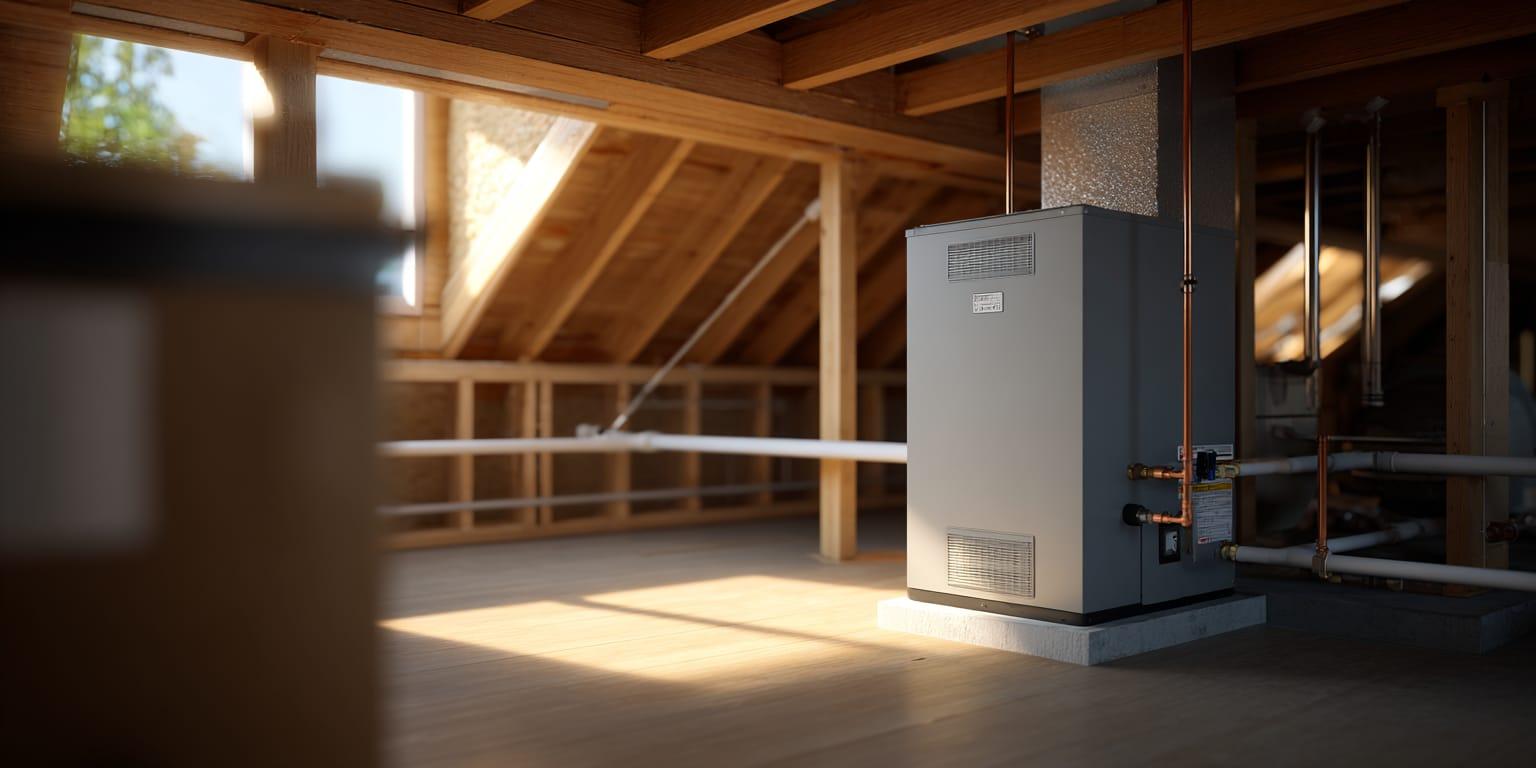
As your air conditioner cools the air, it pulls moisture out of it. That water drips into a drain pan under the indoor coil, and the condensate drain line carries it away to a drain or outside your home. Many attics here hold the air handler, so the pan and the line sit right above your ceilings.
Over time, dust, algae, mold and slime build up inside that line. Once the water can’t leave, it backs up into the pan and then spills over. Many systems have a float switch that shuts the unit off when the pan fills, which is why an AC that quits on its own can be a clog and not a broken AC.
How to Keep Your Condensate Drain Line Clear
Check the drain pan monthly for standing water, look at the visible sections of the line for damage, and keep an eye out for stains near the unit. Then, a few simple habits help:
- Flush the line a few times a year with a vinegar solution, following the unit maker’s directions.
- Clean the drain pan regularly.
- Clear the line’s exit point of dirt, leaves and debris.
- Watch the line while the system runs to confirm water is draining.
- Add algae tablets to the drain pan if your unit allows it.
- Keep the area around the unit clean.
Stop there. Anything inside the air handler itself, or an AC that isn’t cooling, is a job for an HVAC company, not a plumber. Same goes if the water isn’t coming from the drain line at all.
Signs Your Line Is Clogged
Nobody has to be an expert to spot this one. Go by what you notice:
- What you’ll see: water pooling around the indoor unit or in the drain pan, and water stains, bubbling paint or a damp spot on a ceiling or wall near the air handler.
- What you’ll smell: a musty odor near the unit or the vents, which is mold and mildew growing where water is standing.
- What you’ll feel: damp drywall or insulation, or a house that’s warmer than it should be because the unit shut itself off.
If you find water, here’s what to do right now:
- Turn the AC off at the thermostat so the unit stops making more water.
- Switch off power to the air handler at the breaker if water is dripping near it.
- Soak up standing water in the pan or around the unit with towels or a wet-dry vacuum.
- Check where the drain line ends, usually outside near the foundation or at a drain, for clogs or kinks.
- Keep the unit off until the line is clear, so it doesn’t overflow again.
Don’t touch a soaked ceiling or a fixture near the unit. Wet insulation and drywall near wiring are a hazard, and a clogged drain line left alone can weaken drywall, framing and flooring below.
When to Call a Plumber for a Clogged Condensate Drain Line
DIY flushing works on a light buildup. You can handle the upkeep, and hopefully you never need us. But if a flush didn’t hold, the same line keeps backing up, or water damage is already showing, the line needs to be cleared properly. People also call us for a second opinion when another company told them something that didn’t add up.
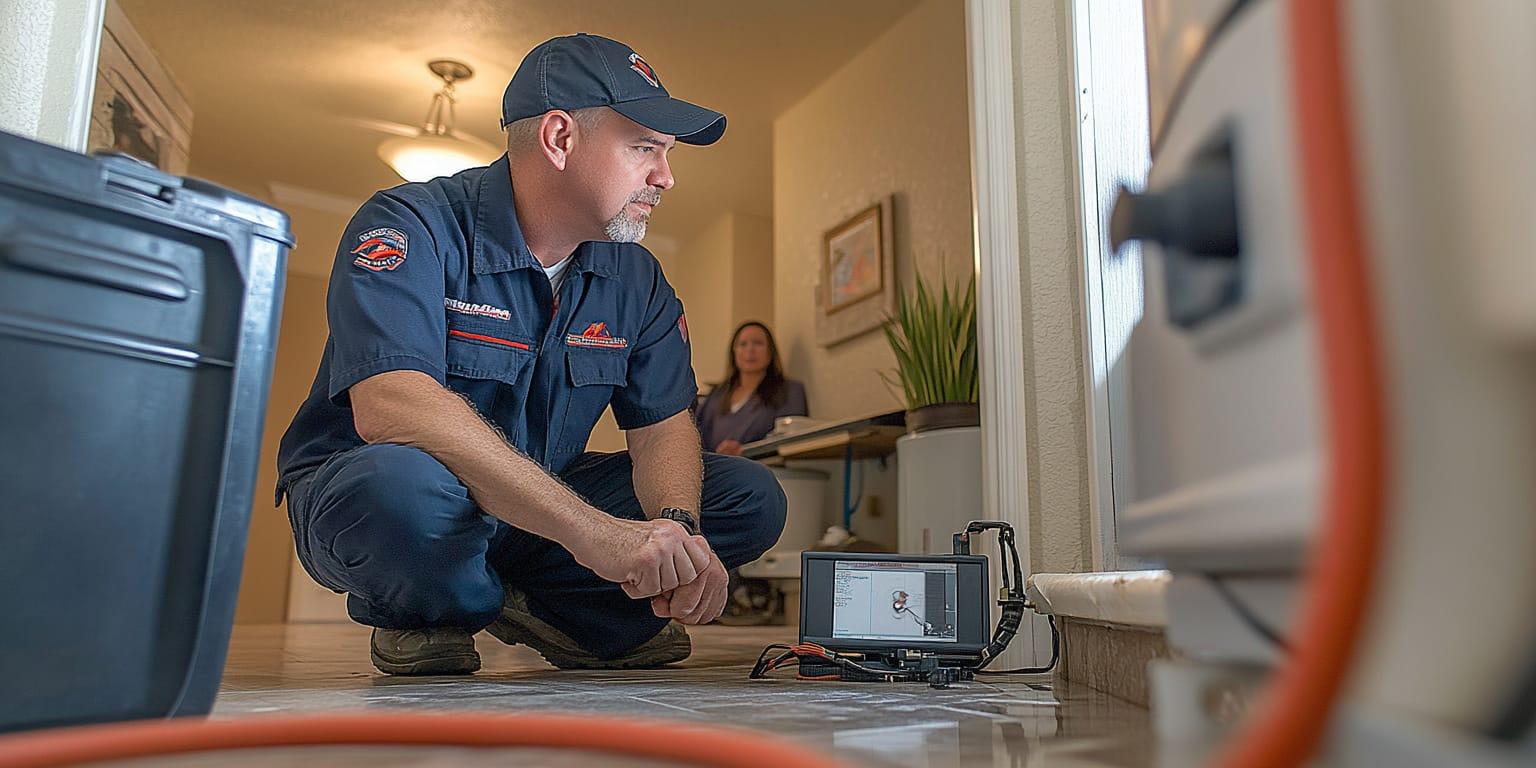
That job is drain cleaning. Our licensed plumber (Dean Stewart holds the Texas master plumber license) finds where the line is blocked, clears it from the closest access point, and confirms the water flows freely afterward. We explain what we found and the options before any work starts. If the same line has clogged more than once, a more thorough cleaning, or a camera look at the line, usually saves you repeat attempts and repeat damage. If water has reached your ceiling, we can also tell you whether it’s coming from the condensate line or from a plumbing leak, so you fix the right problem.
Fill out the request form, pick an arrival window that works for you, and one of our plumbers comes out to you. We’re local, we respect your home, and we’ll take care of it. Help is on the way in Montgomery County.
Have a plumbing problem like this?
We're a Marine veteran-owned plumbing company in Conroe. Tell us what's going on and we'll take it from there.