
Best case
Ask us
A yearly flush on a heater that's working fine.
- Drain, flush and inspect your water heater to extend its life and improve efficiency.
Water Heaters · Conroe, Texas
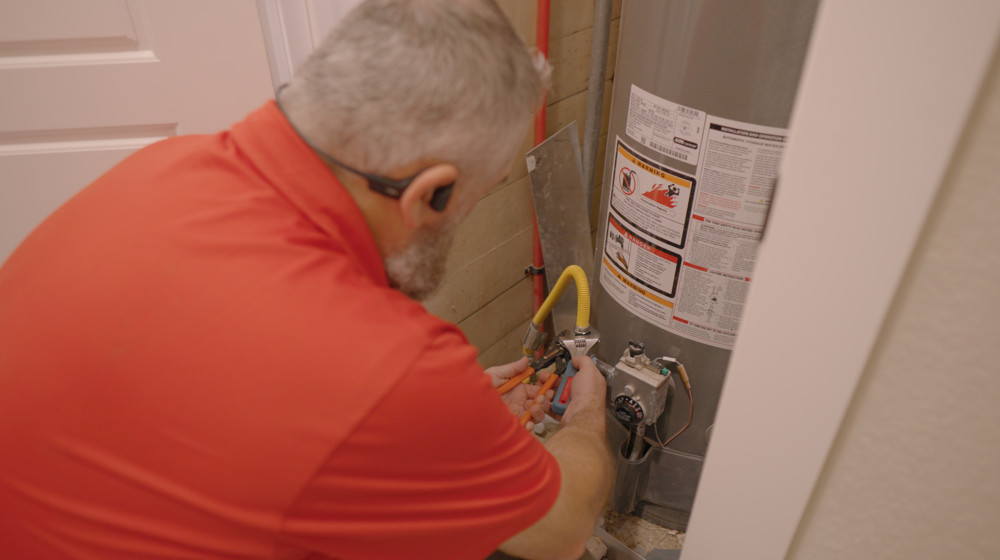
Sediment can leave a tank heater popping or slow to recover. We assess its condition before recommending a flush and tune-up.
My water heater is popping, or it's due for a flush
Book the visit. We'll find the cause, explain your options, and confirm the price before work starts.
Book online
Three quick steps, about a minute. No account needed.
Need to add something? Call or text (936) 758-6237.
Price expectations
The price depends on what the plumber finds. Here's what each outcome looks like and where it starts. You don't pick one: book the visit, and we confirm the scope and price with you before any work starts.
Best case
Ask us
A yearly flush on a heater that's working fine.
Typical
Ask us
A heater that pops or rumbles from sediment, flushed and checked.
Exceptional
Ask us
A flush that turns up a failing part, like the anode rod or relief valve.
Tell us what's happening. You can leave the diagnosis to us; the visit is where we work out which fix you need.
Book a service callOr call (936) 758-6237A water heater that pops and rumbles, or one that doesn't seem to heat like it used to, is easy to put off. Most people never think about their water heater until it stops. In hard water, minerals settle in the tank every day, and a flush clears them out before they cause trouble.
Read more about the causes and simple checks before you call.
Tell us what you're noticing. It takes a minute, and you don't need the technical terms.
We call you back to confirm when we'll come.
A plumber finds the cause and shows you. You approve the price before any work starts.

Our work runs under Responsible Master Plumber license #45475, held by Dean Stewart, a Marine veteran. Our shop is on 910 Cable St in Conroe.
By our own job records, we've completed jobs in Panorama Village (85), Conroe (43), The Woodlands (31), Willis (31), and Spring (14).
Popping on its own isn't an emergency, and not every heater needs a flush right now. A couple of checks help you decide.
Sediment in the tank: Minerals settle at the bottom of the tank. Water trapped under that layer boils as the burner or element heats it, and that's the popping. Slower heating and less hot water: A thick layer of sediment takes up room in the tank and insulates the water from the burner, so it heats slower and runs out sooner. A heater that's never been flushed: A heater that's a few years old and has never been flushed usually has sediment built up, even if it isn't making noise yet.
A flush and tune-up drains the sediment out of the tank and inspects the heater while we're there. If we find a worn part or a failing tank, that's a separate repair or replacement, and we'll show you before anything else is done.
Popping on its own isn't an emergency, and not every heater needs a flush right now. A couple of checks help you decide.
The heater's age and type, from its label. How much sediment comes out when the tank is flushed. The relief valve, the drain valve, and the connections for leaks or wear. Signs of rust or a leak that a flush won't fix.
We're open Mon–Sat, 7am–6pm. After hours, stop the water first, then call or leave a message and we'll call you first thing.