
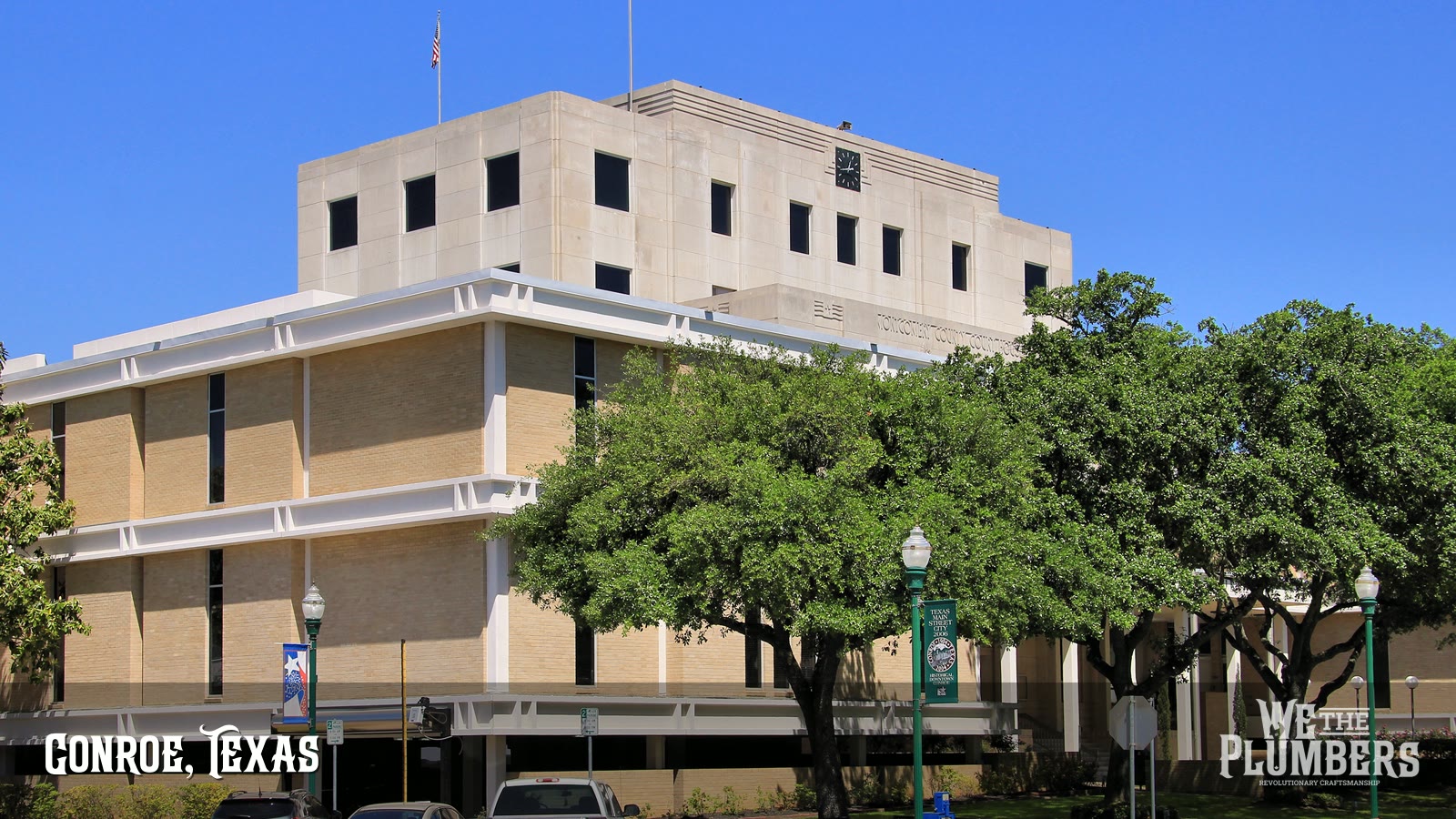
In Conroe
Half of Conroe went up after 2006
Half the houses in Conroe are twenty years old or younger, which means plastic supply lines and drains and fewer surprises behind the walls. What wears out in a house that age is the stuff that moves: the water heater the builder put in, the fill valve and flapper in the toilet, the fittings under the sink. About one home in six here is from before 1980, and those are a different story: slow drains, weak pressure and old shutoff valves that won't quite close.
A leak under a slab doesn't make a puddle
Nearly every house around here sits on a concrete slab, so a supply line leaking under the floor just disappears into the ground. The clues are quieter: a water bill that climbs for no reason, a warm spot on the tile, or the sound of running water when everything's off. If you notice one of those, call us. We find the leak first, before anybody talks about breaking concrete.
Lake water and well water, in the same pipes
Conroe's water is a mix of groundwater from the Jasper and Catahoula aquifers and treated Lake Conroe water the city buys from the San Jacinto River Authority. Chlorine runs about 1 part per million on average, per the city's latest water report. If the taste bugs you, a carbon filter at the kitchen sink handles it. Thinking about a softener? Test the water first, so you're buying for what's actually in it.
The old pipe is on your side of the meter
Good news first: the city's service line inventory found no lead lines, and no galvanized lines that need replacing, between the main and your meter, and its lead testing came in far under the federal limit. The pipe from the meter to your faucets is yours, though. In a house from before about 1980, it's worth knowing whether you've still got galvanized steel supply lines or cast-iron drains, because both wear out from the inside.