
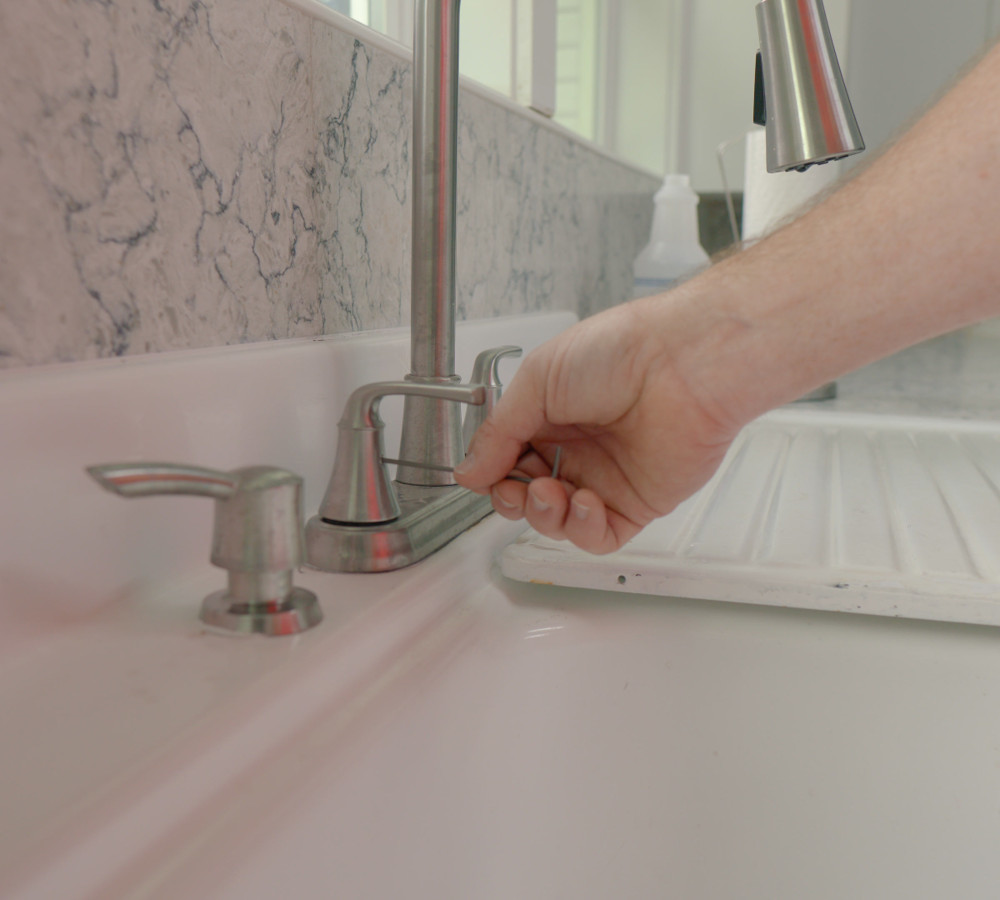
What you can safely check first
Low pressure at a single faucet or shower is very often something you can clean yourself.
- Check whether it's one fixture, the hot side only, or the whole house. That points to the cause.
- For one faucet, unscrew the aerator at the tip, rinse the screen, and soak it in white vinegar if it's crusty.
- For a showerhead, soak it in a bag of white vinegar for an hour, then rinse.
- If the whole house is low, make sure the main shutoff is fully open, and ask a neighbor whether theirs is low too. If it is, the water utility is the call to make.
What might be behind it
More than one thing can cause this, which is why the plumber finds the cause first.
A clogged aerator or showerhead. Mineral scale builds up in the screen on a faucet or the holes in a showerhead. If only one fixture is weak, that's usually why.
A pressure regulator that's failing. Many homes have a pressure regulator where the water line comes in. As it wears out, pressure can drop, or climb, for the whole house.
A hidden leak. A leak in a wall, under the slab, or in the yard lets water escape before it reaches your faucets.
Scale in the water heater. If only the hot water is weak, sediment in a tank or scale in a tankless unit can restrict the flow.
In your area
The Woodlands & Spring
Oak Ridge North has more pre-1980 homes than any town we serve, about two in three. If every tap in one of those houses is weak, hot and cold alike, the galvanized steel pipe in the walls may be rusting closed. One weak faucet, on the other hand, is usually a clogged aerator you can clean in five minutes.
East Montgomery County
More than half the homes around Porter Heights predate 1980. The good news: Porter's water district reports no galvanized service lines needing replacement, so if the pressure's low all through an older house, the problem is more likely inside it than out at the street.
How we fix it
We measure pressure and compare fixtures to separate a local restriction from a whole-house issue. We check the regulator, supply and signs of a leak as needed. A heater-related restriction is investigated separately when only the hot side is affected.
Depending on the cause, the relevant services are water pressure regulator, leak detection, water heater repair, tankless water heaters, faucet repair, faucet replacement or whole-home repiping.
Keep it from happening again
- What to Do When a Pipe Bursts in Your Conroe Home
- How Professional Leak Detection Works: Methods and What to Expect
- Plumbing Checklist for New Conroe Homeowners
- What's in Conroe's Tap Water and How It Affects Your Plumbing
- Why DIY Plumbing Repairs Can Cost Conroe Homeowners More
- Rental Property Plumbing Maintenance Checklist for Conroe Landlords
- Is Conroe Water Hard? Signs, Scale and What to Do
- Signs Your Historic Conroe Home Needs Repiping
- What Local Lead Service Line Inventories Found, and What They Don't Cover
- PEX vs Copper Repipe: Choosing New Pipe When Old Pipes Fail
- Why Seasonal Plumbing Inspections Pay Off in Conroe
- How to Catch a Hidden Water Leak Early: Smart Shutoff Valves and Leak Sensors
- How Do Plumbers Find Hidden Leaks? Signs to Spot Yours Early
- Is a Tankless Water Heater Worth It in Texas? Tank vs. Tankless
- Signs of a Bad Pressure Regulator and the Parts That Protect Your Pipes
- What Should Home Water Pressure Be? Testing for Low Pressure
- Slab Leak Detection: Signs, How Plumbers Find It, and Your Repair Options in Conroe
- What's in Montgomery County Tap Water? A Town-by-Town Guide
- Frozen Pipes in Conroe: How to Prevent Them and What to Do If One Bursts
- Seasonal Plumbing Maintenance Checklist for Conroe Homeowners
- Can a Gas Water Heater Leak Carbon Monoxide?
- Support Your Local Plumber in Conroe
Where we fix it
Our plumbing shop is at 910 Cable St in Conroe. We also serve the surrounding towns. Check our plumbing service area and ZIP codesbefore requesting a visit.