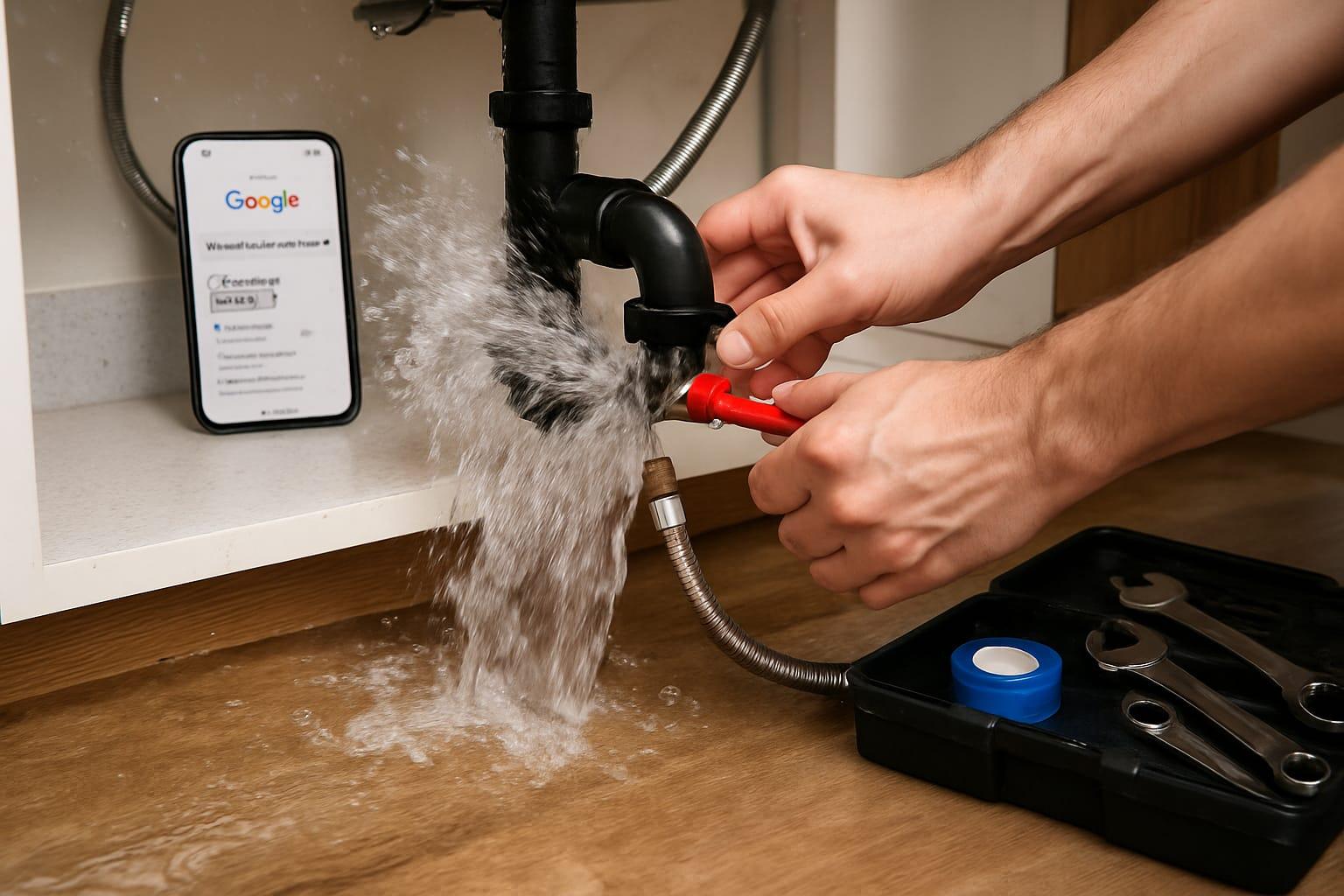
You can’t see it, but something’s off. Maybe the water bill jumped, or there’s a stain on the ceiling that wasn’t there last month. So how do plumbers find hidden leaks? Step by step: we confirm there’s a leak, rule out the easy spots, then work out whether the water is escaping inside the house, under the slab, or out in the yard. You can do the first few steps yourself, and we’ll walk you through them.
Why a Hidden Leak Is Worth Chasing
A hidden leak is sneaky. A small drip behind a wall or under a floor can go unnoticed for weeks, slowly soaking drywall, framing and flooring. The earlier you catch it, the smaller the repair, and the less of your house we have to open up to get at it.
It’s also your time and your money. You pay for water that never reaches a faucet, and a wet wall turns into a bigger job the longer it sits. Here in Montgomery County, with slab foundations and plenty of Gulf rain and humidity, damp spots hang around, so we’d rather you hear about it early than late.
How Plumbers Find Hidden Leaks
Water goes one of three places: out through a fixture you can reach, into a wall or ceiling, or into the ground under your slab or yard. We work from the easy end to the hard end.
First we read the water meter with everything off, to confirm there’s a leak and how fast it runs. Then we check the toilets, fixtures and supply lines, the simplest places to find a leak. After that we look at walls, ceilings and floors for moisture, stains and warm spots, and work out whether the leak is inside the house, under the slab, or between the house and the meter. For more on the equipment, see our post on locating leaks with precision.
How to Check and Prevent Leaks Yourself
You can do the first part of that job at home. Before you call anyone, a few simple checks tell you a lot.
Read Your Water Meter
Turn off every faucet and appliance, then check the meter. Wait about two hours without using any water and check again. If the reading changed, or the leak indicator is still moving, water is going somewhere.
Check the Toilets
Add a few drops of food coloring to the tank and wait 15 to 30 minutes without flushing. If the color shows up in the bowl, the flapper is leaking.
Look at What You Can See
Check under sinks, around toilets and near appliances for moisture, rust or corrosion. Even a little water pooling under a pipe means something’s developing. A moisture meter or infrared thermometer can also show damp areas or temperature differences on a surface. They’re handy, but they won’t always tell you where the water is coming from.
If water is actively escaping, shut off the water at the main while you sort out next steps.
Keep Up Routine Checks
Every few months, take a quick look at faucets, supply lines, pipes and appliances for drips, wear or corrosion. It takes ten minutes, and it’s the habit that catches most leaks early. Smart leak detectors and water monitors can also alert you as a leak starts, which helps in vacation homes or hard-to-reach areas where a leak could run unnoticed.
Watch Aging Pipes and Cold Snaps
Older plumbing materials like galvanized steel or polybutylene are more prone to corrosion and leaks. That’s a real concern in Montgomery County, where many homes were built before modern piping standards and hard water builds up minerals in aging joints and fittings. Replacing outdated pipes with modern, durable materials like PEX or copper can significantly cut down on leaks.
Even in Texas, pipes can freeze and burst during a hard freeze. Pipe insulation and letting faucets drip slightly in extreme cold can prevent a sudden burst. See our guide on preventing frozen pipes for more detail.
When Maintenance Isn’t Enough: Signs of a Hidden Leak
Your house usually tells you before the damage gets bad. Here’s what to look for, in the order most people notice it.
What You’ll See
Stains on walls, ceilings and floors often mean water is collecting behind the surface. Peeling wallpaper, bubbling paint and warped flooring say the same thing. Mold or mildew in a spot that isn’t humid, like a bedroom wall, is another clue. Check under sinks too. A damp cabinet floor or water under the sink is the most common place a leak shows itself.
A water bill that jumps without a change in how you use water is one of the most reliable flags. If the bill has doubled and nobody can say why, read about a suddenly high water bill.
What You’ll Hear
Listen at night, when the house is quiet. Running or trickling water when every fixture is off, or a faint hiss inside a wall, points to a leak in the supply lines. A toilet that keeps running or hissing is the most common hidden leak of all. A worn flapper lets water trickle into the bowl all day, and it’s usually an easy fix.
What You’ll Smell
A musty odor in one room, or dampness with no clear source, usually means moisture is trapped somewhere it shouldn’t be. You may also notice unusual condensation on windows or surfaces.
What You’ll Feel
Fluctuating water pressure can mean a leak in your lines. And if you notice a warm spot on the floor, especially on tile or concrete, that can point to a leak in a hot water line under the slab. Don’t wait on that one.
Who to Call When You Can’t Find the Leak
You can handle the checks above. When the water is soaking into a wall or floor, when the meter keeps moving after you’ve ruled out the toilets, or when you’ve fixed what you could find and the problem is still there, we’re right here. We’re a local, licensed plumbing company, and Dean Stewart holds the Texas master plumber license. Hopefully you never need us for this, but if you do, we’ll take care of it. People also call us for a second opinion when another plumber’s answer didn’t add up, or when a simple fix didn’t hold.
Some leaks hide in walls, under the foundation, or in the line between the house and the meter, and you can’t find those by looking. That’s what our leak detection is for. Our licensed plumber starts with the meter, then checks toilets, fixtures and supply lines. From there we look for moisture, stains and warm spots, and work out whether the leak is inside the house, under the slab, or on the way to the meter.
Finding the leak is one job, and repairing it is another. Once we know where it is, we explain what we found and your options for getting to it and fixing it before anyone opens a wall or floor. We’ll tell you plainly if it’s something you can fix yourself, and we’ll respect your home while we work. Pinpointing it first means less damage and less repair afterward.
Getting started is easy. Fill out the request form, pick an arrival window that works for you, and one of our plumbers comes out to you.
Help is on the way in Montgomery County.
Have a plumbing problem like this?
We're a Marine veteran-owned plumbing company in Conroe. Tell us what's going on and we'll take it from there.