
You can’t see a hidden leak, but you can often tell something is wrong. Here’s how professional leak detection works: the methods a plumber uses to find water that’s escaping where you can’t see it, and what to expect when one comes to your home in Conroe or Montgomery County.
Why Finding the Leak First Matters
A hidden leak wastes water, and it can soften drywall, lift flooring and undermine a slab long before a drip shows up. Pinpointing the leak before anyone opens a wall or floor means less damage to your home and less repair afterward.
Around here, shifting clay soil and the swing between wet and dry weather can stress pipes under a slab. That’s one reason we like to find a leak early. If you’re weighing what comes after, our post on slab leak repair options picks up where this one leaves off. And if you want the do-it-yourself side of finding a leak, how to spot hidden plumbing leaks covers what you can check yourself.
How Professional Leak Detection Works
No single tool finds every leak. A good plumber starts simple, then narrows the search with the next method until the answer is clear. We use the right method for the job, and here are the ones you’ll hear about.
The Water Meter Test
This comes first because it tells us whether there’s a leak at all. With every fixture and appliance off, we watch the meter. If it keeps moving, water is going somewhere. How fast it moves hints at how big the leak is.
Pressure Testing
Pressure testing isolates a section of pipe and watches the gauge. A drop means that section is leaking. It’s how we tell whether a leak is inside the house, under the slab, or on the line between the house and the meter, and it confirms what other methods suggest.
Listening for the Leak
Water escaping a pipe makes a sound, even a faint hiss or drip. Acoustic listening devices amplify it so a technician can follow it to the source. They work best on a quiet day, because traffic, appliances and the floor itself can muffle the sound. Where two sensors sit at different points on a line, the time the sound takes to reach each one can help triangulate the spot.
Thermal Imaging
Thermal cameras show temperature differences on a surface. A leaking pipe can leave a cool patch on a slab, or a warm one where a hot line is leaking. It’s a quick way to scan a large area, though it can’t help much when the temperature difference is small.
Moisture Meters
A moisture meter reads how wet a wall, floor or other material is. A reading well above its surroundings points at a leak behind it, and repeat readings show whether the problem is growing.
Camera Inspection
For some lines, a small flexible camera goes in through an access point so we can see the pipe itself. It shows damage, a blockage or a leak directly, and the recording helps when you’re planning repairs or talking to your insurance company.
In practice we layer these. The meter confirms a leak, pressure testing narrows it to a line, listening and imaging find the spot, and a moisture reading or camera confirms it. That layering is how you avoid cutting into a floor on a guess.
What to Expect From a Leak Detection Visit
We explain before we work. A plumber will ask what you’ve noticed, check the meter and the easy places first, such as toilets, fixtures and supply lines, then work through the methods above until we know where the water is going.
Finding the leak is one job, and fixing it is another. Leak detection tells you the source. Before anyone opens a wall or a slab, we explain where the leak is and what the access and repair options are, so you decide what happens next. We’re respectful of your home and clear about what we find, whatever it turns out to be.
Signs You May Need Leak Detection
Hidden leaks usually announce themselves in small ways. Watch for these, in this order.
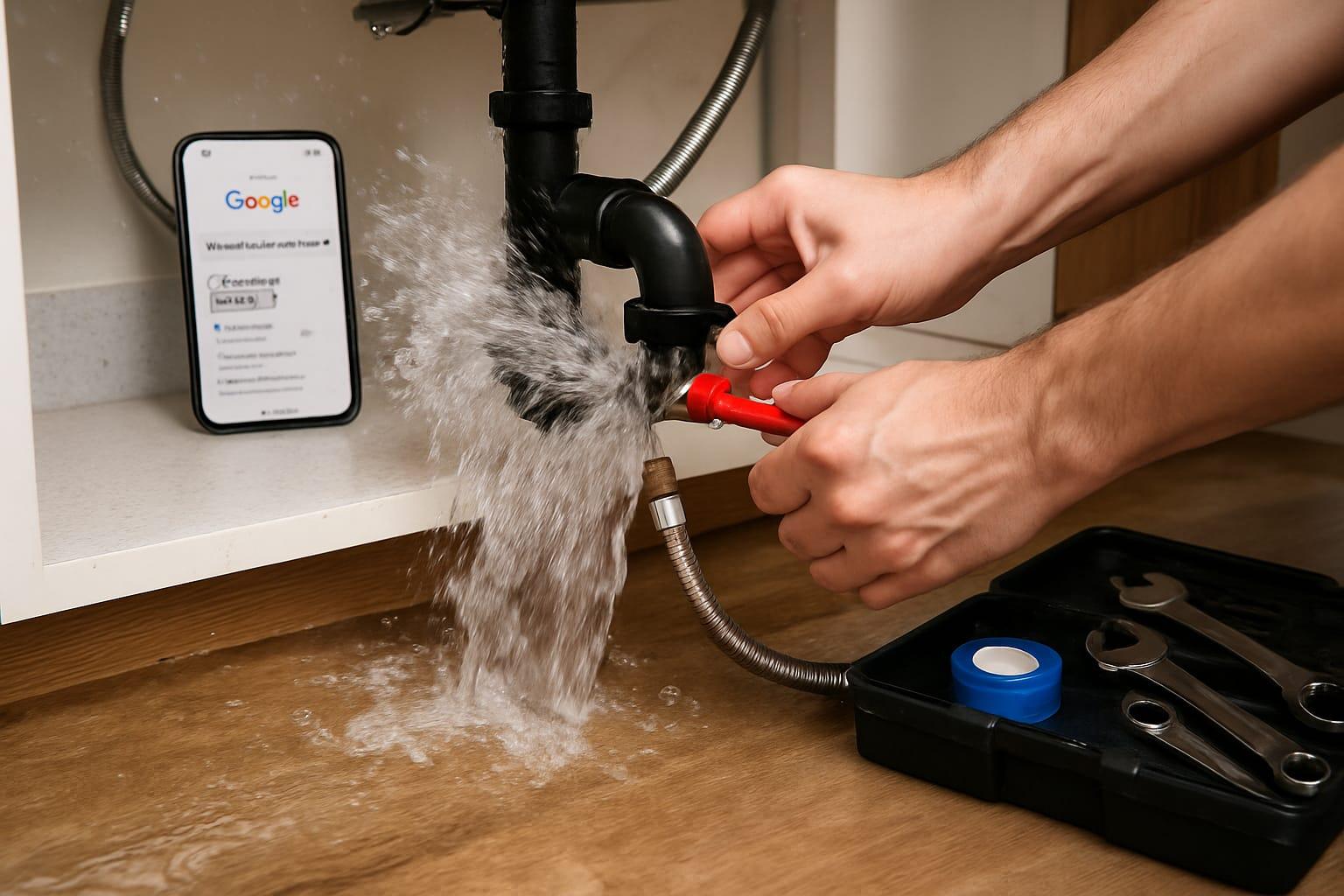
You may see it first on paper: my water bill is suddenly high with no change in how your household uses water. Or you may see damp spots, stains and a wet cabinet floor, as with water under my sink, which can be a loose supply line or a leak you can’t see behind the cabinet.
You may hear water running when everything is off, or notice the meter still turning. You may smell something musty near a wall, which often means moisture trapped behind it. And you may feel it: a warm spot on the floor can point to a leaking hot line under the slab.
A slow leak can wait a few days. One that’s soaking a wall or running the meter hard shouldn’t. If water is actively escaping, shut off the water at the main.
Who to Call for a Hidden Leak
You can do the first checks yourself. Put a few drops of food coloring in the toilet tank, wait 15 minutes without flushing, and if the color shows up in the bowl, the flapper is leaking. Check the meter with everything off, and look under sinks for drips.
If that doesn’t explain it, or a simple fix didn’t hold, or another plumber told you something you want a second opinion on, we’re local, licensed and right here. With leak detection, our plumber investigates the source: they confirm the leak at the meter, check fixtures and supply lines, look at walls, ceilings and floors for moisture and warm spots, and work out whether it’s inside the house, under the slab, or between the house and the meter.
Fill out the request form, pick an arrival window that works for you, and one of our plumbers comes out to you. Help is on the way in Montgomery County.
Have a plumbing problem like this?
We're a Marine veteran-owned plumbing company in Conroe. Tell us what's going on and we'll take it from there.