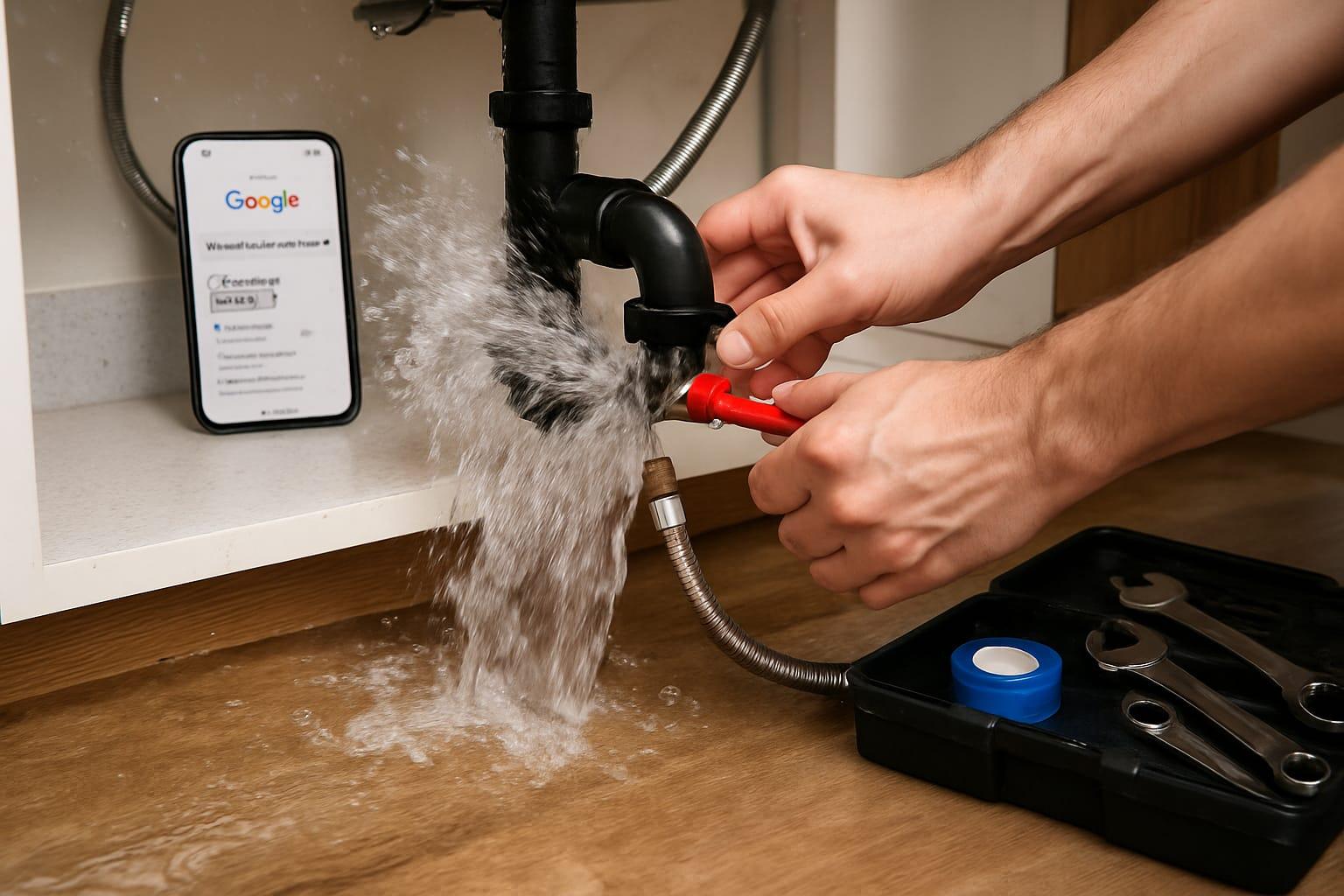
When a pipe bursts, shut off the water at the main, open your faucets to drain the lines, and turn off power to anything the water has reached. Do those three things first and the rest gets a lot easier. Below, we walk through them, why a burst pipe is worth acting on quickly, how to spot a hidden one, and when to hand it to a plumber.
Why a Burst Pipe Can’t Wait
Water goes where it wants to, and it goes fast. Inside wall cavities and under flooring, the damage you can see is often a small part of what happened. Left running, it soaks drywall and insulation, lifts flooring, and gives mold the moisture it needs. A few minutes spent stopping the water saves you days of cleanup.
What Happens When a Pipe Bursts
A pipe lets go when something stronger than the pipe pushes on it. Around Conroe the usual cause is an occasional hard freeze: water turns to ice, expands, and splits the line, and you may not see it until the thaw. Old joints, worn fittings and corroded sections give out the same way, with no freeze involved. Either way, a burst rarely happens in isolation. The same stress can weaken other spots on the same line.
What to Do When a Pipe Bursts
Start with the steps that stop the damage.
- Shut off the main water supply. The main shut-off valve is usually near the perimeter of your home, inside or outside. Find it now, before you need it, and make sure everyone in the house knows where it is.
- Open your faucets to drain what’s left in the pipes. That relieves pressure and keeps leftover water from running out of the damaged spot.
- Turn off electricity to the affected area. Water near outlets and devices is a real shock risk. If the damage is widespread, shut off the main electrical panel, but only if you can reach it without standing in water.
- For a temporary stopgap, wrap self-fusing silicone tape around the split to slow a small leak. It’s a bridge, not a repair.
Take photos of the damage if you can do it safely. Then move wet things out of the way and let a plumber take it from there. A patch or rubber tape won’t hold for long, and a repair that isn’t done right is how you end up with a second failure and mold inside the wall.
When It’s More Than a Quick Stop
Not every burst announces itself with a spray. Some are slow, hidden and behind a wall, and the signs show up in your senses first.
What You’ll See
Look for water under the sink, a stain spreading on a ceiling, a damp or bubbling patch on a wall, or flooring that has started to cup or lift. Wet drywall that feels soft is a sign the water has been there a while.
What You’ll Hear
Listen for water running or hissing when every fixture is off. A quiet house at night makes it easy to catch.
What You’ll Smell
A musty, damp smell in a closet, cabinet or room usually means moisture is sitting somewhere it shouldn’t.
What You’ll Feel
On a slab foundation, a warm spot on your floor can point to a leak in a hot water line under the house. And if your water bill is suddenly high with no change in how you live, water may be escaping somewhere you can’t see.
You can check for yourself first. Turn off every faucet and appliance, then look at your water meter. If the leak indicator is still moving, water is going somewhere.
Who to Call When a Pipe Bursts
Shutting the water off and drying out is something you can handle yourself. Finding where the break is, and fixing it right, is where a licensed plumber earns the call. We’re a local, licensed master plumber here in Conroe, and plenty of people also call us when a patch didn’t hold or for a second opinion on what someone else told them.
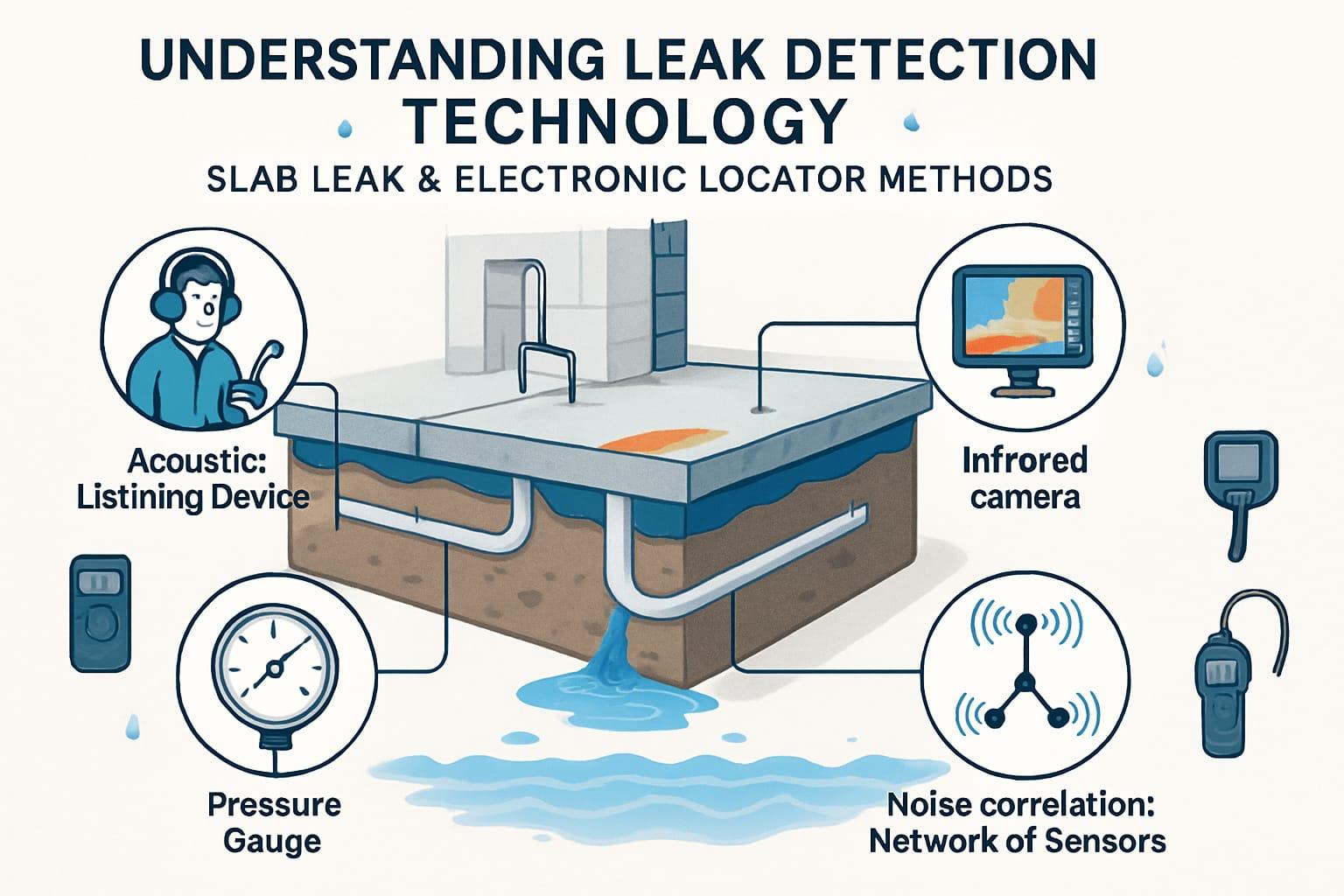
Here’s how leak detection works when you call us. First, our plumber finds the break. That means checking the water meter with everything off, looking at toilets, fixtures and supply lines first, then walls, ceilings and floors for moisture and warm spots, and working out whether the leak is inside the house, under the slab, or between the house and the meter. Pinpointing it first means less damage and less repair afterward.
Then we explain what we found. We tell you where the leak is and what your access and repair options are before anyone opens a wall or a floor, and nothing gets cut into without you knowing why. Leak detection investigates the source, and the repair itself is a separate scope based on what we find, so you decide with the facts in hand.
Getting started is simple. Fill out the request form, pick an arrival window that works for you, and one of our plumbers comes out to you. We’ll respect your home, clean up after ourselves, and never judge what we find behind the wall.
Help is on the way in Montgomery County.
Have a plumbing problem like this?
We're a Marine veteran-owned plumbing company in Conroe. Tell us what's going on and we'll take it from there.