How do you prevent frozen pipes in Conroe? Insulate the pipes that run outside the warm part of your house, take the hose off the outdoor faucet before a freeze, keep the house warm, and know where your main water shutoff is. That’s most of it, and you can do all of it yourself.
Why Frozen Pipes Matter Here
Conroe doesn’t get many hard freezes, and that’s exactly the problem. Most Montgomery County homes weren’t built with a deep freeze in mind, and a cold front can roll through Southeast Texas with very little warning. A night or two below freezing is enough.
When water freezes inside a pipe, it expands and the pressure builds in the line. The pipe can split, and you often won’t know until the ice thaws and the water starts to run. A burst pipe repair can mean wet walls, ruined flooring and a lot of lost time, and it tends to happen right when everyone else’s pipes are doing the same thing. During a cold snap, plumbers get busy, so a little prep beats a scramble.
What Freezes First
Water lines in the places the heat doesn’t reach: attics, crawl spaces, garages, and pipes that run along an exterior wall. The outdoor faucet is the other usual suspect, since it sticks out of the house into the cold. If a pipe is going to freeze at your place, it’s probably one of these.
How to Prevent Frozen Pipes in Texas
Start before the forecast turns. Once it’s 28 degrees outside, nobody wants to be crawling under the house.
Insulate What’s Exposed
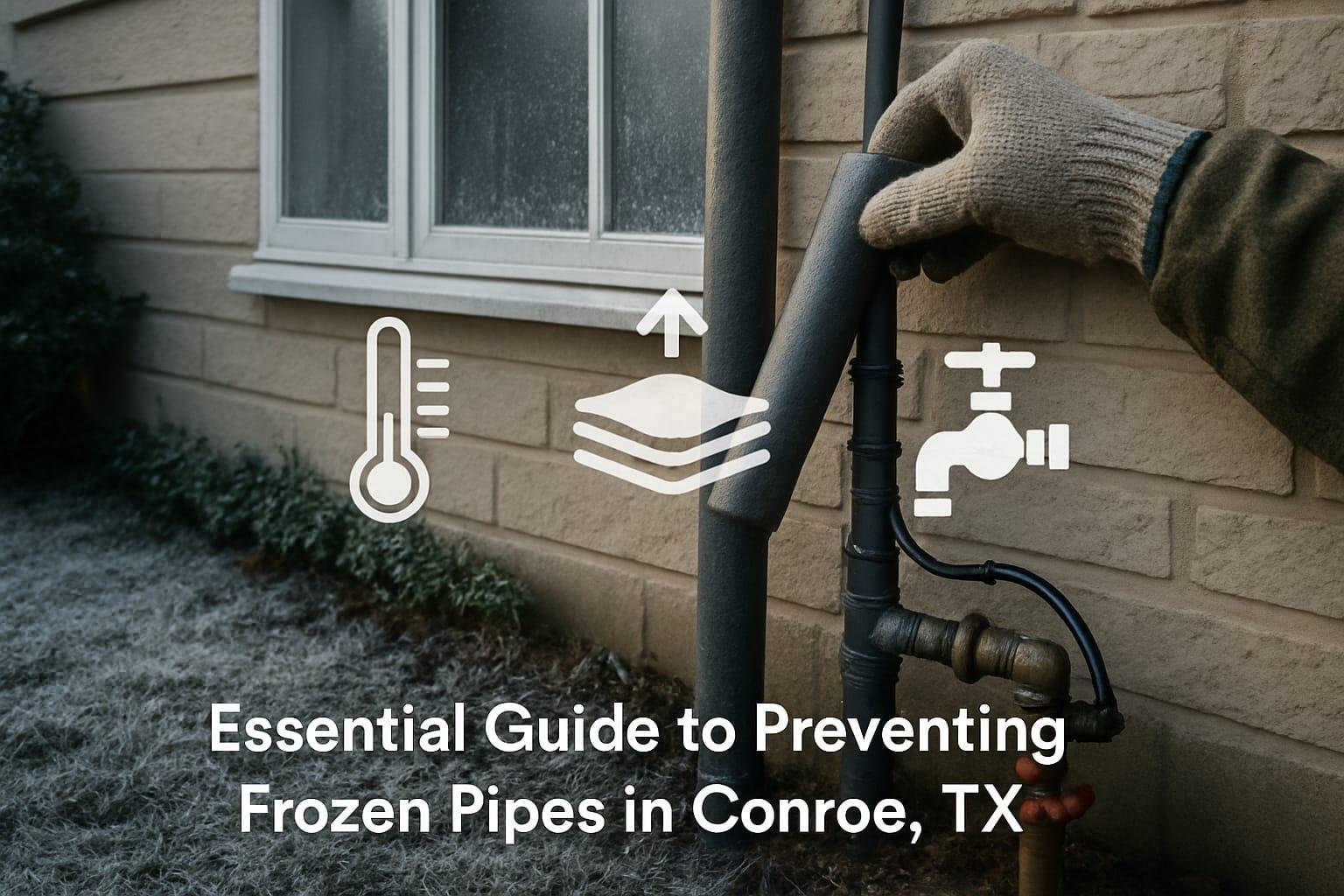
Foam pipe sleeves are the easy win. They slip over a pipe and hold in the warmth. Cover the exposed lines in the attic, crawl space and garage, and overlap the sleeves at the joints so there are no gaps. For a pipe along an exterior wall that’s hard to reach, heat tape wraps the pipe and gives off gentle warmth. Follow the manufacturer’s instructions with heat tape, and local building codes.
Seal the Drafts
Look for gaps where cold air gets in near plumbing, like around windows, doors and where pipes enter the house. Caulk or weatherstripping takes care of most of them, and it helps your energy bill too.
Protect the Outdoor Faucet
Before a freeze, unscrew the garden hose from the outdoor faucet and drain it. A hose left connected holds water against the faucet, and that’s one of the easiest ways to freeze and split it. If your outdoor faucet isn’t insulated, cover it too.
Keep the House Warm
During a cold snap, keep the thermostat at 55 degrees or higher, even at night and even when you’re out of town. Open the cabinet doors under the kitchen and bathroom sinks so warm air reaches the pipes. Let a faucet drip slightly on the coldest nights. Moving water is harder to freeze.
Know Your Main Shutoff
Find your main water shutoff valve now, usually in the garage, a crawl space or along an exterior wall. Make sure everyone in the house knows where it is, and turn it once in a while so you know it isn’t stuck. If a pipe bursts at 2 a.m., you want the water off before you want an answer.
What to Do If a Pipe Freezes
Don’t panic, and nobody did anything wrong. Here’s what we’d do.
- Turn off the water at the main shutoff valve, so if the pipe has split, it doesn’t flood the house when it thaws.
- Find the cold spot by feeling along the exposed pipes. The frozen section is the one that’s colder than the rest.
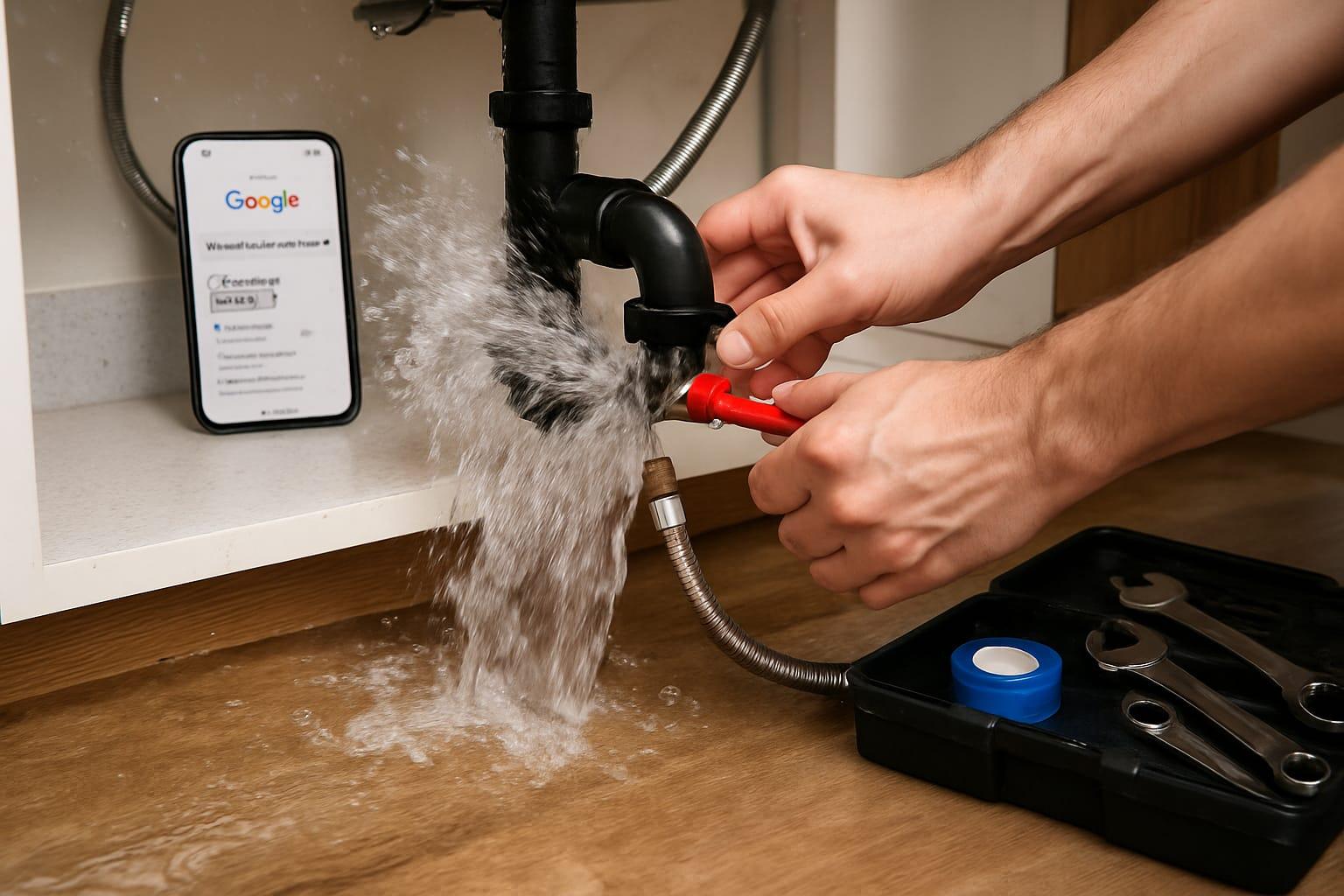
- Apply gentle heat with a hair dryer, starting at the faucet end and working back toward the frozen part. Keep the faucet open so the water has somewhere to go as it melts.
- Never use an open flame, and never use more heat than a hair dryer. Too much heat can damage the pipe and start a fire.
If it won’t thaw, or you think the pipe has already split, that’s when to call a plumber. Our winter plumbing checklist covers a few more steps to take before the next cold front.
When It’s More Than a Freeze
A pipe that split in a freeze doesn’t always announce itself. After a hard freeze, keep an eye out for these.
What You’ll See
A stain or damp spot on a wall or ceiling that wasn’t there before. Water standing in a cabinet, or water under the sink. Your water bill climbing with no change in how you use water, a high water bill.
What You’ll Hear
The sound of water running somewhere when every faucet and appliance is off. Check the meter too. If it’s moving with everything off, water is going somewhere it shouldn’t.
What You’ll Feel
Low pressure at a faucet that was fine before the freeze, or a warm spot on the floor where a hot line may be leaking under the slab.
None of these means you did something wrong. A line can crack in a freeze and not leak until days later.
Who to Call
Most of this you can handle yourself, and we hope you never need us. If a pipe froze and you can’t find where the water is going, call us. We’re a local, licensed master plumber here in Conroe, and plenty of people call because a fix didn’t hold, or for a second opinion on what someone else told them.
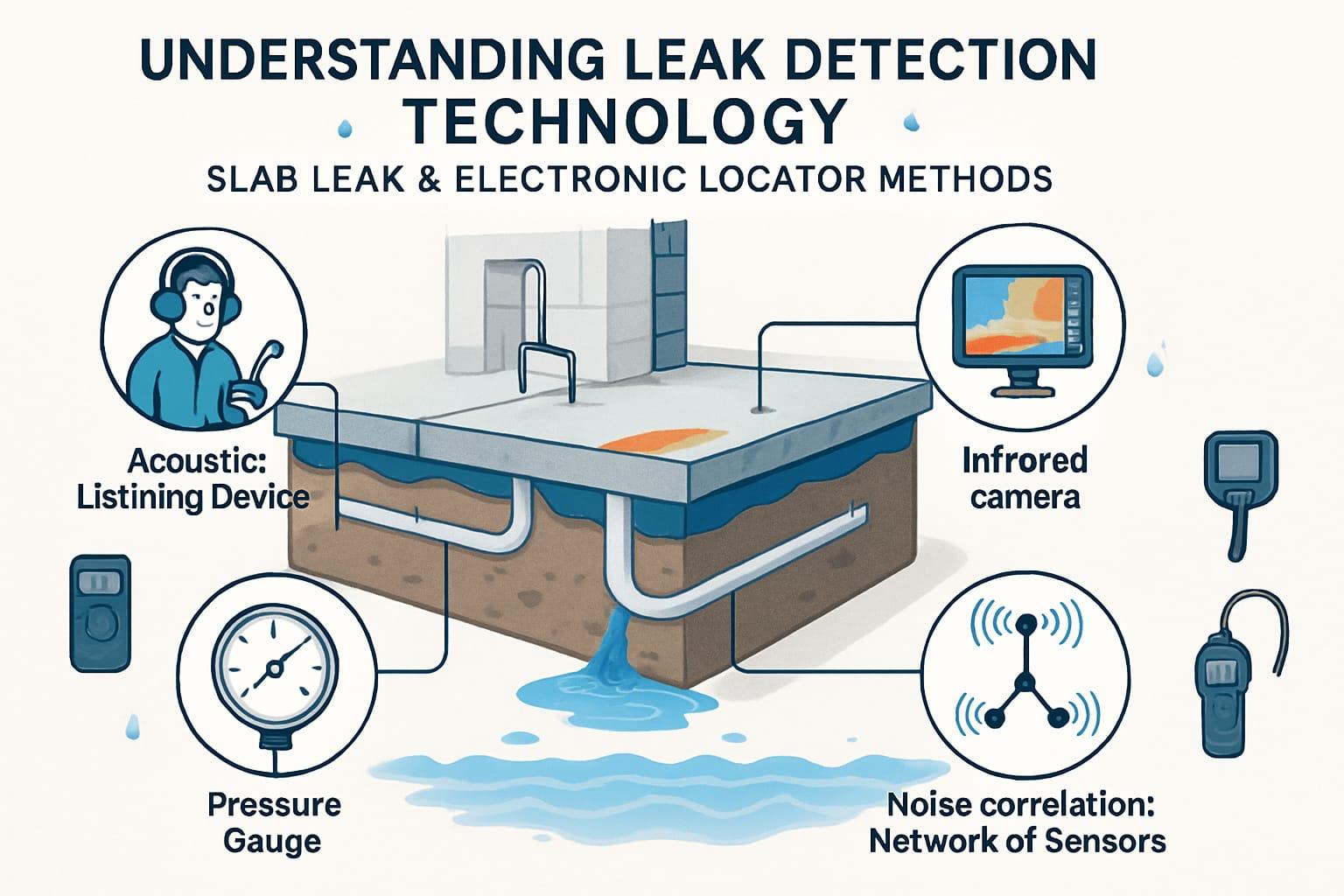
Our plumber will start with leak detection, looking for where the water is actually going before anyone opens a wall or floor. We check the meter with everything off, the fixtures and supply lines first, then the walls, ceilings and floors for moisture and warm spots. We tell you whether the leak is inside the house, under the slab, or on the way to the meter, and we explain your options before any repair starts. Finding it first means less damage to your home.
Fill out the request form, pick an arrival window that works for you, and one of our plumbers comes out to you.
Help is on the way in Montgomery County.
Have a plumbing problem like this?
We're a Marine veteran-owned plumbing company in Conroe. Tell us what's going on and we'll take it from there.