Winter in Conroe doesn’t last long, but when a hard freeze does roll through, plumbing problems show up fast. Most of what we see after a cold snap could have been prevented in an afternoon, so here’s the checklist we’d hand a neighbor, starting with the one most people skip: heater maintenance before winter in Conroe, TX.
Why a Winter Plumbing Checklist Matters in Conroe
Our freezes are rare, and that’s the problem. Most Conroe homes sit on a slab, with supply lines in the attic or along exterior walls and spigots on the outside of the house, and few of them are built with a hard freeze in mind. When water freezes inside a pipe it expands, and that pressure can crack the pipe. You often don’t find out until it thaws and the water starts running.
Cold weather is also when your water heater works hardest. Incoming water is colder, demand goes up, and a tank with sediment on the bottom has to work harder to keep up. A little attention before the first cold front costs you far less than a flooded hallway or a cold shower in January.
What Freezing Weather Does to Your Plumbing
Three places take the brunt of it:
- Exposed pipes. Anything in an attic, a garage, or an exterior wall cavity is the first to freeze.
- Outdoor faucets and hoses. A hose left attached holds water against the faucet, and that water has nowhere to go when it freezes.
- Your water heater. It isn’t going to freeze indoors, but it carries the load when the weather turns, and minerals from our hard water settle in the tank all year long.
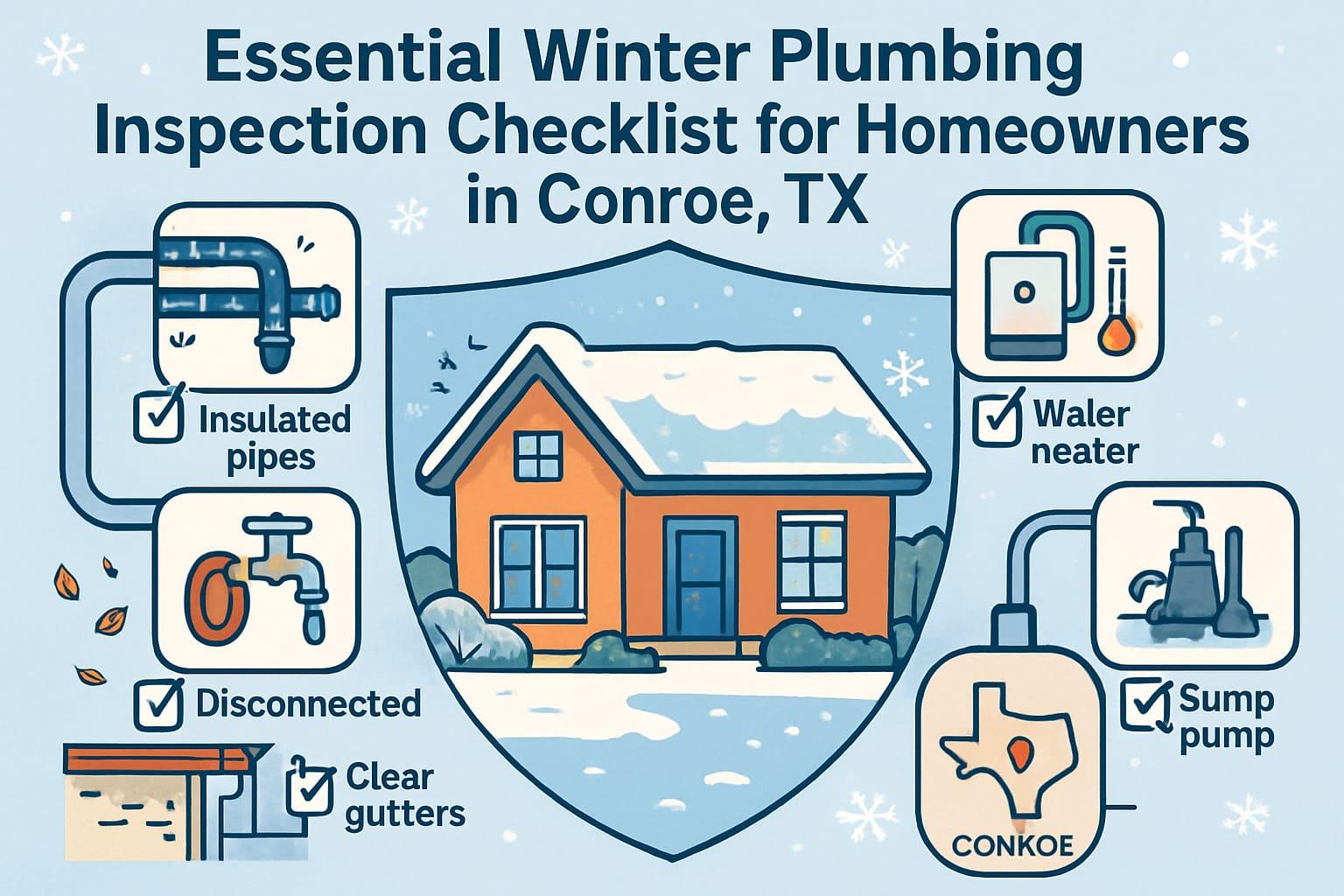
Winter Plumbing Checklist for Conroe Homes
You can do most of this yourself, and we’d rather you did. Work through it before the first cold front.
- Look over the visible plumbing. Check under sinks, behind toilets, and around the water heater for drips, corrosion, moisture, or rust. Even a slow drip is worth fixing before winter, because cold can turn a small leak into a big one.
- Insulate exposed pipes in unheated spaces such as the garage, attic, and exterior walls. Foam pipe sleeves work well. On a freezing night, open the cabinet doors under sinks on exterior walls so warm air can reach the pipes.
- Disconnect and drain your hoses. Unscrew every hose from the outdoor faucets, shut off the interior valve to each one if you have it, and open the faucet to drain what’s left. A hose left attached is one of the most common ways an outdoor faucet splits.
- Give your water heater some attention before winter. Check that the temperature is set around 120 degrees Fahrenheit, look for moisture or rust around the base, and plan on a flush about once a year to clear out sediment. A flush on a gas heater means working with the gas controls, which is where we ask you to stop. That’s a job for us.
- Keep the house warm. Hold the thermostat steady, even when you’re away, and keep it above 55 degrees so the pipes in the walls and attic don’t get cold enough to freeze.
- Clear your gutters and downspouts so rain moves away from the foundation instead of pooling against the slab.
- Seal drafts around windows, doors, and places where pipes pass through the wall. Less cold air getting in is easier on your pipes and your heating bill.
Signs It’s Time for More Than a Checklist
Maintenance catches most things. Some signs mean the heater needs a closer look, and we’ve linked the pages that walk through each one.
What You’ll See
If you spot rust-colored water, or hot water that looks rusty, the tank or the pipes may be corroding. Crusty white buildup around your fixtures, or white spots and crusty buildup, is the hard water minerals that also settle in your tank.
What You’ll Hear
A water heater making popping noises is usually sediment. Water trapped under the layer of minerals boils as the burner or element heats it, and that’s the popping and rumbling you hear.
What You’ll Smell
Hot water that smells like rotten eggs is worth having looked at. If you ever smell gas, get everyone out, don’t touch any switches, and call the gas company’s emergency line or 911 from outside.
What You’ll Feel
If the shower runs out of hot water sooner than it used to, or only gets lukewarm, sediment may be taking up room in the tank.
When to Call a Plumber for Heater Maintenance
We’re a local, licensed master plumber here in Conroe, and Dean Stewart holds the Texas master plumber license. Hopefully this checklist is all you ever need. If you’d rather not crawl around the heater, or you’re not sure what you’re looking at, we’re right here whenever you’re ready.
People also call us when a simple fix didn’t hold, or for a second opinion on something another plumber told them. We’re happy to take a look and tell you straight what you do and don’t need.
For a heater that’s popping or has never been flushed, a water heater flush and tune-up is what we’d do. We assess the heater’s condition first, drain the sediment out of the tank, and check the relief valve, the drain valve, and the connections for leaks or wear. If we find a worn part or a failing tank, we’ll show you before anything else is done. On a heater near the end of its life, a flush may not help, and we’ll tell you that too.
To get started, fill out the request form, pick an arrival window that works for you, and one of our plumbers comes out to you. If a freeze has already done its damage, we have more on winter plumbing emergencies.
Help is on the way in Montgomery County.
Have a plumbing problem like this?
We're a Marine veteran-owned plumbing company in Conroe. Tell us what's going on and we'll take it from there.