A reliable water heater is an essential part of any home or business, providing hot water for showers, washing dishes, and laundry. But when it’s time to replace an old unit or install a new one, many homeowners and business owners face a common dilemma: Should you choose a traditional tank water heater or a modern tankless system?
Both options have their advantages and drawbacks, and the right choice depends on your household’s hot water needs, budget, available space, and long-term energy savings goals. Traditional tank water heaters store hot water in a reservoir, ensuring a steady supply but using energy to keep the water heated at all times. In contrast, tankless water heaters heat water on demand, offering greater efficiency and saving space but requiring a higher initial investment.
Understanding the key differences between these two types of water heaters will help you make an informed decision that best suits your home or business.
How Tank Water Heaters Work and Their Benefits
Tank water heaters have been the standard in homes for decades. These systems store a large amount of water—typically between 30 and 80 gallons—in an insulated tank, keeping it heated and ready for use at all times. When someone turns on a hot water tap, heated water is drawn from the top of the tank while fresh cold water enters the bottom to be warmed up. This cycle continues throughout the day.
One of the biggest advantages of tank water heaters is their affordability. They cost significantly less upfront compared to tankless systems, making them a practical option for homeowners on a budget. Installation is also relatively simple, as most homes are already set up for tank systems, requiring minimal modifications to plumbing or electrical connections.
Another advantage is consistent water pressure. Since hot water is stored and readily available, multiple fixtures—such as showers, dishwashers, and washing machines—can operate simultaneously without experiencing significant fluctuations in pressure.
For households that use hot water in predictable cycles, a tank water heater can be an effective solution. However, it’s important to be aware of its limitations.
The Drawbacks of Tank Water Heaters
Despite their reliability and lower initial cost, tank water heaters come with certain disadvantages. The most noticeable issue is limited hot water capacity. Once the stored hot water runs out, users must wait for the tank to refill and reheat, which can be frustrating for large families or households with high hot water demand.
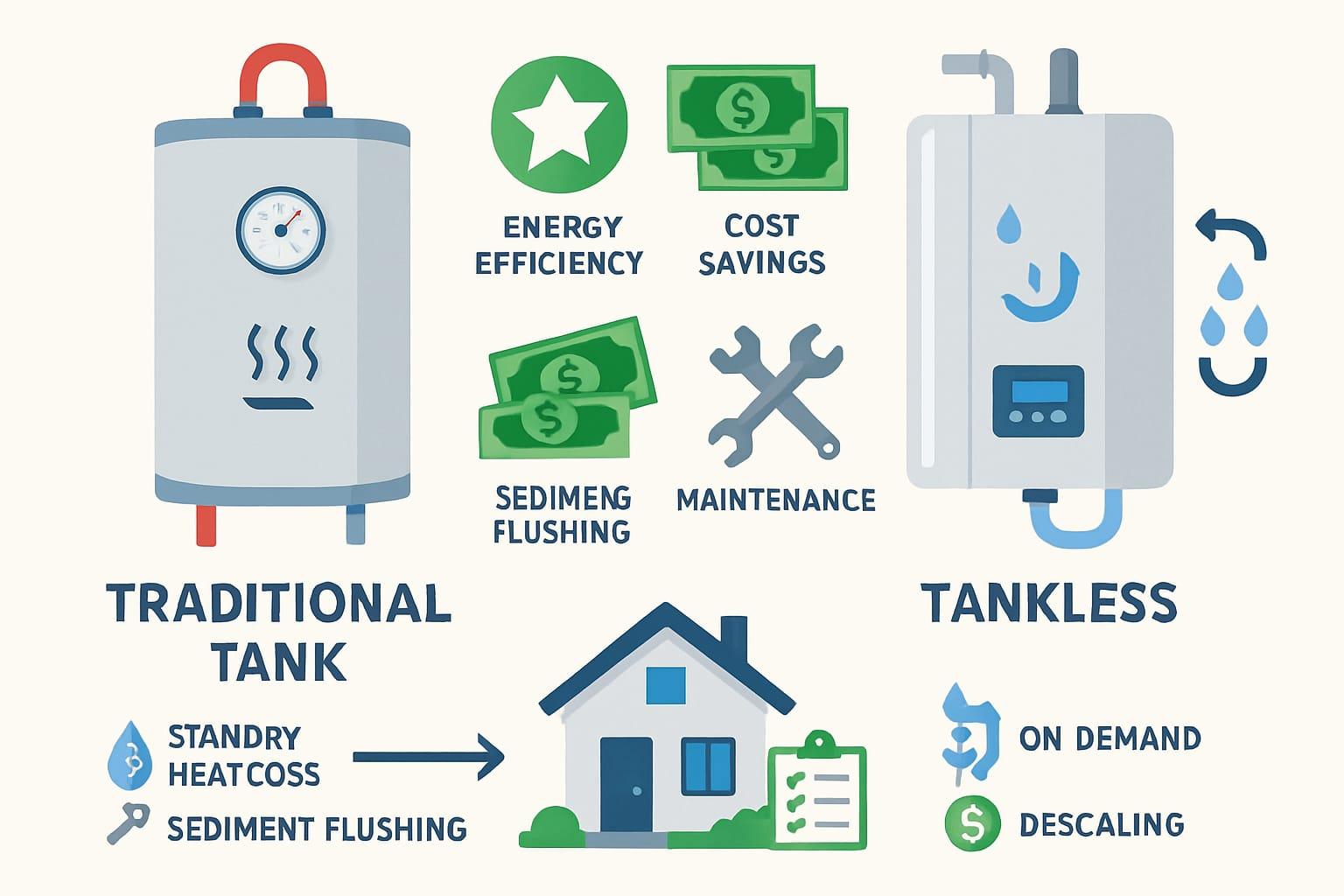
Energy efficiency is another concern. Since these units continuously heat water, they consume energy even when hot water isn’t being used—a phenomenon known as standby heat loss. This can lead to higher monthly utility bills, particularly in colder months when maintaining the water temperature requires extra energy.
Tank water heaters also take up more space, requiring a dedicated area such as a basement, garage, or utility closet. They have a shorter lifespan, typically lasting 8 to 12 years, and if not properly maintained, mineral buildup inside the tank can lead to inefficiencies and reduced heating performance over time.
Additionally, tank systems are prone to leaks. As the tank ages, corrosion can develop, leading to potential water damage if leaks go undetected.
How Tankless Water Heaters Work and Their Benefits
Tankless water heaters operate differently from traditional tank models. Instead of storing hot water, they heat water on demand using either a gas burner or an electric element. When a hot water tap is turned on, cold water passes through a heat exchanger, instantly reaching the desired temperature before flowing to the faucet.
One of the biggest benefits of a tankless system is unlimited hot water. Since water is heated as needed, there’s no risk of running out, making tankless units ideal for larger households, homes with multiple bathrooms, or properties with high hot water demands.
Energy efficiency is another major advantage. Unlike traditional tanks that maintain a constant supply of hot water, tankless systems only use energy when hot water is required. This can reduce energy consumption by 24-34% compared to a traditional tank, leading to significant savings on monthly utility bills.
Tankless water heaters are also compact and space-saving, often mounted on walls to free up floor space. This makes them an excellent choice for smaller homes, apartments, and businesses where space is limited. Additionally, they have a longer lifespan, typically lasting 20 years or more, making them a worthwhile long-term investment.
The Drawbacks of Tankless Water Heaters
While tankless water heaters offer several benefits, they also come with a few downsides. One of the main concerns is the higher initial cost. The unit itself is more expensive than a traditional tank heater, and installation costs can be higher as well, especially if electrical or gas line upgrades are required.
Installation can also be more complex, particularly in older homes that were not designed for tankless systems. Some homes may need additional venting, gas line modifications, or upgraded circuit breakers, which can increase the overall installation expense.
Another consideration is water flow rate limitations. While tankless heaters provide unlimited hot water, their flow rate may not be sufficient to run multiple appliances at the same time. If several showers, a washing machine, and a dishwasher are all in use at once, a single tankless unit may struggle to keep up. Some homeowners install multiple tankless heaters to compensate, but this adds to the cost.
Cost Considerations and Energy Efficiency
Choosing between a tank and tankless water heater involves balancing initial investment, long-term savings, and energy efficiency.
However, they cost more to operate, as they continuously heat water.
While this is a significant investment, the long-term savings on energy bills can offset the initial expense, especially for homes that use large amounts of hot water.
A tankless water heater can last twice as long as a traditional tank system, making it a better investment over time. Additionally, because it doesn’t store water, there’s less risk of leaks, corrosion, or water damage, further reducing maintenance costs.
Choosing the Right Water Heater for Your Home
When deciding between a tank and tankless water heater, consider your household’s specific needs, budget, and long-term energy savings.
A tank water heater is ideal if:
- You have moderate hot water usage and don’t mind occasional shortages.
- You’re on a budget and prefer a lower initial cost.
- You have existing infrastructure that supports a tank system.
- You need a system that’s easy to install and maintain.
A tankless water heater is the better choice if:
- You want endless hot water without worrying about running out.
- Energy efficiency and lower utility bills are a priority.
- You have limited space and need a compact system.
- You’re planning to stay in your home long-term and want a durable, high-performance system.
Upgrading or replacing a water heater is a major investment, and choosing the right system depends on your hot water needs, budget, and long-term goals. While tank water heaters are cheaper upfront and easier to install, they have higher operating costs and a shorter lifespan. Tankless water heaters cost more initially but save energy, take up less space, and last longer.
If you’re unsure which system is right for you, contact We The Plumbers today for expert guidance. Our team can evaluate your home’s infrastructure and help you choose a cost-effective, energy-efficient water heater that meets your needs.
Have a plumbing problem like this?
We're a Marine veteran-owned plumbing company in Conroe. Tell us what's going on and we'll take it from there.