If you’re asking what size water heater you need, the short answer is this: size it to your busiest hour of hot water, not to the number on the tank. Count who lives in your home, think about when everyone showers, and match that to the unit’s first-hour rating (tank) or flow rate (tankless). Here’s how to choose a water heater that fits your Conroe home, and how to look after it so it lasts.
Why the Right Size and Type Matter
A water heater runs every day of its life, and it’s one of the bigger energy users in a house. One that’s too small runs out in the middle of a shower. One that’s too big costs more to buy and more to keep hot. Getting it right once saves you cold showers, wasted energy and a second trip to the store.
We’d rather you choose with your eyes open, so here’s what we tell neighbors who ask.
What a Water Heater Does and the Two Main Types
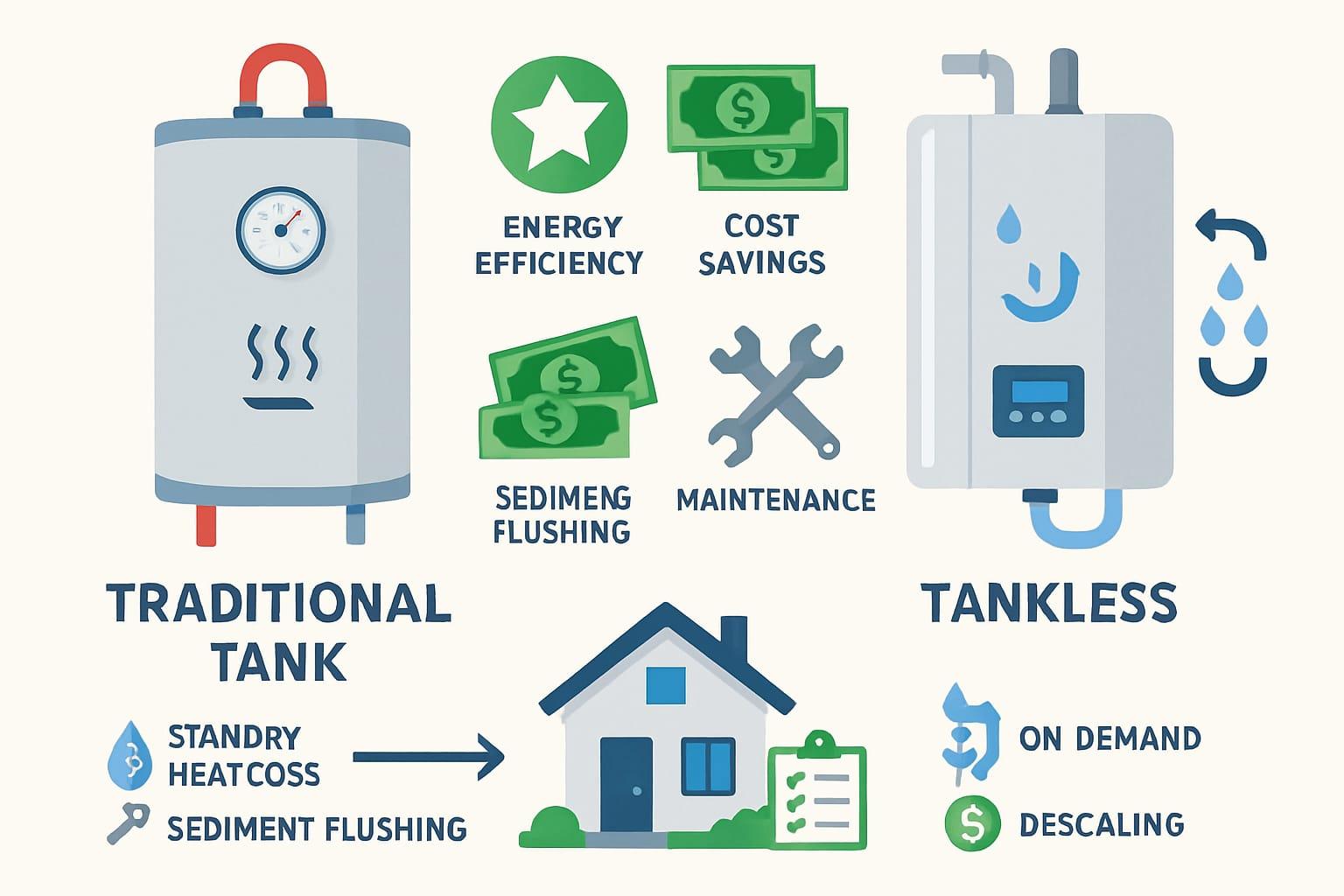
A tank water heater stores a set volume of water, typically somewhere between 30 and 80 gallons, and keeps it hot. Because that water slowly loses heat, the unit cycles on now and then even when nobody’s home. That’s called standby loss.
A tankless heater, also called on-demand, heats water only while it flows, so there’s no standby loss. It trades that for a higher upfront cost, and for a limit on how much hot water it can deliver at once.
Typical lifespans, as general ranges: tank heaters often last around 10 to 15 years, and tankless units commonly 20 or more with good upkeep. Your own results depend on your water and your maintenance. Tankless units cost more up front, which is why many people weigh the two types side by side.
How to Size a Water Heater for Your Home
Start with your household, then look at the ratings that matter for each type.
Start With Household Size and Peak Use
More people, more bathrooms and a big soaking tub all push the number up. What matters most is your peak hour: the morning rush, or the evening when the dishwasher, the washer and two showers all want hot water together. If the shower goes cold when someone else starts a load of laundry, that’s your peak hour telling you something.
For a Tank, Check the First-Hour Rating
Gallons of storage isn’t the whole story. The number to compare is the first-hour rating, printed on the yellow EnergyGuide label: roughly how much hot water the heater can deliver in one hour starting full. Pick a heater whose first-hour rating covers your busiest hour. A bigger tank usually means a better rating, but a smaller, more efficient model can sometimes match a larger one, which is why the label is worth reading.
For Tankless, Check the Flow Rate
A tankless heater is sized by flow rate, how many gallons per minute it can heat. Add up the fixtures you’d run at the same time. A shower uses a couple of gallons a minute, so a shower plus a dishwasher plus a running faucet adds up fast. Cold incoming water also lowers what a unit can deliver, which is why a model that keeps up in August may struggle during a hard freeze. Large households often need a bigger unit or more than one.
Which One Is Right for You
If your hot water use comes in short bursts, tankless can cut standby loss. If everybody wants hot water at once, a tank with a strong first-hour rating is hard to beat and costs less to install. The figures here are general guidance, not quotes. Every home and every heater is different.
How to Keep It Running and Lower Your Energy Bills
Whichever you choose, a little upkeep goes a long way, and it’s the same advice whether you’re in a new build or a house with a 20-year-old heater.
- Flush a tank heater about once a year. Sediment from our hard water settles at the bottom, makes the heater work harder and wears it down. Connect a hose to the drain valve and run water until it comes out clear, following the manufacturer’s steps.
- Descale a tankless unit every 6 to 12 months. Mineral buildup on the heat exchanger cuts efficiency. Descaling solution or white vinegar are the usual choices, again per the manual.
- Look for drips now and then. Check the tank, the connections and the valves for moisture. A small leak wastes water and energy long before you’d notice it on the bill.
- Insulate the hot water pipes and the heater to cut heat loss, and set the thermostat to 120°F. That’s plenty of hot water and it saves energy.
- If hard water keeps coming back, a water softener or whole-home filtration treats the cause across all your plumbing, not just the heater.
Where to stop: leave gas valves, gas controls and pilot lights to a licensed plumber. If you ever smell gas, get everyone outside, don’t touch any switches, and call the gas company’s emergency line or 911 from outside.
When Maintenance Isn’t Enough: Signs to Watch For
Most heaters give you notice. Here’s what we’d watch for, by what you see, hear and feel.
What You’ll See
Water around the base is the one to take seriously. If you find a puddle under the water heater, check whether it’s coming from a fitting or valve, or from the tank itself. A tank that has corroded through can’t be repaired. Rust-colored water from the hot side only is another sign the tank is wearing out from the inside. If you see brown hot water, it’s worth having someone look.
What You’ll Hear
A water heater sounds like popcorn when sediment has built up and water is trapped under it. A flush sometimes helps, but an older heater that keeps rumbling is telling you it’s tired.
What You’ll Feel
If your hot water ran out sooner than it used to, the heater may be too small for your household now, or it may be failing. A tank that was fine for two people can run short for five.
Who to Call: A Local Master Plumber for Your Water Heater
You can handle the maintenance above yourself, and we’d rather you did. Hopefully you never need us. But if the time comes, we’re right here: a local, licensed master plumber, and Dean Stewart holds the Texas master plumber license. People also call us when a simple fix didn’t hold, or for a second opinion on what another plumber told them. We’ll explain before we work, tell you honestly if a repair will do, and treat your home with respect.
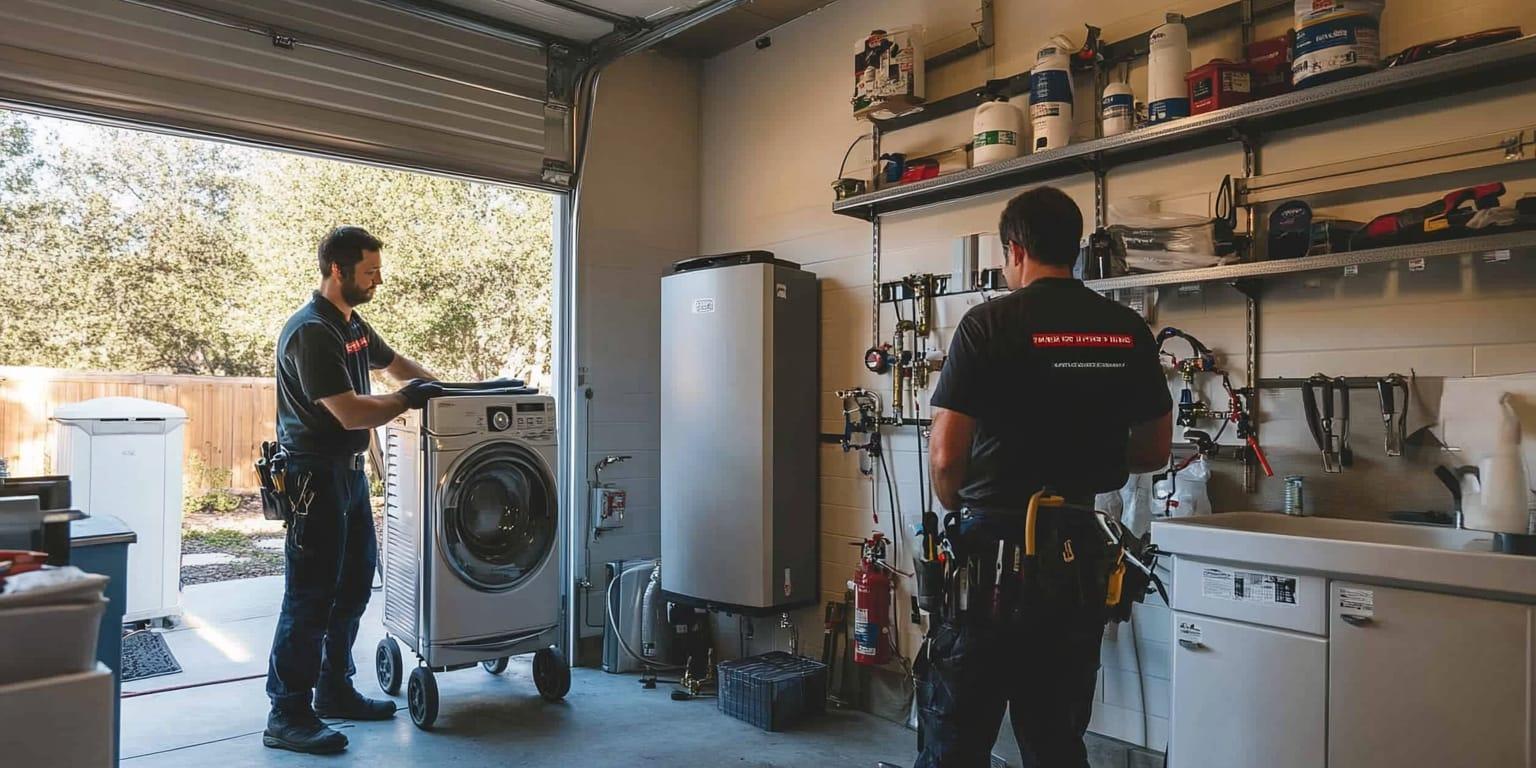
Here’s what a water heater replacement visit involves. We check whether the leak is the tank or just a fitting or valve that can be fixed instead. We look at the heater’s age, size and fuel type, and how many people it has to serve. We review the gas or electric connections, the venting, and the relief valve discharge line, and we check whether code now calls for something the old install didn’t have, such as an expansion tank. Then we explain what each option includes before you decide, including how the size and type fit your household.
Fill out the request form, pick an arrival window that works for you, and one of our plumbers comes out to you.
Help is on the way in Montgomery County.
Have a plumbing problem like this?
We're a Marine veteran-owned plumbing company in Conroe. Tell us what's going on and we'll take it from there.