
“Should I repair or replace my water heater?” is the question we hear most when a tank starts acting up, and the honest answer is that it depends on what’s wrong and how old the heater is. Here’s how to tell, how to help a good tank last longer, and where heat pump and hybrid units fit if you do end up shopping for water heater replacement in Conroe or anywhere in Montgomery County.
Why Your Water Heater’s Age and Upkeep Matter
A water heater works quietly until the day it doesn’t, and that day usually comes at the worst time: a full house, a cold morning, or a tank leaking onto a garage floor. Minerals in our hard water wear a tank down from the inside, so a little attention now keeps a small problem from becoming a wet floor later.
Knowing which kind of heater you have also helps you decide what comes next. Repairing an aging tank and replacing it are different bets, and you should be able to see both clearly before you spend anything.
What a Standard, Heat Pump, and Hybrid Water Heater Are
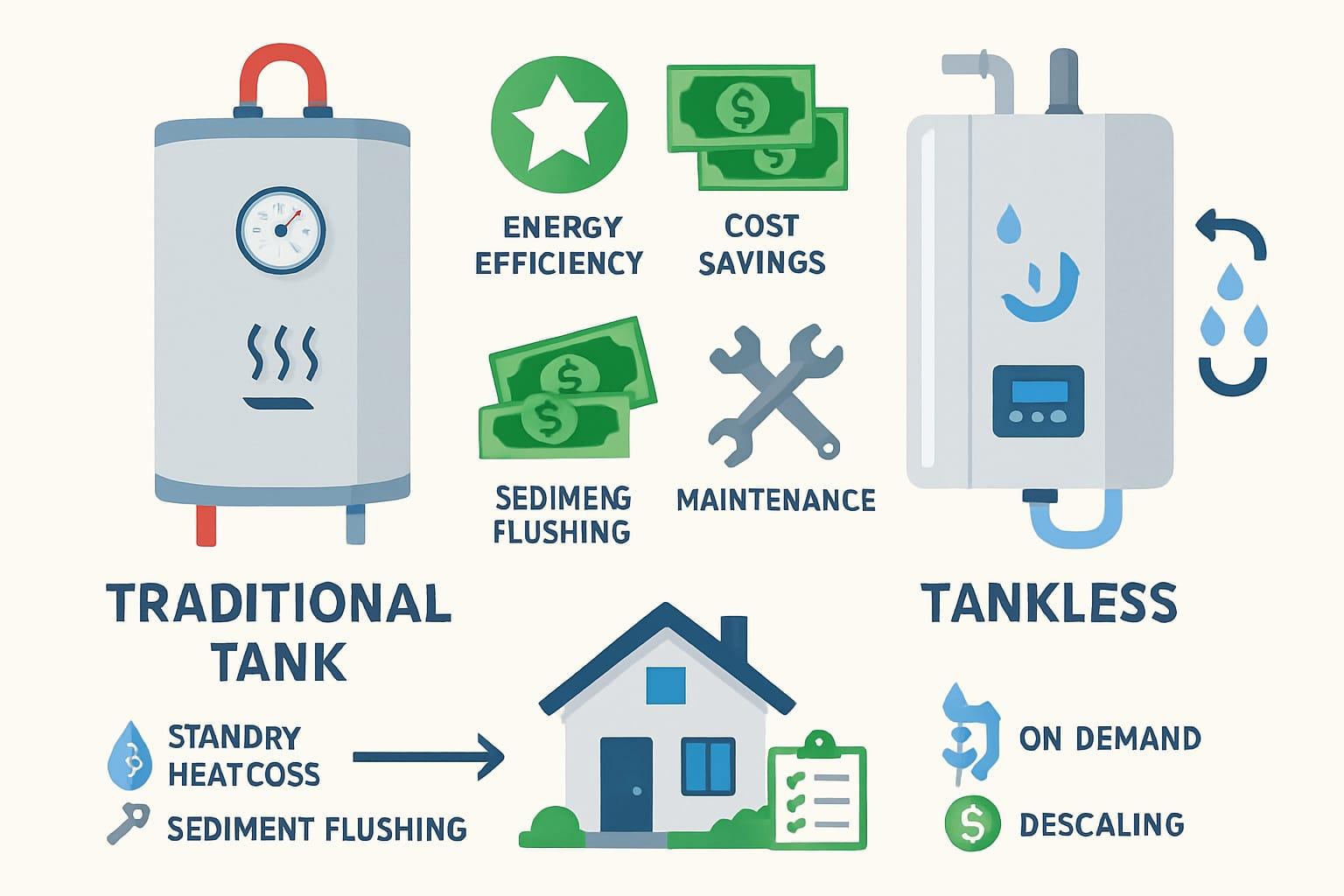
A standard electric or gas tank heater makes heat directly: an element or a burner warms the water in the tank.
A heat pump water heater works differently. Instead of making heat, it pulls warmth out of the surrounding air with a compressor and refrigerant, much like a refrigerator in reverse, and moves it into the water. Because it moves heat rather than creating it, it uses less electricity to do the same job. Texas summers help, since warm air around the unit gives it more heat to work with. It also cools and dehumidifies the space it sits in, which is a nice side effect in our humid months.
A hybrid water heater pairs a heat pump with a built-in electric resistance element in one unit. Heat pump mode handles most of the work, and the element steps in when hot water demand spikes, such as a full house in the morning, so you aren’t waiting on a slow recovery. Many hybrid and heat pump models also have Wi-Fi controls and built-in diagnostics.
A few things are worth knowing before you shop. These units are electric. They need room and airflow around them, a drain for the water they pull out of the air, and a suitable electrical circuit. They cost more up front than a standard tank, and rebates and tax credits change, so check what’s current before you count on one. For some homes a heat pump or hybrid is a great fit, and for others a standard tank is the simpler choice. Neither is better for everybody.
How to Make Your Water Heater Last
Most tanks wear out from the inside, so the routine that helps most is simple:
- Flush the tank about once a year to clear out sediment that settles on the bottom and makes the heater work harder.
- Look around the base and the pipes now and then for drips, damp spots, or rust.
- Keep the area around the heater clear so air can move and you can see what’s going on.
- On a heat pump or hybrid unit, keep the air filter clean and the condensate drain clear, as the maker describes.
- Leave anything gas-related to a licensed plumber, every time.
A tank that gets a flush each year and a quick look every month or two will often outlast one that’s ignored, but nothing makes it last forever.
When to Repair and When to Replace
Not every problem means a new heater. A drip from a fitting, the drain valve, or the relief valve line, or a heater that stopped heating on an otherwise healthy tank, can often be repaired. A leaking tank itself can’t be, because the steel has corroded through.
Here’s what to look for, in the order you’d notice it.
What You’ll See
Water pooling around the base is the one to take seriously. If water around the water heater is coming from the tank itself and not a fitting, replacement is usually the answer. Rust-colored water at the tap is another sign, so if my hot water looks rusty sounds familiar, the tank may be rusting from the inside.
What You’ll Hear
A tank that sounds like popcorn is usually boiling water trapped under a layer of sediment. A flush can help if it’s caught early. If the heater is old and the noise keeps coming back, that’s often a tank near the end of its life.
What You’ll Feel
Hot water that runs out sooner than it used to, or only lukewarm water from the shower, can be a failed part we can repair, or a tired tank that can’t keep up.
As a rule of thumb, an older tank with more than one of these signs is usually worth replacing, and a younger tank with one fixable problem is usually worth repairing. If you’re not sure which you have, that’s what a plumber’s look is for.
Who to Call When It’s Time for More Than Maintenance
You can handle the flushing and the looking around. When the heater needs more than that, we’re a local, licensed master plumber right here in Conroe, and Dean Stewart holds our Texas master plumber license. Hopefully you never need us, but if you do, we’ll take care of it. People also call us when a quick fix didn’t hold, or for a second opinion on what another plumber told them.
Here’s what we do. We look at whether the problem is the tank or a fitting or valve that can be repaired instead. We check the heater’s age, size, and fuel type and how many people it has to serve. Then we explain your options before any work starts. If replacement is the right call, we review capacity, connections, venting, and what code now calls for, and we’ll talk through whether a heat pump or hybrid unit is worth a look for your home. A straight swap is usually done in a single visit, and we clean up when we’re finished.
When you’re ready, fill out the request form, pick an arrival window that works for you, and one of our plumbers comes out to you. Help is on the way in Montgomery County.
Have a plumbing problem like this?
We're a Marine veteran-owned plumbing company in Conroe. Tell us what's going on and we'll take it from there.