
When it becomes urgent
If water is spreading, turn off the cold water valve at the top of the heater. If the water is near an outlet or the electrical panel, stay out of it.
What you can safely check first
You can stop the water and figure out where it's coming from yourself, and sometimes that's all it takes.
- Look up before you look down. An AC drain line, a water softener, or a washer hose nearby can drip onto the floor by the heater.
- Dry the floor and watch for a few minutes to see where new water shows up, like a pipe fitting, the drain valve, or the tank itself.
- If the drain valve near the bottom is dripping, make sure it's closed. Turn it by hand only, clockwise until it stops.
- If the leak is from the heater, close the cold water valve on the pipe at the top of the heater. On an electric heater, also switch off its breaker.
What might be behind it
More than one thing can cause this, which is why the plumber finds the cause first.
A leaking fitting or valve. A drip from a pipe connection, the drain valve near the bottom, or the relief valve line. These can often be fixed without replacing the tank.
The tank itself is leaking. Water coming from the tank body means it has corroded through from the inside. A leaking tank can't be repaired.
A heavy leak that won't stop. A tank that's pouring water, or a valve that won't close, needs a plumber now to stop the damage.
How we fix it
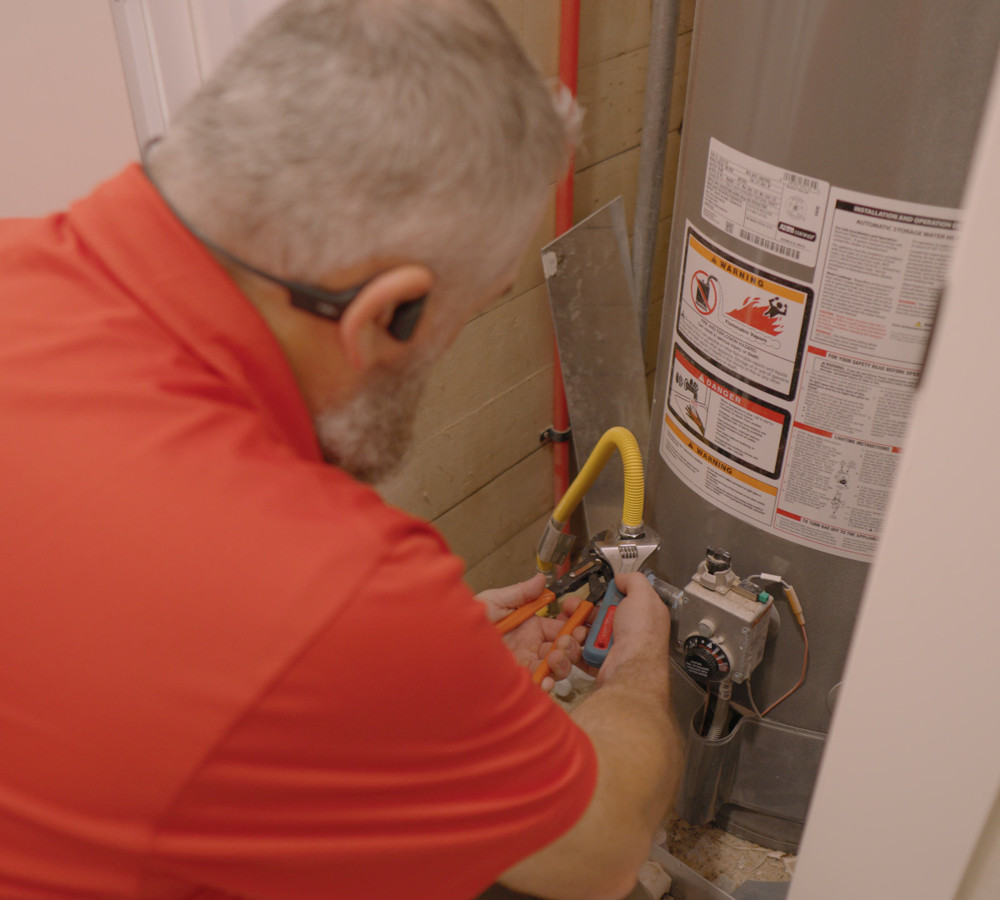
We locate where water is escaping before recommending a repair. A connection or valve leak may be repairable; a tank that has corroded through generally needs replacement. We explain the source, heater condition and proposed scope.
Depending on the cause, the relevant services are water heater repair or water heater replacement.
Where we fix it
Our plumbing shop is at 910 Cable St in Conroe. We also serve the surrounding towns. Check our plumbing service area and ZIP codesbefore requesting a visit.