Winter water heater maintenance in Conroe comes down to one habit: take care of the heater before the first hard freeze, not after the first cold shower. Here’s what we’d do, and what we’d leave to a plumber, for both tank and tankless units.
Why Water Heater Maintenance Before Winter Matters
Cold weather makes your water heater work harder. Incoming water is colder, the demand for hot showers goes up, and in Southeast Texas the occasional hard freeze can catch a garage or an exterior wall off guard. A heater that’s been ignored all year is the one that gives out on the coldest morning.
Hard water here makes it worse. Minerals settle in the bottom of the tank every day, and that sediment makes the unit work harder and wears it out sooner. A little attention now saves you a cold morning and a bigger bill later.
How a Water Heater Works
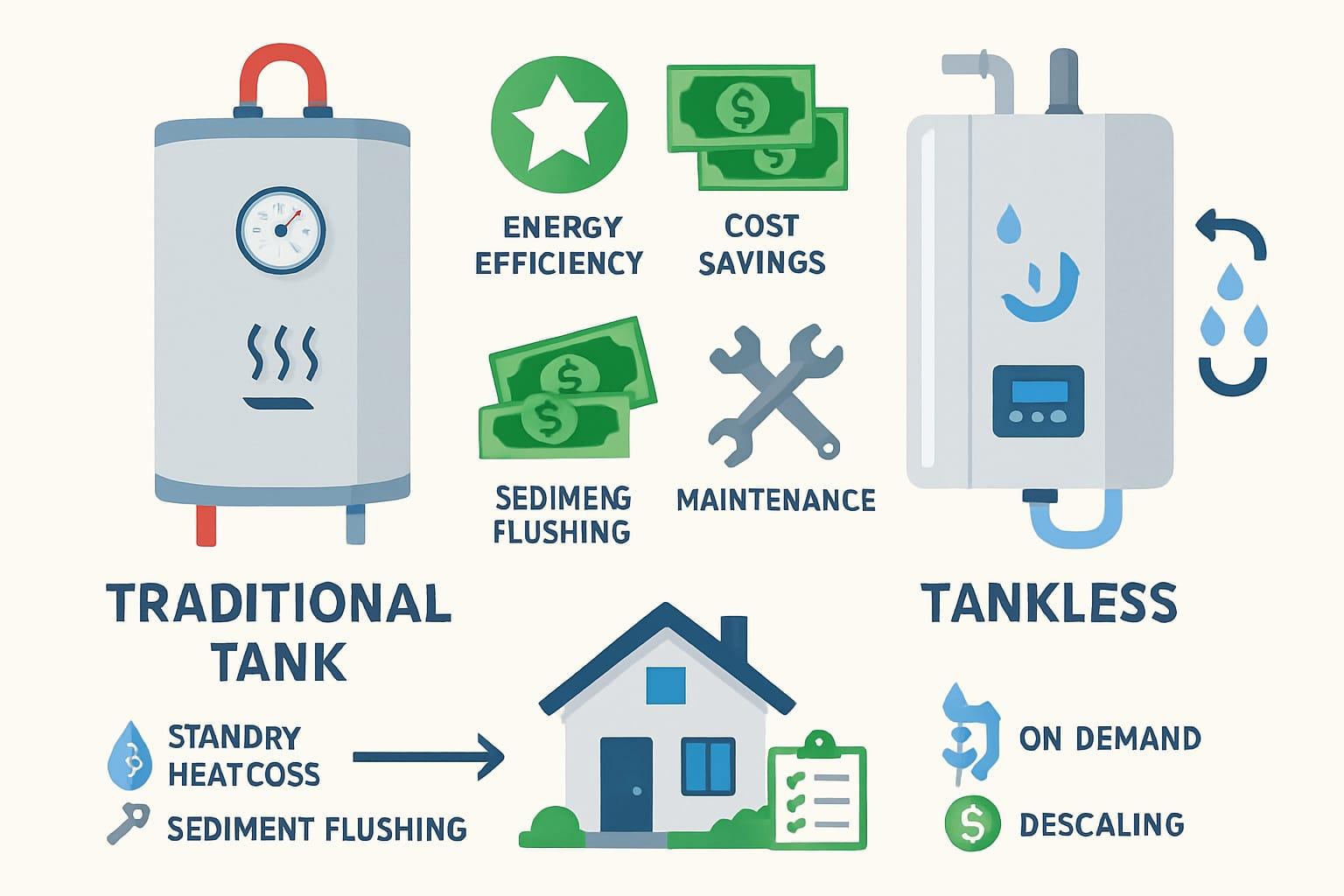
A tank heater keeps a few dozen gallons hot all the time. A burner (gas) or heating elements (electric) warm the water, a thermostat holds the temperature, and an anode rod inside the tank sacrifices itself to rust so the tank doesn’t. A temperature and pressure relief valve (the T&P valve) is the safety that lets go if pressure or heat climbs too high.
A tankless unit heats water only when you call for it, so there’s no tank to rust. The tradeoff is that it hangs on a wall, often in a garage or outside, where it and its pipes are more exposed to a freeze.
How to Maintain Your Water Heater Before a Freeze
Most of this is simple, and you can do much of it yourself.
Flush the Tank About Once a Year
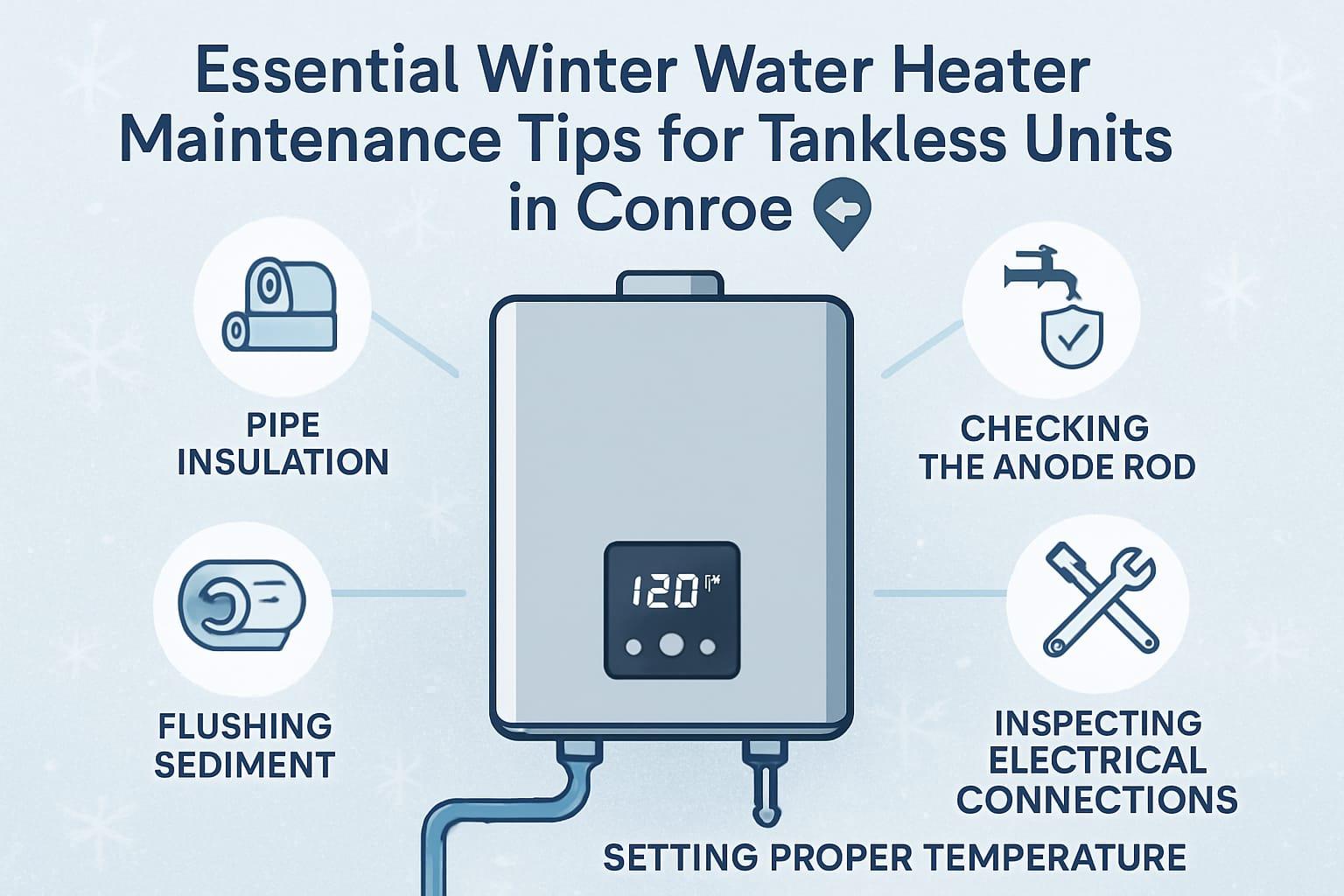
Draining a few gallons to clear out sediment, ideally before winter, restores efficiency and takes strain off the unit. If you’re not sure how, our water heater flushing guide walks through it, and we’re glad to do it for you.
Check the Anode Rod
The anode rod protects the tank from rust, and replacing it on schedule can add years to the heater’s life. It’s a job that’s hard to do safely on your own, so ask a plumber to look at it during a flush.
Heating Elements Are for Electric Tanks Only
If you have an electric tank, the heating elements take the heaviest load in cold months, and worn ones give you uneven water temperature and higher energy bills. Have a plumber test them. If your heater is gas, there are no elements to worry about, and the gas controls stay off limits for everyone but a licensed plumber: no valves, no pilot. That goes for tankless units too.
Look the Unit Over
Check the base and connections for rust, moisture or scorch marks, and leave electrical work to a professional. If the heater is near the end of its expected life, replacement may make more sense than repeated repairs.
Set the Thermostat and Test the Relief Valve
About 120°F is a good balance between comfort and energy savings. Too high wastes energy, and too low can leave you short on the coldest mornings. If your heater has a T&P valve, have it tested before winter, because a stuck valve is a safety hazard.
Insulate Exposed Pipes
Wrapping exposed hot and cold lines in garages, crawl spaces and exterior walls cuts heat loss and helps prevent frozen pipes. It’s easy to do, and it makes a noticeable difference.
Winter Care for Tankless Water Heaters
Tankless units need their own precautions. Their compact, wall-mounted design makes them more vulnerable to freezing. If you’ll be away in winter, even for a long weekend, have a plumber show you how to drain the unit so standing water can’t freeze inside and cause damage.
Insulate all the exposed pipes connected to it, hot and cold. Even in our mild climate, a sudden hard freeze can burst unprotected pipes overnight.
Leave the power and gas supply as they are when you’re home. Most tankless models have built-in freeze protection that turns on automatically as temperatures drop. On an exceptionally cold night, a slow trickle of water keeps things moving. For a long trip, ask a plumber to drain the system rather than relying on freeze protection alone, and follow the manufacturer’s maintenance guidelines.
Signs Your Water Heater Needs More Than Maintenance
Your heater will usually tell you before it quits. Here’s what to watch for, in the order you’re likely to notice it.
What You’ll See
Water around the water heater, a puddle on the garage floor, or rust at the base means the tank may be failing, and a flush won’t fix that. If the water coming out of your taps is brown or rust colored, that’s worth a look too.
What You’ll Hear
A heater that sounds like popcorn is popping or rumbling. That’s usually sediment, and it’s the classic sign it’s due for a flush.
What You’ll Feel
If the hot water runs out fast, stays lukewarm or never gets hot, something has changed inside the heater or at its controls.
If you smell gas near the heater, don’t touch switches or valves. Get everyone outside, call the gas company’s emergency line or 911 from outside, and then call a licensed plumber.
When to Call a Plumber for Water Heater Maintenance
You can handle a good share of this yourself. When it needs a pro, we’re a local, licensed master plumber here in Conroe, and we’d rather see you before the freeze than after. Hopefully you never need us, but if you do, we’re right here and we’ll take care of it. Some folks call us when a simple fix didn’t hold, or for a second opinion on what another plumber told them. We don’t judge what we find, and we’ll tell you if the heater is past the point where maintenance helps.
Here’s what our plumber does on a water heater flush and tune-up. We look at the heater’s age and type, then drain and flush the tank and see how much sediment comes out. We check the relief valve, the drain valve and the connections for leaks or wear, and look for rust or a leak that a flush won’t fix. If we find a worn part or a failing tank, that’s a separate repair or replacement, and we explain it before anything else is done.
Getting started is easy: fill out the request form, pick an arrival window that works for you, and one of our plumbers comes out to you. Help is on the way in Montgomery County.
Have a plumbing problem like this?
We're a Marine veteran-owned plumbing company in Conroe. Tell us what's going on and we'll take it from there.