Winter is easy on a water softener in Conroe, right up until the night it isn’t. Most of the season it just needs salt and a quick look. A hard freeze is the exception, and a softener in the garage or outside is the part of your plumbing that gets caught by it. Here’s how to keep yours working all winter, and what to do before the cold shows up.
Why Winter Softener Care Matters
We don’t get hard freezes every year, and that’s exactly why they catch people off guard. The softener has been sitting quietly in the garage since last winter, and nobody thought about it. The plastic valve head, the tank and the small lines that connect them can crack when the water inside freezes, and you may not find out until the thaw.
The other cost is quieter. If the softener runs out of salt or stops regenerating, the hard water comes right back. That means scale in your water heater, spots on your dishes and crust on your faucets, all while the unit looks like it’s working fine. A few minutes now saves you a mess and a lot of time later.
What a Water Softener Does
Conroe water is hard, meaning it carries minerals that leave scale behind. A softener sits where water enters the house and swaps those minerals out of the water as it passes through a tank of resin beads. Every so often it regenerates: it flushes the beads with salty brine from the second tank, the one you fill with salt, and sends the minerals down the drain.
So two things have to keep working: there has to be salt in the brine tank, and the unit has to be able to run its cycle. Everything below comes back to those two.
How to Keep Your Softener Running in Winter
These are all safe for a homeowner, and none of them need a tool beyond your hands.
Check the Salt
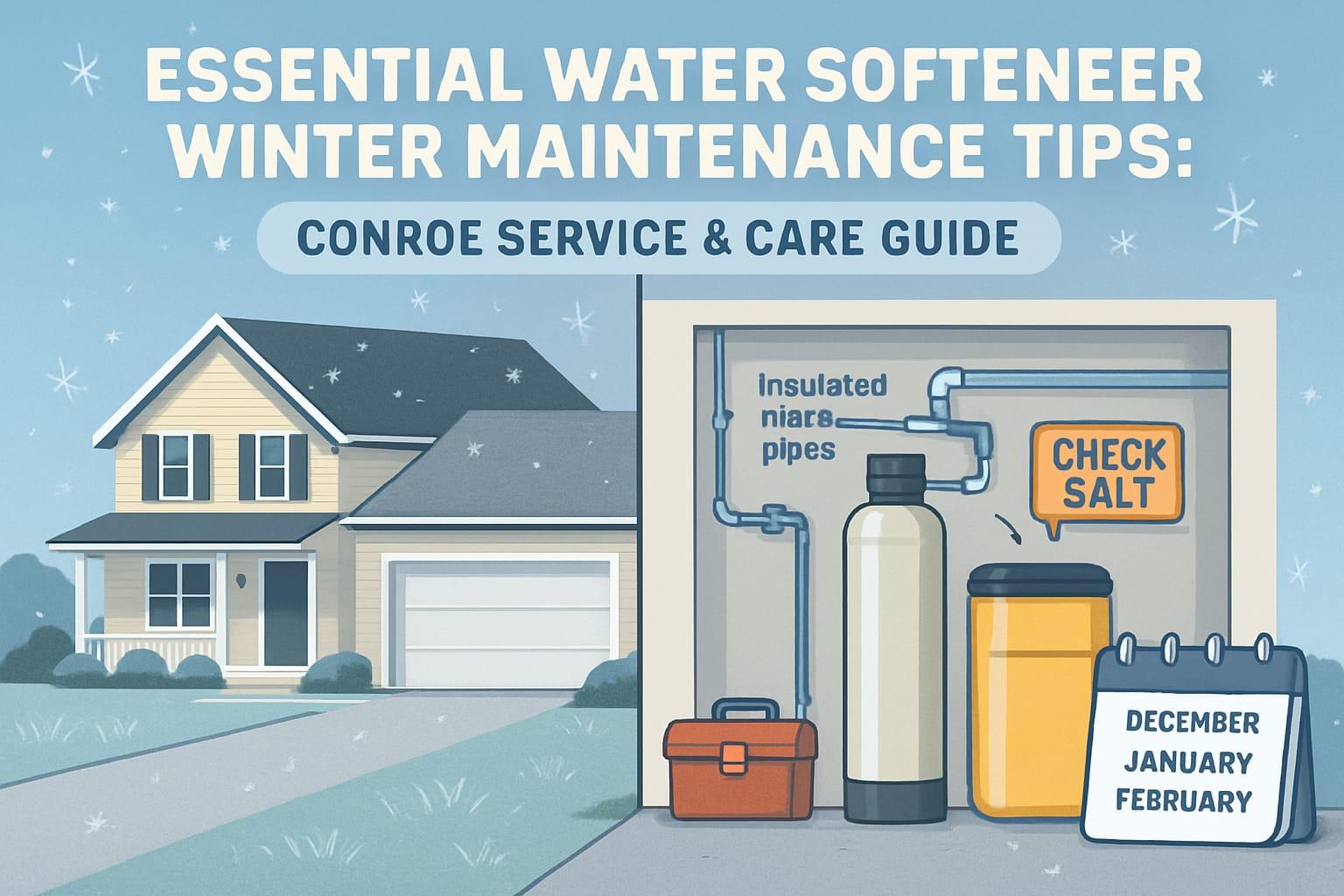
Look in the brine tank about once a month, and keep it at least half full. Cold weather doesn’t change how much salt you use, but it’s easy to forget when you’re not out in the garage much.
Break Up Salt Bridges
Sometimes the salt forms a hard crust with an empty gap underneath, so it looks full but nothing is dissolving. Press the top with a broom handle. If it’s solid like a crust, break it up gently. If the salt keeps bridging, a plumber can look at the unit.
Protect It From a Freeze
If your softener sits in a garage, a shed or outdoors, this is the part that matters most. When a hard freeze is in the forecast:
- Insulate the pipes and the connections going into and out of the softener with foam pipe insulation from any local hardware store.
- Close the garage door and cover any vents or gaps that let cold air blow across the unit.
- Run a faucet inside at a slow drip during the coldest hours so water keeps moving through the line.
- Know where your main water shutoff is, in case something does split.
Don’t try to drain or take apart the softener yourself unless the manufacturer’s manual walks you through it.
Watch Your Water
You’ll know the softener is doing its job when soap lathers and the faucets stay clean. If you suspect it stopped, check the salt first, then look at the signs below.
When It’s More Than Maintenance
Some signs mean the salt isn’t the problem. Here’s what to look for, in the order you’ll probably notice them.
What You’ll See
Hard water is the easiest to spot. If your faucets and shower head get white crust and spots again after months of clean fixtures, or your dishes come out spotted, hardness is getting through. A puddle near the softener or a cracked housing after a freeze means the unit needs a plumber right now, and the water to it should be shut off.
What You’ll Hear
A water heater that starts popping or rumbling can mean scale is building up on the bottom of the tank, which is what a failing softener lets happen over time. A softener that runs constantly, or never seems to run, is also worth a call.
What You’ll Feel
Soft water feels a little slick and lathers easily. If your soap suddenly won’t lather, or your skin feels dry and tight after a shower again, the softener probably isn’t keeping up.
Who to Call
You can handle the salt, the pipe insulation and the freeze prep yourself. Hopefully that’s all you ever need. If the softener stopped working, froze, or you want a second opinion on what another plumber told you, we’re right here. We’re a local, licensed plumbing company, and Dean Stewart holds the Texas master plumber license.
When you call us about a softener, we start with a water test to confirm how hard your water is and what size softener fits your household, and we explain the options before we touch anything. If it’s time for a new unit, that’s our water softener installation: we set the softener where the water enters your house so every tap gets softened water. We’ll also tell you straight if the unit you’ve got just needs salt or a simple fix.
The next step is easy. Fill out the request form, pick an arrival window that works for you, and one of our plumbers comes out to you. We’ll take care of it.
Help is on the way in Montgomery County.
Have a plumbing problem like this?
We're a Marine veteran-owned plumbing company in Conroe. Tell us what's going on and we'll take it from there.