Do you need a seasonal plumbing inspection? For most Conroe homes, a quick look around the house at the start of each season does the job, and you can do it yourself in about half an hour. We’re a plumbing company, and we’ll tell you straight: most of this you don’t need us for. Here’s what to look at, and when it’s worth calling a plumber.
Why a Seasonal Plumbing Check Matters in Conroe
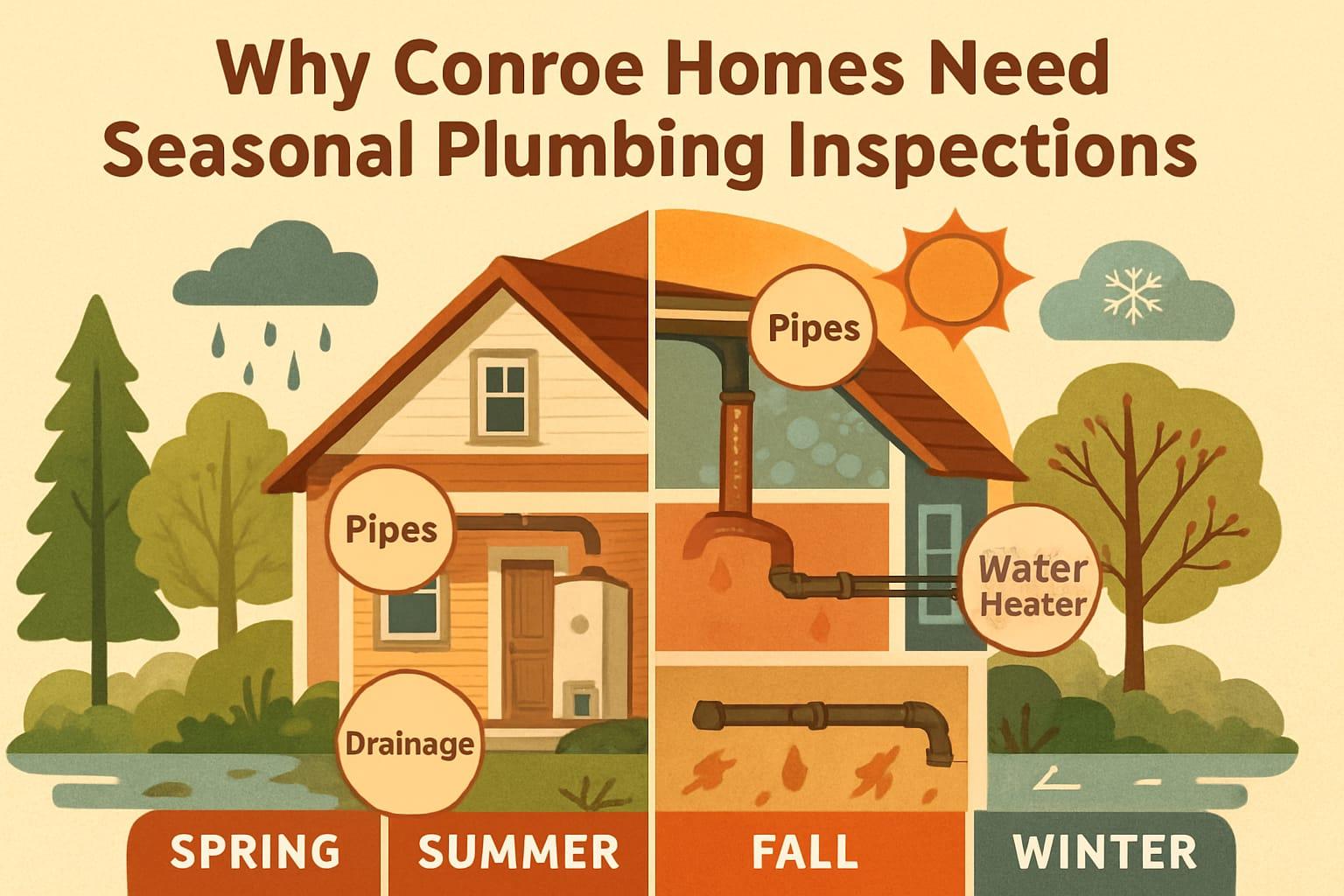
Plumbing here works under real stress. We get the occasional hard freeze, heavy Gulf rains, and long, humid summers, and a house on a slab has most of its pipes where you can’t see them.
A short freeze can make the water inside a pipe expand, and the crack may not show until it warms up again. Humidity speeds up corrosion on exposed pipes, fittings and valves, and condensation can wear on joints until a slow leak starts. Heavy rain can overwhelm drainage and leave standing water near the house.
None of that is dramatic on day one. A small leak that goes unnoticed costs you water damage, mold and a bigger repair later. Ten minutes now costs a lot less than a wet wall in August.
What You’re Actually Checking
Your plumbing is a few simple systems, and each one gives you clues.
- Supply lines and valves bring water in. They’re the pipes, shut-off valves and hose connections under sinks, at toilets and outside.
- Drains carry water out and away from the house.
- Your water heater holds and heats the water, and sediment and temperature swings wear on it.
- Water pressure is what pushes it all through. Pressure that swings up and down often points to a developing problem.
How to Check Your Plumbing Each Season
Put this on the calendar when the seasons change. It’s all safe for a homeowner, with no tools beyond a flashlight.
Pipes, Valves and Hose Connections
Look under every sink and behind each toilet for drips, stains or a damp cabinet floor. Check the shut-off valves and supply lines for crusty buildup or corrosion. Pay extra attention to garages, crawl spaces and exterior walls, where pipes feel temperature swings most. Before a freeze, disconnect hoses from outdoor faucets.
Water Pressure and Your Meter
If you have a pressure gauge on a hose bib, check it now and then. Pressure that jumps around is worth noting. To check for a hidden leak, turn off every faucet and appliance and look at the water meter. If the leak indicator is still moving, water is going somewhere.
Water Heater
Look around the base for moisture or rust. A tank water heater is flushed about once a year to clear sediment, and sediment is what shortens its life. If yours is showing early signs of failure, it helps to know your water heater replacement options before it quits on a cold morning.
Drains and Drainage
Run each sink, tub and shower and watch how it drains. Walk the outside of the house after a hard rain and make sure water flows away from the foundation instead of pooling against it. A slow drain handled early is a lot easier than a backup during a storm. Skip the chemical drain cleaners on older pipes; they’re hard on them.
When It’s More Than a Seasonal Check
Here’s how it tends to show up, by what you see, hear, smell and feel.
What You’ll See
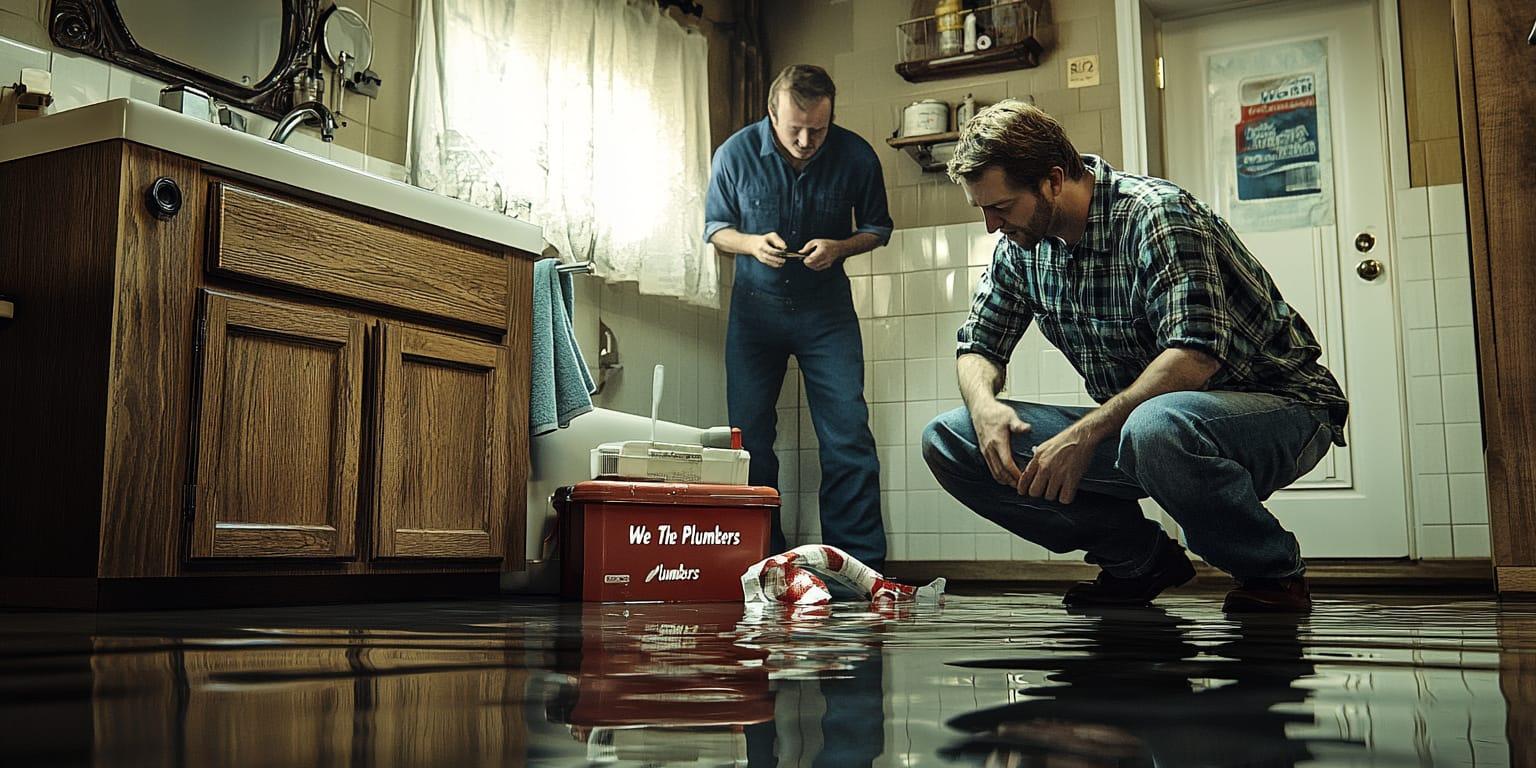
A stain, a soft spot or a wet cabinet floor usually means water under the sink, and it often starts as a slow drip nobody noticed. The other big tell is on paper: a high water bill, especially if the meter keeps moving with everything off, is often a leak you can’t see.
What You’ll Hear
Water running or hissing in a quiet house when nothing is on is not normal. Stand still for a minute and listen.
What You’ll Smell
A musty smell near a wall or cabinet can mean moisture has been sitting there a while.
What You’ll Feel
A floor that’s warmer than the rest, like a warm spot on the floor, can mean a leak in a line under the slab. And when the shower or faucets feel weak, low water pressure can come from a pressure problem, a hidden leak or a failing fixture.
Who to Call When It’s Leaking
You can handle the seasonal check, and hopefully you never need us. But if you’ve found a leak, or the meter says one is there and you can’t find it, we’re right here. We’re a local, licensed master plumber, and Dean Stewart holds the Texas master plumber license. People also call us when a simple fix didn’t hold, or for a second opinion on what another plumber told them. We don’t judge what we find, and we’ll explain it before we do any work.
Our plumber starts with leak detection. We check the water meter with everything off, then toilets, fixtures and supply lines, then walls, ceilings and floors for moisture and warm spots, to find out whether the leak is inside the house, under the slab, or between the house and the meter. Finding it first means less damage and less repair afterward. Repairing the leak is a separate step based on what we find, and we explain the location, access and repair options before opening a wall or floor.
Fill out the request form, pick an arrival window that works for you, and one of our plumbers comes out to you.
Help is on the way in Montgomery County.
Have a plumbing problem like this?
We're a Marine veteran-owned plumbing company in Conroe. Tell us what's going on and we'll take it from there.