What is in Conroe tap water? Treated, tested water that meets state and federal standards, and still carries minerals and disinfectants that wear on your pipes, fixtures and water heater over the years. We can’t tell you the exact numbers for your address, and we won’t guess. Your utility publishes a yearly water quality report that lists what it finds, and that’s the place to check. What we can tell you is what that water does to a plumbing system, and what to do about it.
Why Your Water Matters to Your Plumbing
Safe to drink and easy on plumbing are two different things. Water can pass every test and still leave scale in a water heater, dry out rubber gaskets, or make the shower taste like a swimming pool. Slow wear is the expensive kind, because nobody notices it until a fixture fails or the water heater quits early. A little attention now saves you the time and the surprise later.
What’s in Conroe’s Water
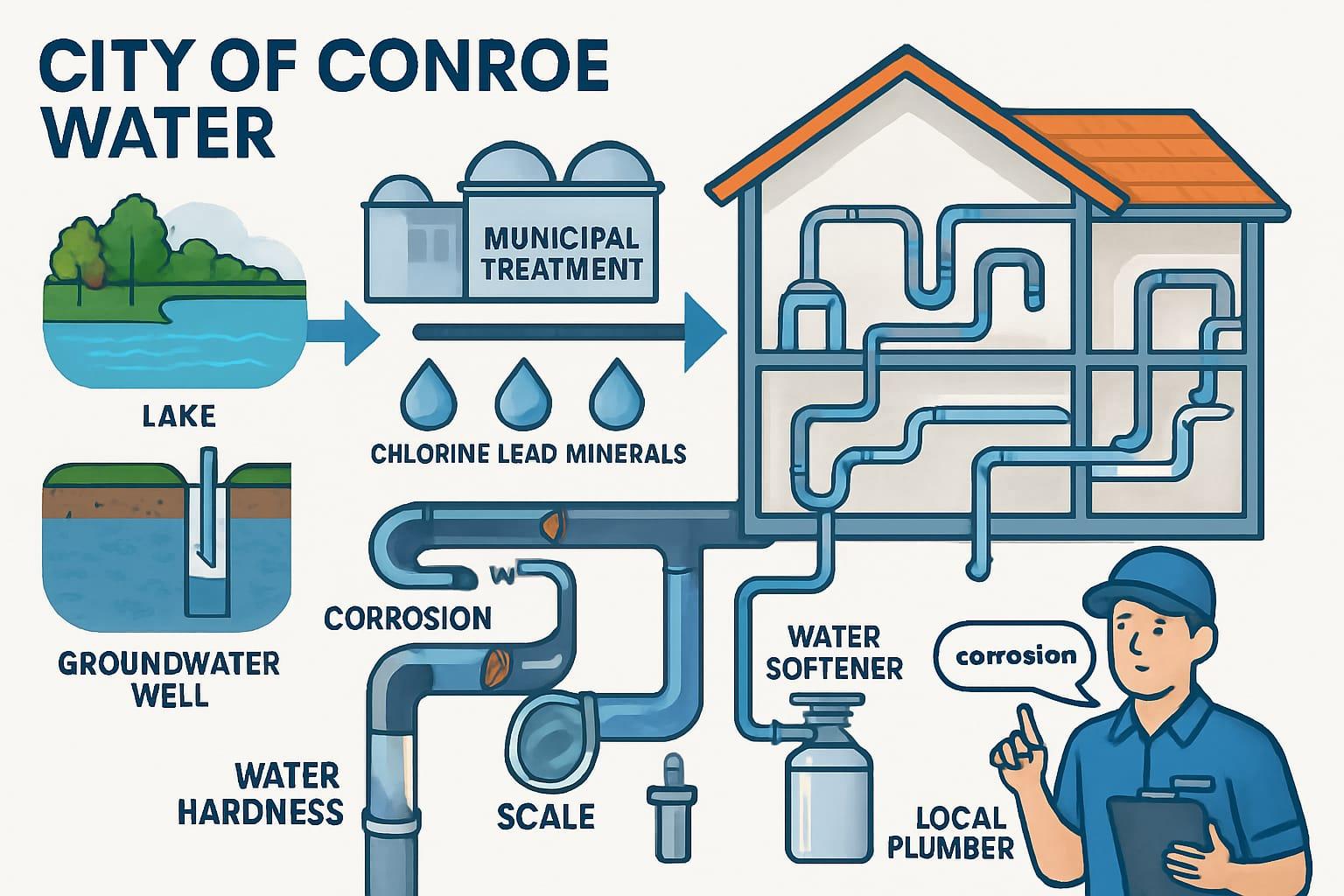
Water systems in this part of Southeast Texas can draw from surface water, groundwater wells or a mix of both, so the mineral content and chemistry can shift through the year. A few things come up again and again in municipal tap water:
- Chlorine, used for disinfection, which can dry out rubber gaskets and affect taste.
- Lead, which can leach into water from older galvanized or soldered plumbing. It comes from the pipes in some homes, not from the treatment plant.
- Calcium and magnesium, the minerals that make up hard water.
Hard water is one of the most common plumbing challenges in this area. Those minerals form scale, a white, chalky buildup, inside pipes, faucets and appliances. Over time, scale restricts flow, lowers water pressure, and forces a water heater to work harder, which shows up on your energy bill. It can also shorten the life of fixtures, washing machines and dishwashers.
How to Protect Your Plumbing From Hard Water
Most of this is simple habits, and none of it needs a tool belt.
- Read your utility’s yearly water quality report. It’s the real answer to what’s in your water.
- Wipe down faucets and showerheads, and soak a scaled aerator in vinegar now and then.
- Flush your water heater about once a year to clear the sediment that settles in the tank. If you’re not sure how, ask us; we’d rather show you than have you guess.
- Watch your pressure and your fixtures. Changes tell you something before a failure does.
- Don’t use chemical drain cleaners on old pipes. They’re hard on them, and they don’t fix a water problem.
Treatment is the next step when maintenance isn’t keeping up. A water softener takes on the hardness minerals that cause scale. A filter takes on chlorine and sediment. A water test comes first, so you buy what your water actually needs and nothing extra.
Signs It’s Time for More Than Maintenance
Water problems show up on your senses before they show up on a repair bill.
What you’ll see. White spots on dishes, crusty buildup on faucets and a showerhead, or water that leaves white spots and crusty buildup, are the classic signs of hard water. Cloudy water or specks of sediment are worth a closer look too.
What you’ll taste and smell. If your tap water smells or tastes off, like chlorine or something funny, that’s what a filter is for. A water test tells you which one fits.
What you’ll feel. Scale narrows pipes, and low water pressure at a faucet or across the whole house can be one of the results. Appliances that wear out too soon are another.
Rust-colored water or pinhole leaks can mean corrosion in older copper or galvanized lines. That’s a plumbing problem rather than a filter problem, and it’s worth having looked at.
When to Call a Plumber About Your Water
Most of this you can handle yourself, and we hope you never need us. When water problems stick around, we’re a local, licensed master plumber, and we’re right here. Dean Stewart holds our Texas master plumber license. People also call us when a simple fix didn’t hold, or for a second opinion on what someone else told them about their water.
When you want a whole-house answer, our plumber starts by reviewing your water-test results and what you want out of your water, then explains the options before any work starts. Whole-home water filtration treats water where it enters the house, reducing chlorine, sediment and other common contaminants at every faucet and shower. Which system fits depends on your water, and we’ll tell you if you don’t need one.
Fill out the request form, pick an arrival window that works for you, and one of our plumbers comes out to you. Help is on the way in Montgomery County.
Have a plumbing problem like this?
We're a Marine veteran-owned plumbing company in Conroe. Tell us what's going on and we'll take it from there.