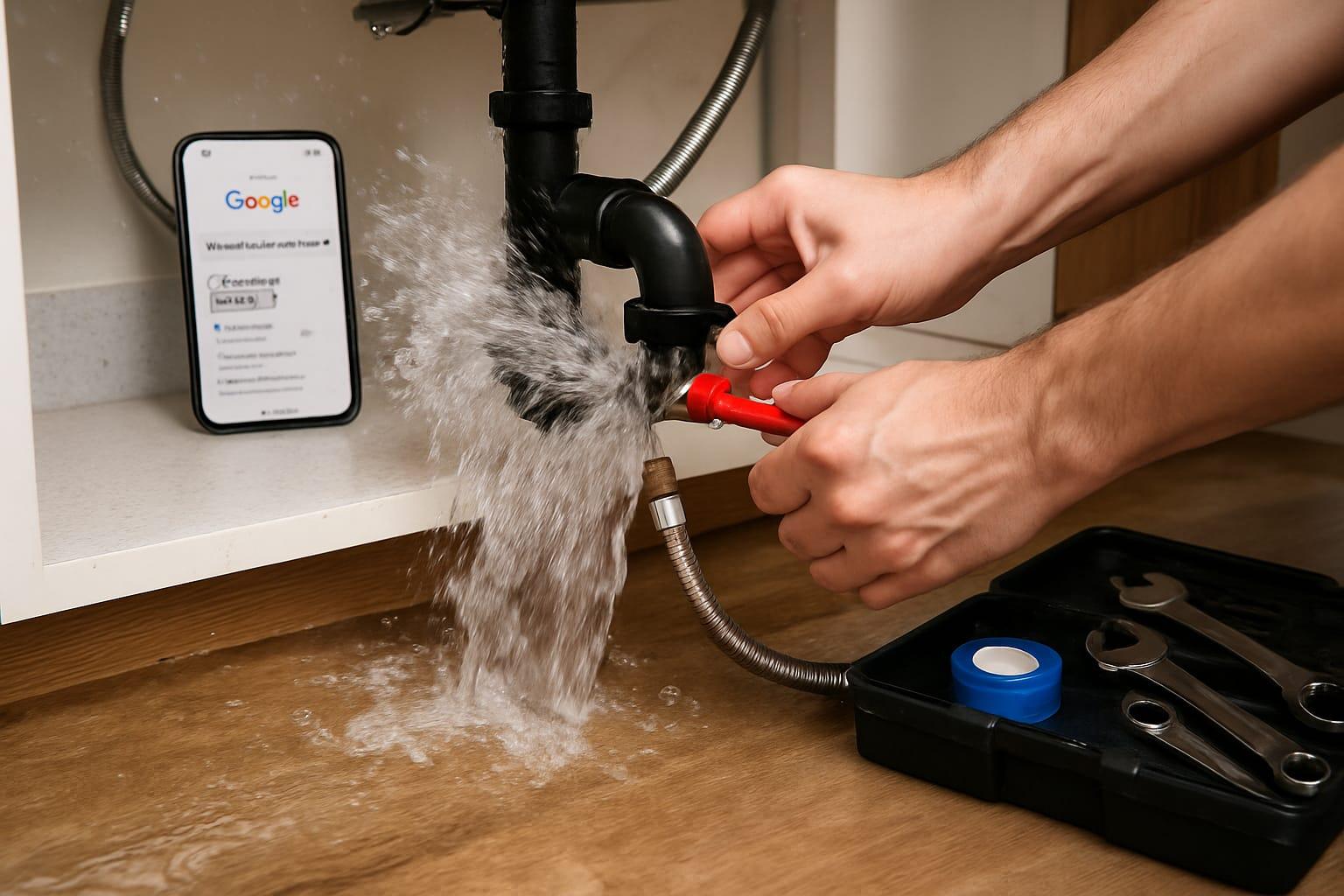

A leak you can’t see is the expensive kind. It runs behind a wall or under a sink for weeks, and the first sign is a soft spot in the floor or a water bill that doesn’t make sense. The way to catch a hidden water leak early is to find out the day it starts, and smart shutoff valves and leak sensors are one way Conroe and Montgomery County homeowners do that. Here’s what they do, where they help, where they stop, and how we’d pick up from there.
Why Catching a Leak Early Matters
Time is what a leak costs you. Our humidity doesn’t help: a small leak left alone turns into mold and rotted framing faster than most people expect, and rebuilding walls and floors costs far more than the leak itself ever would. Every hour a leak runs makes the repair bigger, and it takes your time too, with the drywall, the flooring and the phone calls that follow.
Catching leaks quickly also saves water, which counts in a part of Texas that sees drought restrictions.
What Smart Shutoff Valves and Leak Sensors Are
A smart shutoff valve sits on your main water line and lets you close the water supply from your phone. Pair it with leak sensors and you get a system that can notice trouble and act on it.
The sensors sit where leaks like to start: under sinks, behind toilets, beside the water heater and near the washing machine. They pick up moisture, or changes in water pressure and flow, and send an alert to your phone. Some are wired and some are wireless, and the wireless ones are easier to place in an older house. Better models learn your household’s usual water use, which cuts down on false alarms.
Many systems can also close the valve on their own when they confirm a leak, even if nobody’s home. That stops the water until someone can find the cause.
Two honest limits. These systems take an investment and some setup, and they don’t always go in cleanly on older homes with worn-out plumbing. And a sensor only alerts you. It doesn’t find the break or fix the pipe.
How to Catch a Leak Before It Does Damage
Sensors are a good start, but a few habits catch what they miss.
- Put sensors where water shows up first: under the kitchen and bathroom sinks, behind toilets, by the water heater and by the washer.
- Check your water meter now and then. Turn off every faucet and appliance, then look at the leak indicator. If it’s still moving, water is going somewhere.
- Test the toilets. Put a few drops of food coloring in the tank and wait 15 minutes without flushing. If the color shows up in the bowl, the flapper is leaking. It’s silent, it never reaches a sensor, and it’s the most common hidden leak.
- Look under sinks and behind toilets once in a while for drips, stains or a damp cabinet floor.
- Know where your main water shutoff is, so anyone in the house can close it in a hurry.
When It’s More Than Maintenance: Signs of a Hidden Leak
Leaks announce themselves to the senses before a sensor does, if you know what to watch for.
What You’ll See
A stain on a ceiling or wall, a damp or soft spot, peeling paint, or water under the sink when you open the cabinet. A meter that keeps moving with everything off is a sign too.
What You’ll Hear
Water running when nothing is on, or a toilet that keeps running on its own. A hissing or trickling sound in a wall at night, when the house is quiet, is worth taking seriously.
What You’ll Smell
A musty, damp smell in a closet, a cabinet or a corner of a room, even when you can’t see any water.
What You’ll Feel
A warm spot on the floor, a floor that feels soft, or a water bill that is suddenly high when your habits haven’t changed.
A sensor that keeps alerting belongs on this list too. If water is actively escaping, close the main water shutoff first. That’s always the right first move.
Who to Call for a Hidden Leak
You can handle the sensors, the meter check and the toilet test yourself, and we hope that’s all you ever need. When it isn’t, we’re a local, licensed master plumber, Dean Stewart holds the Texas master plumber license, and we’re right here in Conroe. People also call us when a simple fix didn’t hold, or for a second opinion on what another plumber told them. We explain before we work, we respect your home, and we don’t judge what we find.
Here’s what our leak detection work looks like. A sensor tells you water showed up. We find where it’s coming from before anyone opens a wall or floor. We check the water meter with everything off to confirm the leak, look at toilets, fixtures and supply lines first since they’re the simplest places, then check walls, ceilings and floors for moisture and warm spots. We tell you whether the leak is inside the house, under the slab or on the line to the meter.
Finding the leak is one job, and repairing it is a separate one. We explain the location, the access and your repair options before any work begins, because pinpointing first means less damage and less repair afterward.
Fill out the request form, pick an arrival window that works for you, and one of our plumbers comes out to you. Help is on the way in Montgomery County.
Have a plumbing problem like this?
We're a Marine veteran-owned plumbing company in Conroe. Tell us what's going on and we'll take it from there.