How does a vacuum breaker work? It lets air into a pipe the moment water pressure drops, so dirty water can’t be pulled backward into the water you drink. It’s a small part with a big job, and most Conroe and Montgomery County homes have a few without the owner ever noticing. Here’s how they work, how to keep them working, and when it’s time to hand one to a plumber.
Why Backflow Protection Matters at Your House
Your water is supposed to move one way, from the supply to your tap. When pressure in the line drops (a main break down the street, a hydrant opened, heavy demand somewhere), the flow can try to reverse. That’s called back-siphonage, and without protection it can pull whatever is sitting at the other end of a hose or pipe back into your clean supply.
Picture the hose left in a bucket, a kiddie pool or a flower bed, or a sprinkler head sitting in standing water after one of our heavy Gulf rains. A vacuum breaker keeps that water on the outside where it belongs. You’ll never think about it until it fails, which is why a few minutes of attention a season is worth it.
How Does a Vacuum Breaker Work
A vacuum breaker is a mechanical device that lets air into the plumbing to break a vacuum. When pressure in the pipe drops below the pressure of the air around it, a spring-loaded disk or valve shuts off the backward flow, and air enters through an inlet valve. That air breaks the vacuum, so nothing gets drawn up from hoses, tanks or the ground. When normal pressure returns, the air inlet closes and water flows as usual.
There are two main types:
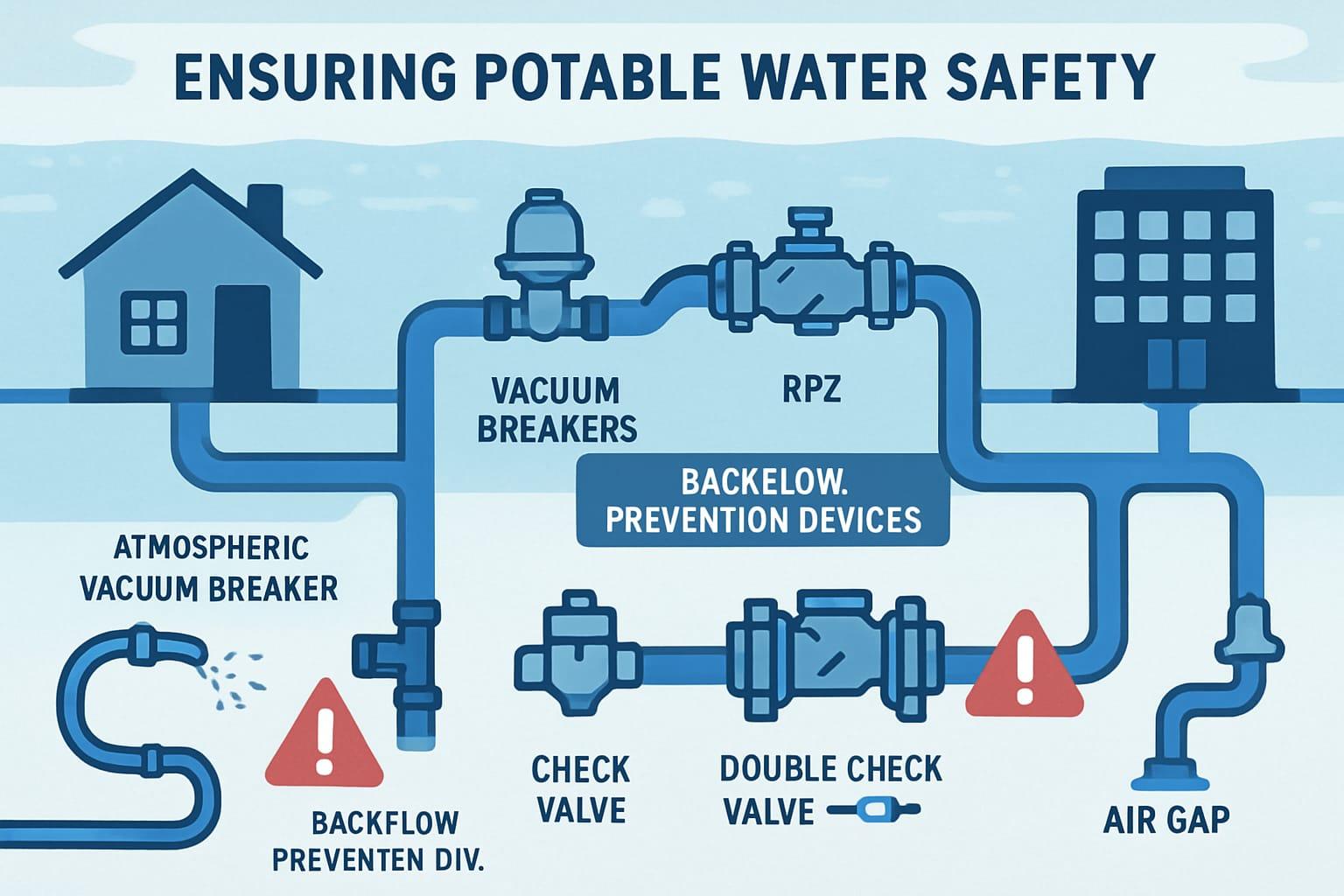
Atmospheric vacuum breakers (AVBs) let air in whenever pressure drops. They’re the simple kind you’ll often see on a hose connection.
Pressure vacuum breakers (PVBs) also work under constant pressure and guard against back-siphonage, which makes them a common choice on irrigation systems.
You’ll find them wherever water can meet something it shouldn’t: at the hose bibs where you hook up a hose for outdoor watering, at faucets where a hose might end up submerged, and on lawn sprinkler systems. They’re built from corrosion-resistant materials, but springs, seals and discs wear out, and our hot, humid summers and the occasional hard freeze are rough on anything outdoors.
Vacuum Breakers and Other Backflow Prevention Devices
A vacuum breaker is one tool in a bigger family. Backflow prevention protects against two things: back-siphonage (a vacuum pulls water backward) and backpressure (pressure in a non-drinking system pushes water the wrong way). The main devices:
Air gaps leave a physical open space between the supply outlet and the highest point of possible contamination. Nothing beats an air gap for simplicity.
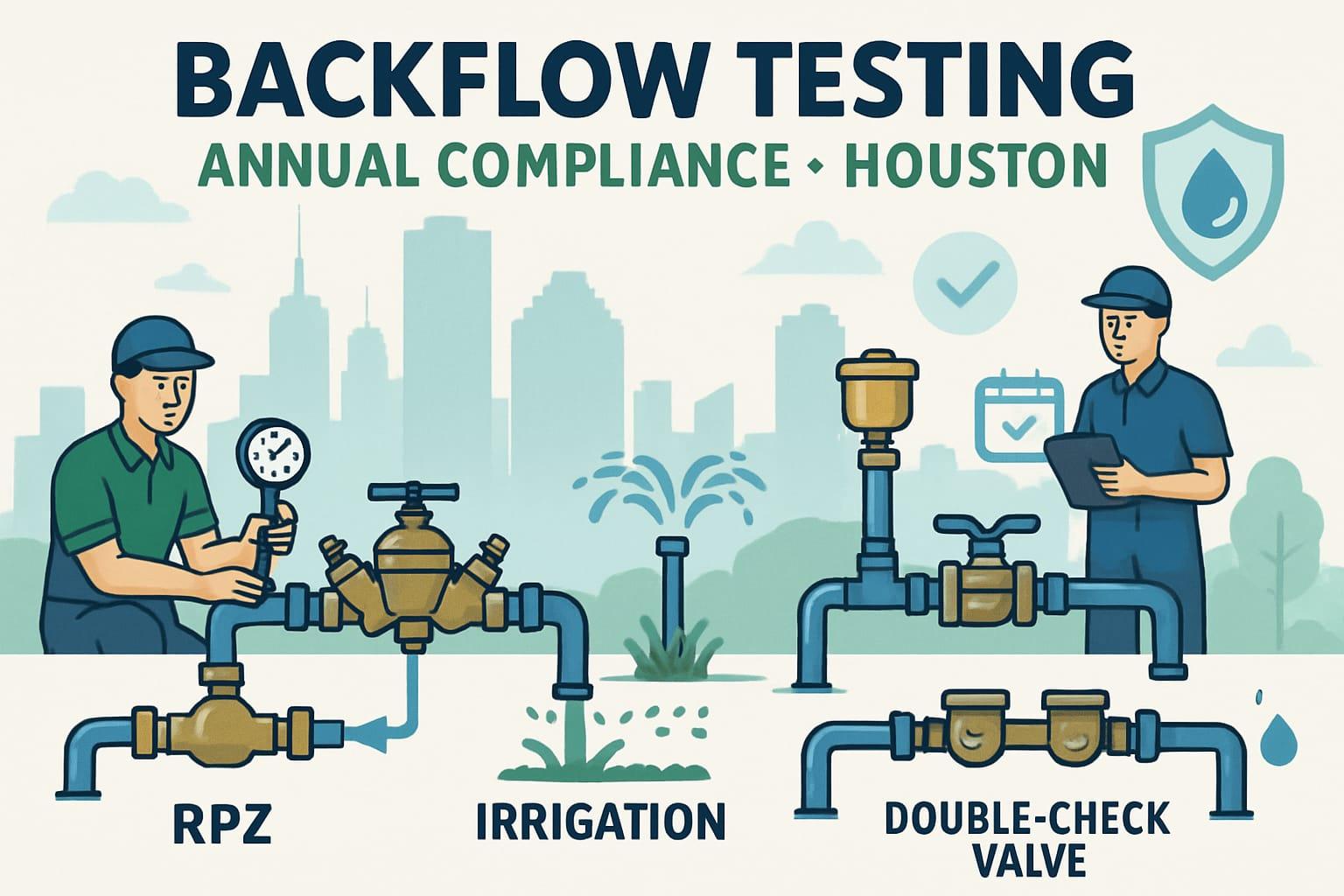
Reduced pressure zone (RPZ) assemblies use two check valves and a relief valve to guard against both back-siphonage and backpressure, and are often required in high-risk applications.
Double check valve assemblies use two inline check valves and suit lower-risk situations.
Check valves let water flow one direction and close automatically if it reverses. They’re the working parts inside the bigger assemblies.
Which device is required where depends on the risk and on Texas rules and your water provider’s requirements. If you’re not sure, ask before you buy or install anything.
How to Keep Your Vacuum Breakers Working
Most of this is easy, and you can do it yourself.
- Unhook your hoses. Don’t leave a hose attached with its end sitting in a pool, bucket or pond. It also helps the hose bib last through a freeze.
- Look at each outdoor vacuum breaker a few times a year. Check for drips, cracks, a loose cap or corrosion, and clear dirt and webs from around the vent.
- Mind the placement. A breaker works best in an open, accessible spot with room to drain, above the highest downstream fixture or sprinkler head, not buried in mulch or standing water.
- Respect its pressure rating. Atmospheric breakers aren’t meant to sit under constant pressure, so a shut-off valve upstream keeps them from being stressed. Pressure types are built for it.
- Keep a simple record of when each device was installed or replaced. If your water provider requires periodic testing on an RPZ or double check assembly, ask them who can test it.
Where to stop: don’t take apart a pressure vacuum breaker or an assembly on a main line. Those have springs and seals under pressure, and a mistake can leave you with a leak or an unprotected line.
When a Vacuum Breaker Needs More Than Maintenance
You’ll usually catch a worn vacuum breaker by what you see, hear and feel, in that order.
What You’ll See
Water dripping or spitting from the vent or cap, a cracked body after a freeze, heavy rust or corrosion, or a hose bib that drips with the hose off. A slow drip is easy to ignore, but it runs all day, and it’s one way my water bill is suddenly high happens.
What You’ll Hear
Hissing or spitting at the vent while the water runs. A brief spurt when you first turn the water on can be normal; steady spraying isn’t.
What You’ll Feel
A handle that’s loose, stiff or won’t shut the water off all the way, and soggy ground around the bib or the sprinkler valve when nobody has been watering.
There’s no smell to a failing vacuum breaker. If your water itself smells or tastes off, that’s a separate problem.
When to Call a Plumber for Vacuum Breakers and Hose Bibs
You can handle the looking and the hose habits. When a vacuum breaker leaks, cracks or won’t seal, when a fix didn’t hold, or when another plumber’s opinion left you unsure, give us a call. We’re a local, licensed plumbing company right here in Conroe, and Dean Stewart holds the Texas master plumber license. Hopefully you never need us, but if you do, we’ll explain what we find before we touch anything, tell you if it’s something you can fix yourself, and take care of it.
For leaking or worn vacuum breakers, we handle hose bib and outdoor faucet repair: we check the connection and the pipe around it for leaks, replace a worn spigot or breaker, and can swap in a frost-free style that protects the pipe in a cold snap. To get started, fill out the request form, pick an arrival window that works for you, and one of our plumbers comes out to you.
Help is on the way in Montgomery County.
Have a plumbing problem like this?
We're a Marine veteran-owned plumbing company in Conroe. Tell us what's going on and we'll take it from there.