Why does your water smell like rotten eggs? Almost always it’s hydrogen sulfide gas, and the first thing to figure out is whether you smell it in the hot water only or in both hot and cold. That one question points to two very different fixes, and we’ll walk you through it. Here’s what causes the smell in Conroe homes, what you can do to keep it from coming back, and when it’s time to call a plumber.
Why a Rotten Egg Smell Matters
Beyond the odor, sulfur in your water affects daily life in practical ways. It can cause foul-tasting drinking water, lingering odors in laundry, staining on fixtures, and corrosion in pipes and appliances. Over time, untreated sulfur and the bacteria and mineral buildup that go with it can shorten the life of water heaters, dishwashers, washing machines, and plumbing components.
Ignoring the smell lets the underlying problem get worse, and it’s easier on your time and your home to sort it out early.
What Causes Sulfur Smell in Water
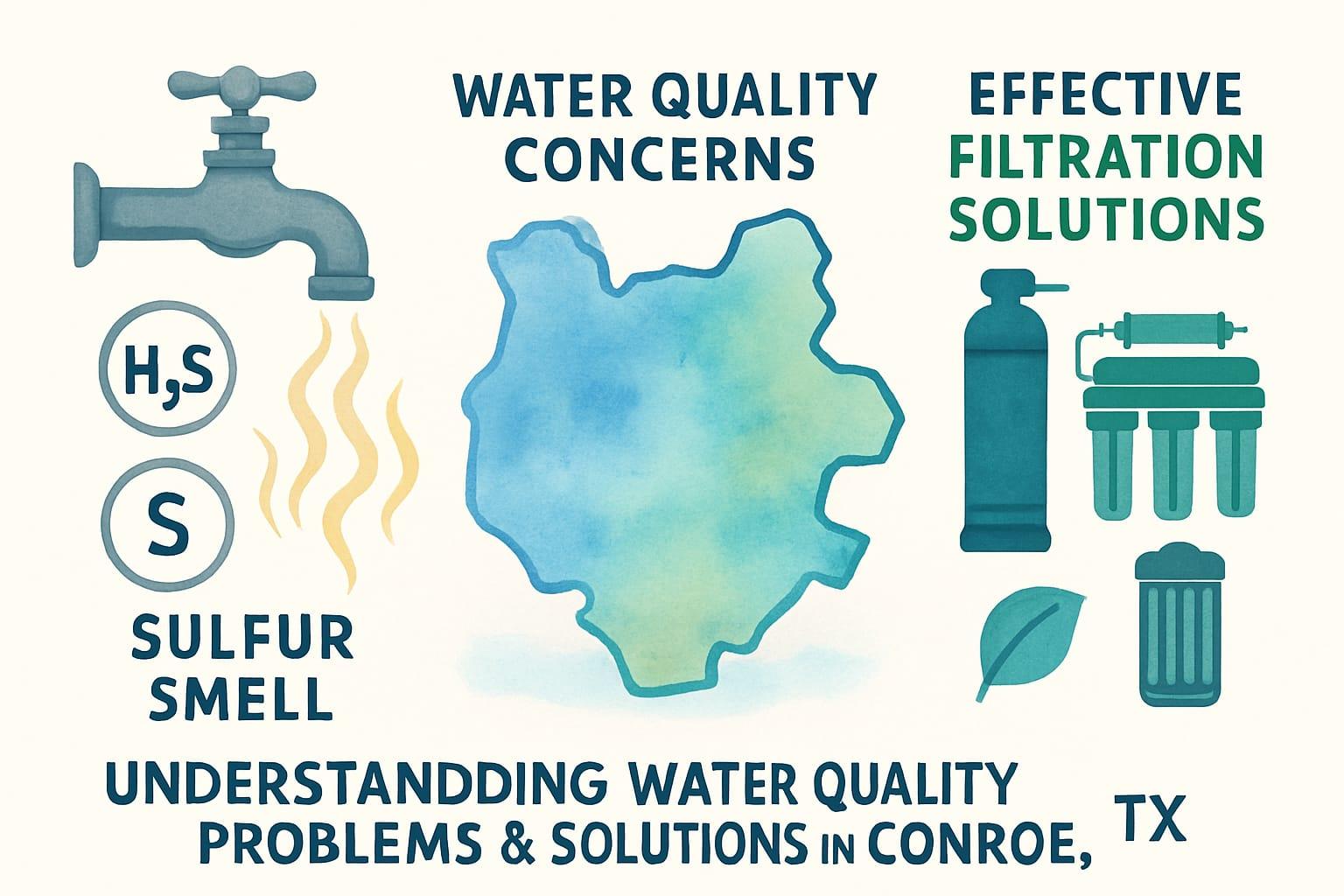
A sulfur smell in water is most commonly caused by hydrogen sulfide gas. Many homes in Southeast Texas rely on groundwater where sulfur compounds exist in the surrounding soil and rock. As water moves through those layers, hydrogen sulfide can dissolve into the supply, and the smell is most noticeable when you first turn the water on.
Sometimes the problem starts inside your house instead. Aging plumbing, corroded pipes, and a poorly maintained water heater can intensify sulfur odors. Bacteria that thrive in warm, low-oxygen conditions can interact with minerals in the water and produce hydrogen sulfide right in your plumbing. That’s why the smell can differ from one home to the next, even on the same street.
Hot Water Only or Hot and Cold
The first thing we check is where the smell shows up. A smell limited to hot water frequently points to the water heater, such as bacterial activity inside the tank or a failing anode rod. When it’s in both hot and cold water, the source is usually the incoming water supply.
You can check this yourself in a minute. Run a cold tap for a bit, smell it, then run the hot and compare.
How to Keep Sulfur Smell Under Control
You can’t change what’s in the ground, but you can keep your own equipment from making things worse.
- Flush your water heater about once a year. Sediment gives bacteria a place to live.
- Have the anode rod looked at. A rod that’s used up is a common reason hot water starts to smell.
- Know your water. A water quality test tells you what’s in your supply, so you’re not guessing.
- Keep up with your filtration system. Filters must be replaced on schedule, media tanks need monitoring, and the system should be inspected now and then to keep performing.
Filtration Options for Sulfur
When the smell comes from your supply, the fix is filtration designed for sulfur removal, matched to your home’s water rather than one size fits all.
Whole-home filtration treats all the water entering the house, protecting every faucet, appliance, and plumbing line. It often combines sediment filtration, carbon media, and sulfur-specific treatment stages to remove hydrogen sulfide before it reaches your interior plumbing.
Reverse osmosis plays a supporting role for drinking water. It excels at removing dissolved solids and improving taste, but it’s installed at a point of use like the kitchen sink. In a home with a strong sulfur smell, it works best paired with whole-home sulfur filtration, not on its own.
Activated carbon filtration is another common way to reduce the smell, since carbon media absorbs hydrogen sulfide. For higher sulfur levels, aeration may be recommended. It introduces oxygen so the gas escapes before the water enters the house, and it’s especially effective for well water, which is common in Montgomery County.
Signs It’s Time for More Than Maintenance
Here’s what homeowners tell us, in the order you’d usually notice it.
What You’ll See
Stains on fixtures and a film or discoloration in sinks and tubs often travel with a sulfur problem. Corrosion on pipes and fittings can too.
What You’ll Smell
If it’s hot water that smells like rotten eggs, that usually means the water heater. If the smell is in both hot and cold, or you notice funny tasting water at the kitchen sink, start with the supply and a water test.
What You’ll Taste and Notice
A sulfur or metallic taste in drinking water, coffee, or ice means the problem has reached what you drink, and laundry that comes out smelling off tells the same story.
When to Call a Plumber for Sulfur Smell
Most of the maintenance above is yours to handle. Hopefully you never need us, but if the smell keeps coming back, a simple fix didn’t hold, or another plumber told you something and you’d like a second opinion, we’re right here. We’re a local, licensed master plumber, and we’ll take care of it.
We start by working out where the smell comes from. If it’s the supply, we review your water-test results and filtration goals, then recommend whole-home water filtration that fits your water, treated where it enters the house. We explain the options before any work begins. If it’s the water heater, we’ll tell you that instead.
Fill out the request form, pick an arrival window that works for you, and one of our plumbers comes out to you. Help is on the way in Montgomery County.
Have a plumbing problem like this?
We're a Marine veteran-owned plumbing company in Conroe. Tell us what's going on and we'll take it from there.