If you’ve been searching for whole home water filtration in Conroe, you’re probably asking one of two things: what does it actually do, and what will it ask of me afterward? Here’s the plain answer, the way we’d give it across the counter.
Why a Whole Home Filter Matters
Water comes into your house once, and then it goes everywhere: the kitchen faucet, the showers, the washing machine, the water heater. A whole home filter treats it at that one point, so every tap gets the same filtered water instead of just the one with a pitcher or a cartridge on it.
What’s at stake is mostly everyday stuff. Sediment can clog aerators and showerheads. Chlorine can leave a taste and smell you notice in every glass. A filter that nobody maintains stops doing its job, and can slow your flow, which is why upkeep matters as much as the install.
What a Whole Home Filtration System Is
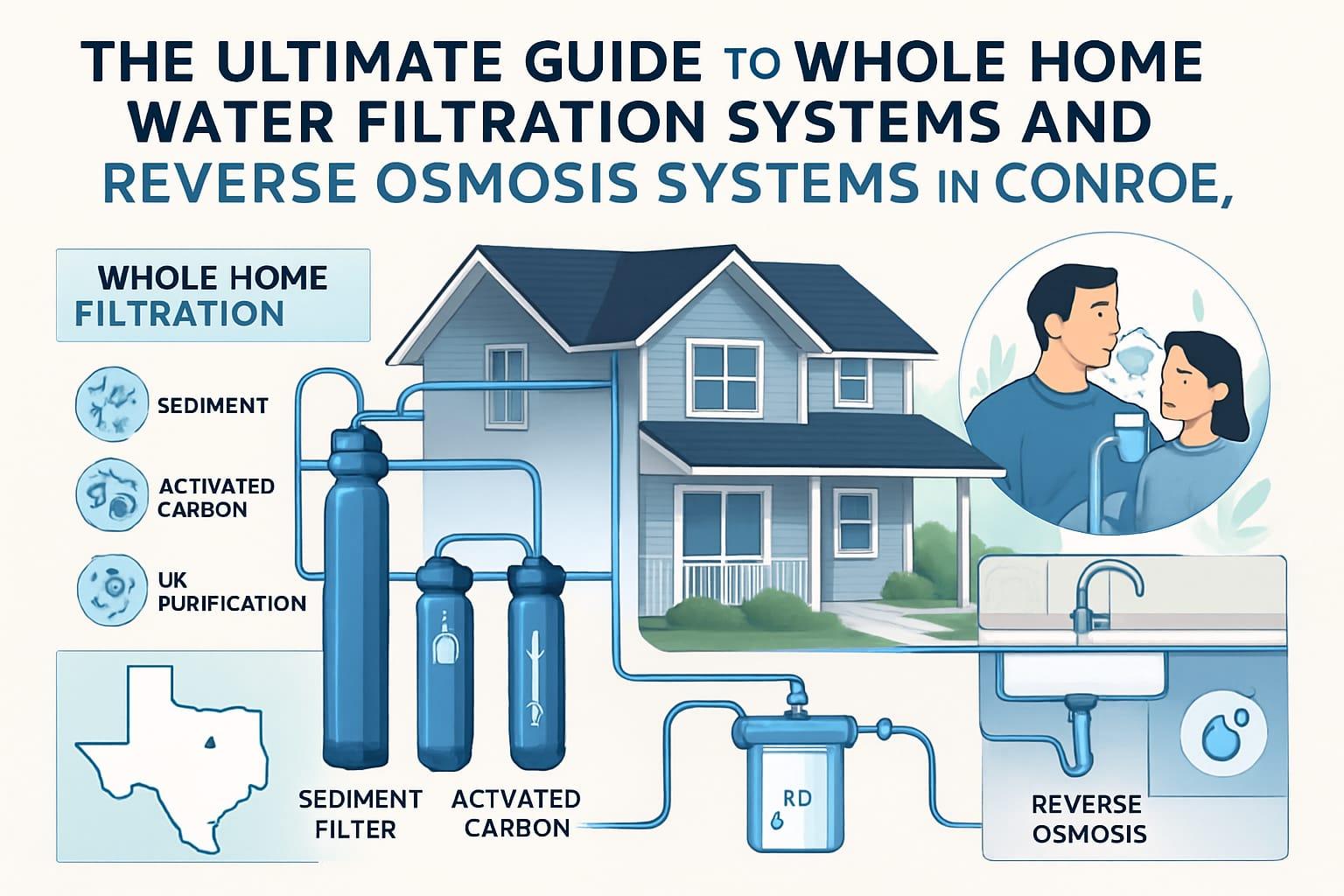
It’s a set of filter housings plumbed in where the main water line enters the house, usually outside on a slab-foundation home or in the garage. Most systems are built in stages:
- Sediment filter. Catches sand, grit and rust flakes before they reach the rest of the system or your fixtures.
- Activated carbon. Reduces chlorine and the taste and odor that go with it.
- UV treatment. An optional stage some homeowners add after the filters.
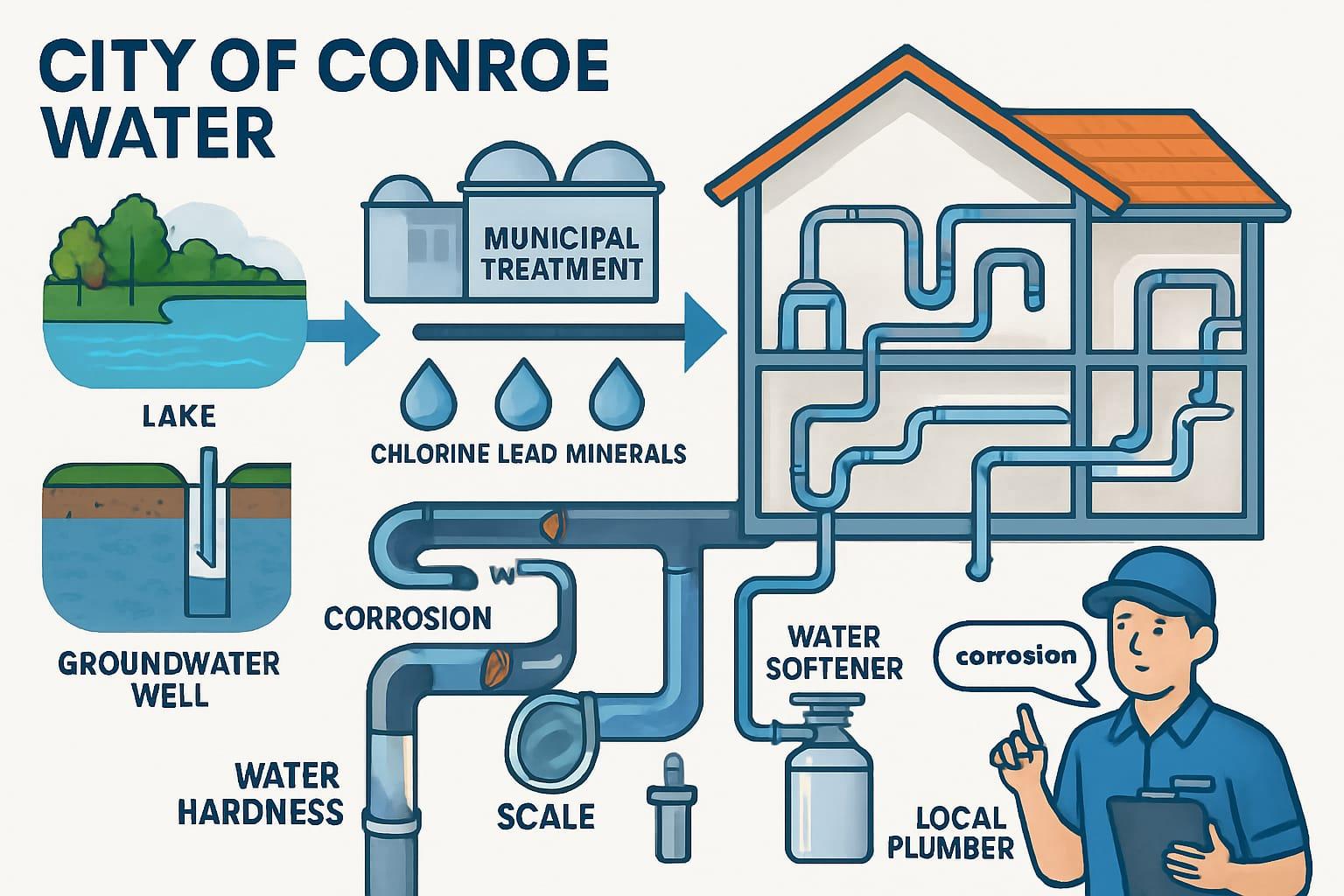
One thing to know up front: a filter is not a softener. Hard water, the white spotting and crusty scale that Montgomery County is known for, is handled by a water softener. Many homes end up with both, and a water test is how you find out which one your water actually needs.
Reverse osmosis is a different piece of equipment. It’s a small system under the kitchen sink that treats drinking and cooking water at one faucet, and it often works alongside a whole home filter instead of replacing it.
How to Maintain Your Filter
The good news is that filter upkeep is the kind of chore you can do yourself:
- Follow the maker’s schedule for cartridges. Sediment and carbon cartridges are made to be replaced, and the schedule is printed on the housing or in the manual. Write the date on the new cartridge when you swap it.
- Watch your water pressure. A clogged sediment filter is the usual reason flow drops after a filter is installed. If the shower is weaker than it used to be, a cartridge is the first thing to check.
- Shut the water off first. Turn off the main (or the bypass valve, if yours has one) and relieve the pressure before you open a housing. Keep the housing wrench near the system so it’s not a scavenger hunt.
- Replace the UV lamp on its schedule. If your system has UV, the lamp wears out even when it still glows, so go by the maker’s replacement interval.
- Look at the connections. A drip at a fitting or a housing seal is easy to catch early and a mess to find later.
Where we’d stop: if a housing is cracked, a fitting won’t seal, or the plumbing around the system needs work, that’s a job for us, not a weekend project.
When It’s Time for More Than Maintenance
Filters tell you when something is off, mostly through your senses. Here’s what we’d watch for:
What you’ll see. Sediment showing up in the aerator, a housing with a hairline crack, or water at the base of the system.
What you’ll smell and taste. If your tap water smells or tastes off even after a fresh cartridge, the filter may not be the right match for what’s in your water.
What you’ll feel. Water pressure that dropped right after a filter went in, or that keeps dropping, usually means a clogged cartridge or an undersized setup.
None of this means you did something wrong. Water conditions change with the season, and a system that fit your water two years ago may not fit it now.
Who to Call for Whole Home Filtration
Most of this you can handle yourself, and we’d rather you did. Hopefully you never need us. If you do, we’re a local, licensed master plumber, and Dean Stewart holds the Texas master plumber license. People also call when a fix didn’t hold or when they want a second opinion on what another company told them, and we’re glad to give one.
With whole home water filtration, our plumber starts with your water-test results and what you want out of the system, then explains the options before any work. If a whole home system is the right call, we install it where the water enters the house, so every faucet and shower is covered, and we tell you what upkeep to expect.
The next step is easy. Fill out the request form, pick an arrival window that works for you, and one of our plumbers comes out to you. We’ll take care of it from there.
Help is on the way in Montgomery County.
Have a plumbing problem like this?
We're a Marine veteran-owned plumbing company in Conroe. Tell us what's going on and we'll take it from there.