A garbage disposal humming but not working is almost always a jam: something is wedged between the grinding plate and the impeller, and the motor can’t turn it. We see this a lot in Conroe kitchens, and most of the time you can free it yourself in a few minutes. Here is why it happens, how to keep it from happening again, and when it’s time to let us take over.
Why a Humming Disposal Matters
A jammed disposal is more than an inconvenience. The motor keeps pushing against a stuck blade, which can trip the reset or burn the motor out, and a sink you can’t use makes cooking and cleanup a chore. A slow leak under the sink can also soak the cabinet floor before you notice. Catch it early and it’s usually a quick fix.
What a Garbage Disposal Does
Under the sink, a disposal doesn’t chop food with sharp blades. A motor spins a plate with small impellers that flings scraps against a grinding ring, and cold running water flushes the bits down the drain. Fibrous strings, starchy pastes, fruit pits and bones are what stop that plate from turning.
How to Free a Jammed Disposal Safely
Before you try anything, turn off the wall switch and unplug the disposal or switch off its breaker. Never put your hand into the unit, even when it is off.
- If you can see the jammed item, pull it out with tongs or pliers.
- Many disposals have a socket in the center of the underside. Put a hex key in and rock the blades back and forth until they move freely.
- Press the red reset button on the bottom once the motor has cooled.
How to Prevent Disposal Clogs and Jams
A few habits extend the life of your disposal and your kitchen drain line:
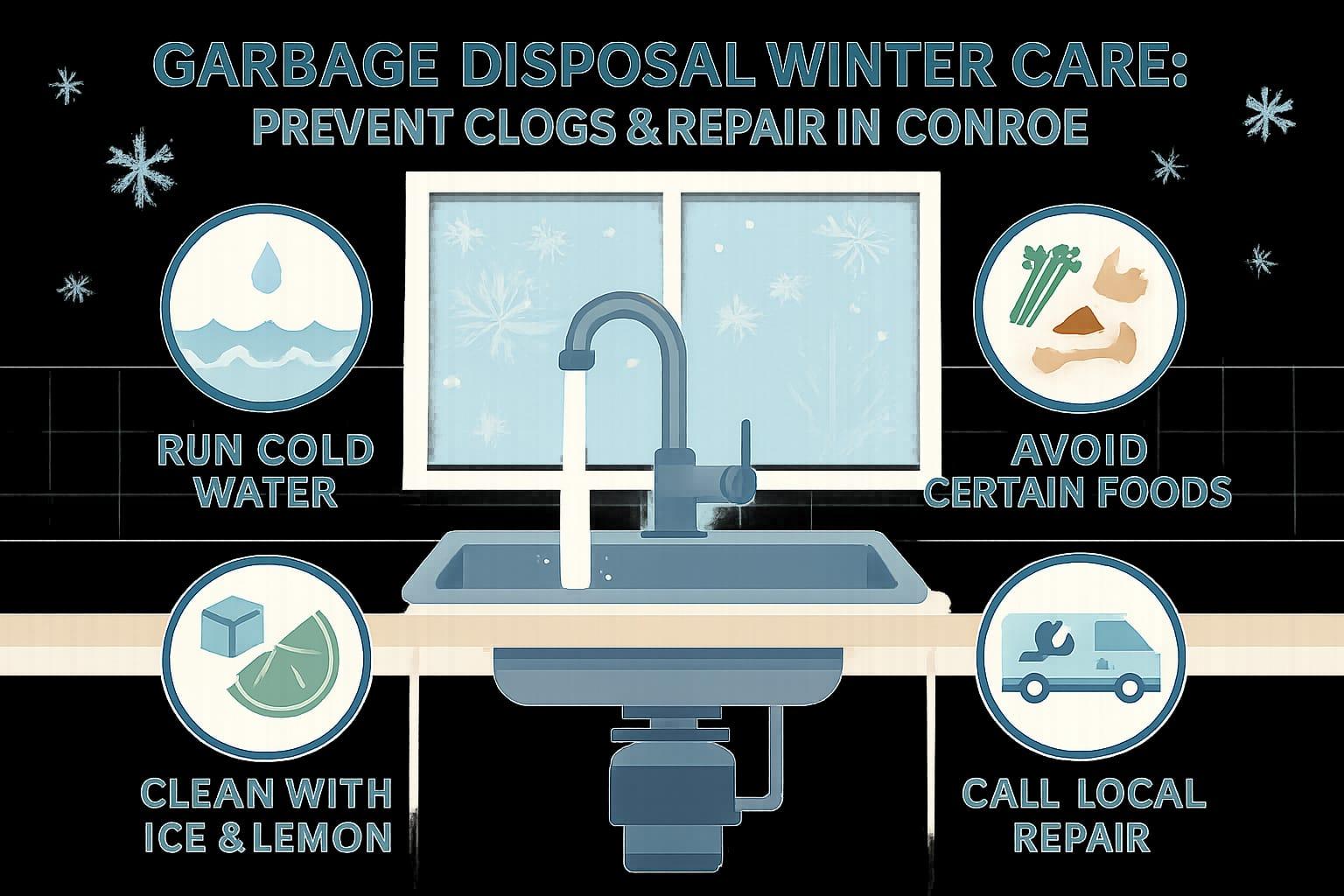
- Run cold water before, during, and after each use so food particles flush cleanly through your pipes and grease stays solid.
- Feed waste in slowly rather than dumping a pile at once, which overloads the motor.
- Keep out fibrous vegetables (celery, corn husks, asparagus), starchy foods (pasta, rice, potatoes), coffee grounds, eggshells, grease, oils, fruit pits, and bones.
- Don’t pour fats or oils down the drain. They harden inside pipes and cause blockages.
- Grind ice cubes and citrus peels, or clean with ice and vinegar, about once a month to clear buildup and odors.
- Skip chemical drain cleaners. They can corrode the disposal and the pipes. Enzyme-based cleaners are gentler.
When It’s More Than a Jam
Trust what you see, hear, smell and feel, and don’t ignore the signs, because they get worse quickly.
What You’ll See
If you spot a puddle or damp cabinet floor, you may have water under the sink from a loose seal or a leak at the bottom of the unit. Standing water in the sink that won’t go down means the clog may be past the disposal, a case of a slow drain or a full blockage.
What You’ll Hear
A low hum with no grinding is the classic sign that my garbage disposal hums but won’t spin. Total silence usually means a tripped reset, lost power or a burnt-out motor.
What You’ll Smell
Odors that return right after you clean usually mean food stuck below the blades or in the drain line, not just the unit.
What You’ll Feel
If the sink and the drain beneath it are slow, or the disposal feels loose or wobbly in its mount, the seals may be failing.
If you experience a clog, avoid forcing the blades or reaching inside the unit. Turn off the power and call a plumber, who can use safe, non-damaging methods like drain snaking or hydro-jetting to clear blockages without harming your pipes.
When to Call a Plumber for a Garbage Disposal
Hopefully a hex key and the reset button get you going again. If the unit still hums after you free the jam and press reset, leaks from the bottom or the seals, or keeps tripping its reset, it is usually near the end of its life. A leak from the body can’t be sealed, so the fix is garbage disposal replacement.
We’re a local, licensed master plumber, right here in Montgomery County. People also call us when a simple fix didn’t hold, or for a second opinion on what another plumber told them. We’ll tell you plainly if it’s something you can handle yourself. If it isn’t, our plumber assesses the unit and the connections, explains your options, removes the old disposal and installs a new one sized for how your kitchen is used, connects it to the drain and power, and tests it before we leave. We’ll also check the drain line when the sink is slow, so you know whether the problem is the disposal or the pipe beyond it.
Fill out the request form, pick an arrival window that works for you, and one of our plumbers comes out to you. Help is on the way in Montgomery County.
Have a plumbing problem like this?
We're a Marine veteran-owned plumbing company in Conroe. Tell us what's going on and we'll take it from there.