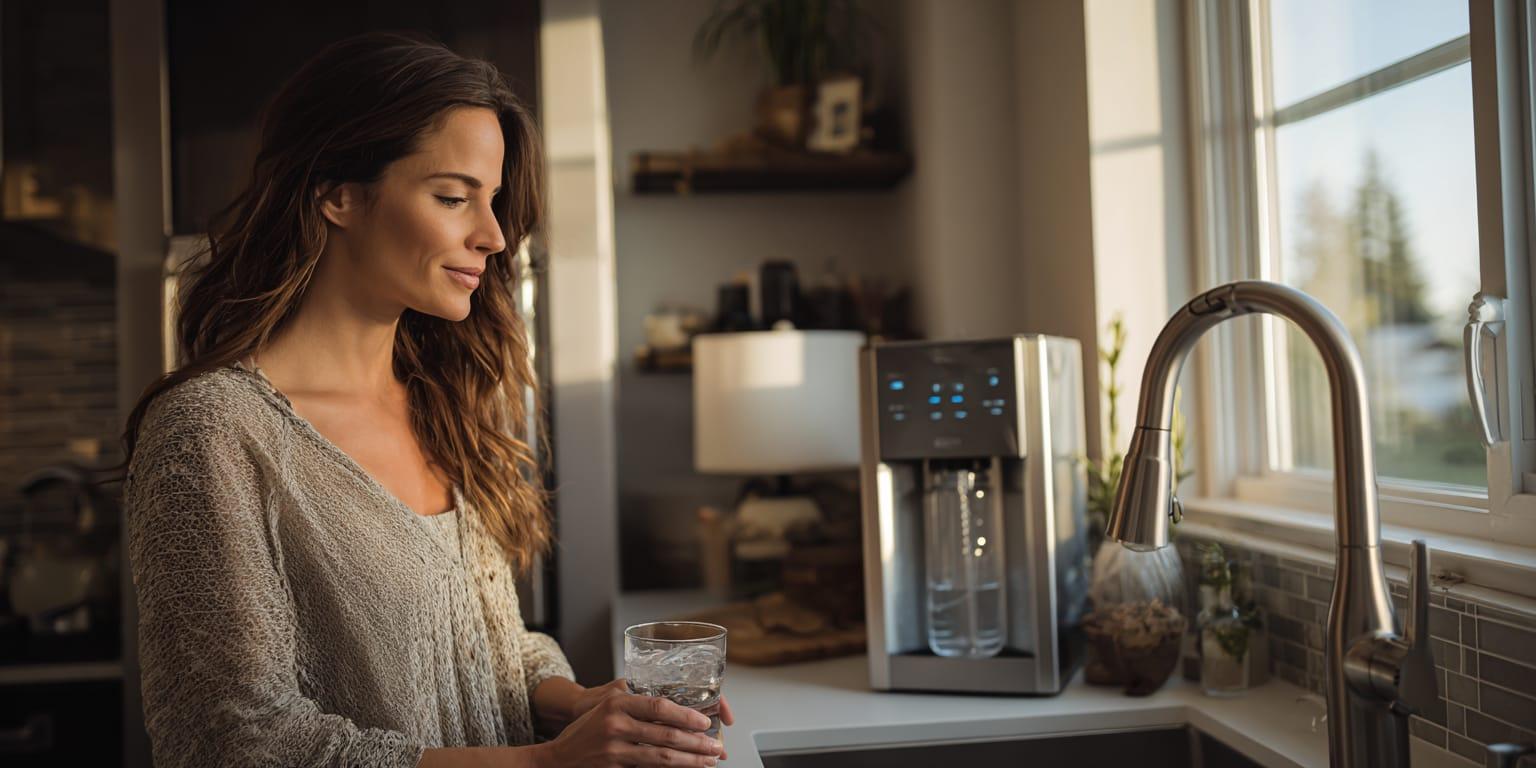
Is whole home water treatment worth it? For a lot of Conroe and Montgomery County homes, yes, and the answer comes down to what your water is actually doing to your house. If it leaves spots on every dish and scale on every fixture, or you’re tired of the taste, a whole home water filtration system treats it once, where it enters the house, instead of one faucet at a time. Here’s how we’d work out whether it pays off for you.
Why Whole Home Water Treatment Matters
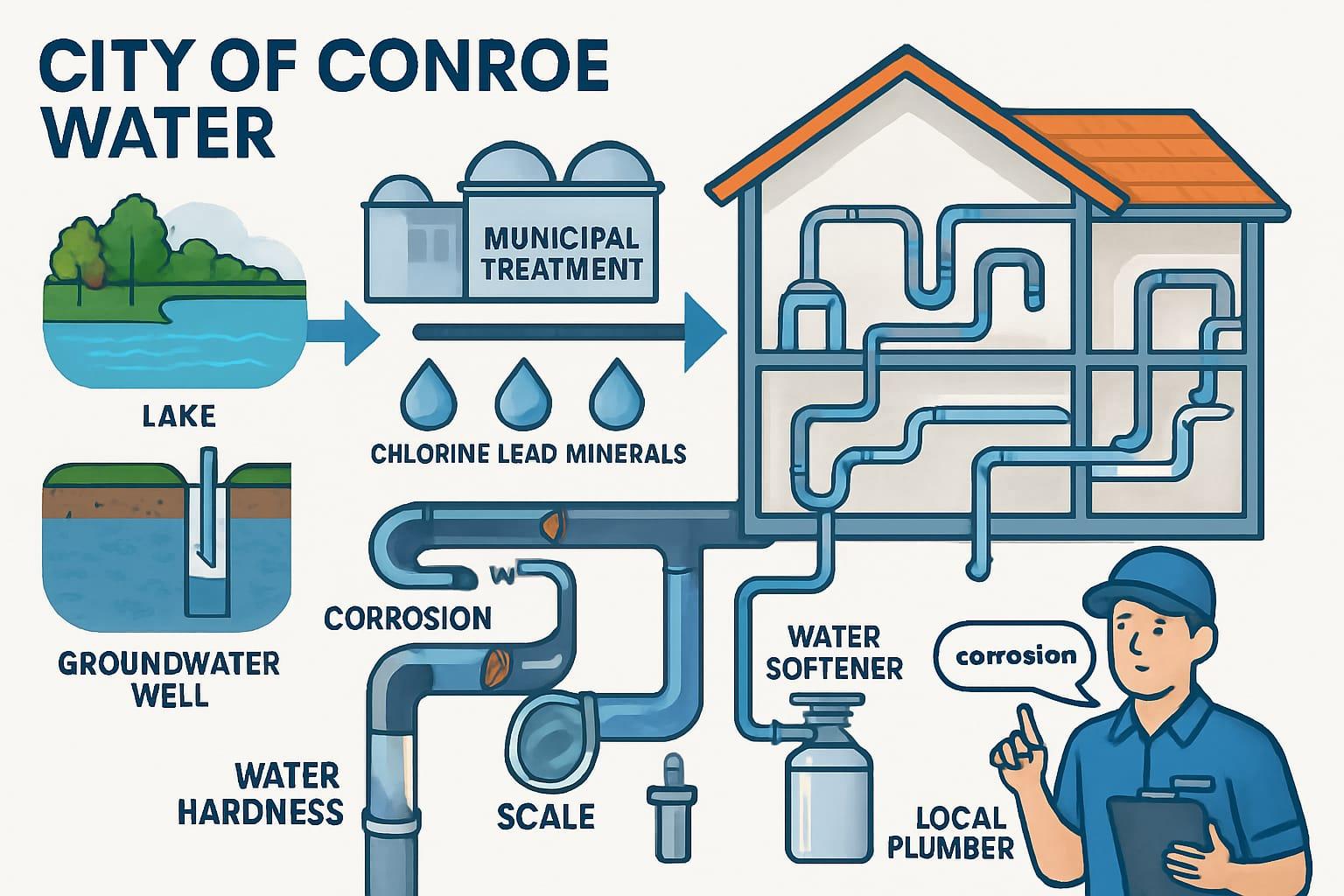
Water touches nearly everything in your house: the water heater, the dishwasher, the washing machine, every faucet and shower. Hard water in Montgomery County leaves minerals behind in all of them, and chlorine and sediment come along for the ride. Left alone, that buildup shortens the life of fixtures and appliances and makes you work harder at cleaning.
Treating the water at the source protects all of it at once, and it saves you the time of juggling filters at the sink and bottled water in the garage. Whether that adds up to a good deal for your home is the ROI question, and we’ll get to it below.
Calculating ROI on Water Systems
Start with the honest math. Total the upfront cost of the system and installation, then add the yearly upkeep, mainly filter replacements. Set that against what you’d otherwise spend or lose:
- Bottled water you no longer buy
- Appliances that keep working longer because scale isn’t building up inside them
- Less spent on cleaning products and soaps
- Fewer plumbing repairs from scale in fixtures and pipes
Then add the things that are harder to price: better-tasting water at every tap, and one less chore. We won’t hand you a number here, because it depends on your water, your house and your habits. A water test gives you real facts to work with instead of guesses.
Impact on Property Value
A whole home system can be an attractive feature when you sell. It tells a buyer the water has been looked after and they won’t inherit a hard water problem. In an area where hard water is common, a system that’s already installed can help set your home apart. We can’t promise what it does to a sale price, and we won’t pretend to.
The Plastic Bottle Point
A household that stops buying bottled water keeps hundreds of plastic bottles a year out of the trash. That’s good for the budget and for the garage, and it takes a trip to the store off your list.
What a Whole Home Water Treatment System Is
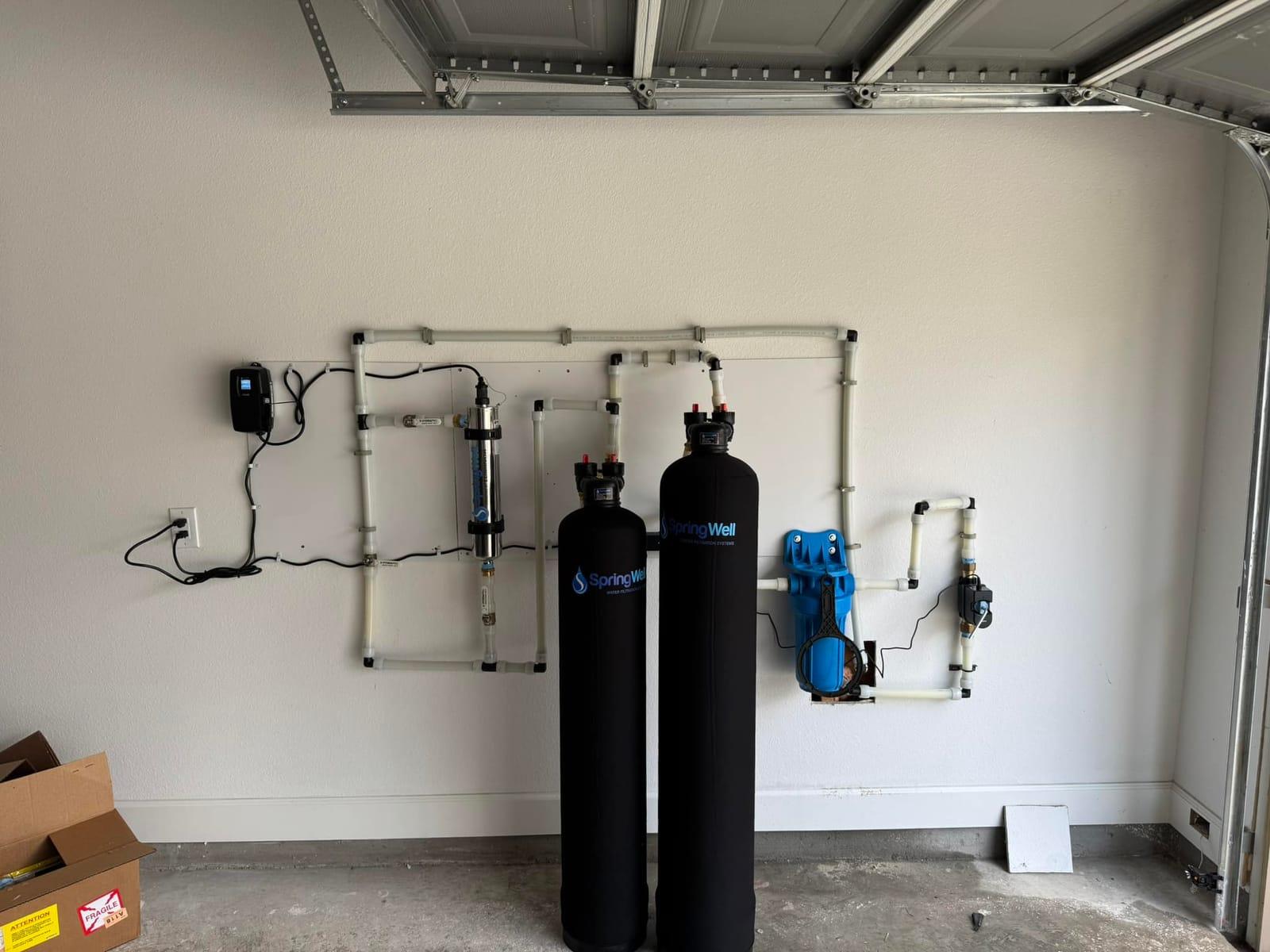
A whole home water treatment system, also called a point-of-entry (POE) system, is a filtration unit installed where your main water line enters your home. Everything downstream, from the kitchen sink to the shower, gets treated water. It’s built to deal with sediment, chlorine and the minerals that cause scale.
The right system depends on your water and your household, and in this area the usual suspects are hard water and sediment. There are a handful of common types:
- Activated Carbon Filters: Effective on chlorine, sediment and organic compounds, which improves taste and odor.
- Reverse Osmosis Systems: The most thorough filtration, removing even dissolved solids.
- Water Softeners: These target hard water by removing excess minerals like calcium and magnesium.
- UV Purification Systems: These use ultraviolet light to neutralize microorganisms, which is why they’re a good fit for well water.
- Whole House Sediment Filters: These catch larger particles before they reach your fixtures.
Choosing and Maintaining Your System
Pick the system by starting with your water, not the brochure.
- Water Quality: Start with a water test to see what’s actually in your supply. That tells you which type of system you need.
- Home Size and Water Usage: The size of your home and how much water you use set the size and capacity of the system.
- Water Source: City water and well water call for different treatment.
- Budget: Count both the system and installation and the long-term upkeep.
- Space: You need room for it, typically near the main water line.
Installation and Water Pressure
Some systems are sold for DIY installation, but many need a professional setup. A licensed plumber ties the system into your plumbing correctly and makes sure it meets local code. A properly sized and installed system should have little effect on your water pressure; an undersized one, or one installed wrong, can cut it noticeably.
Here’s how the two approaches compare:
| Aspect | DIY | Professional |
|---|---|---|
| Upfront cost | Lower | Higher |
| Time you spend | High | Low |
| Risk of leaks or sizing errors | High | Low |
| Help after installation | None | Available |
Keeping It Working
Maintenance is simple, and it’s yours to do:
- Replace filters on the manufacturer’s schedule
- Look for leaks or unusual noises
- Keep an eye on your water quality to make sure it’s still doing its job
Most systems need filter changes every 3 to 6 months, depending on your water and how much you use. Some have indicators that tell you when it’s time. Stay on top of it and the system lasts longer.
Signs Your Water Needs More Than Maintenance
You don’t need a lab to know when water is telling you something. Here’s what we hear from homeowners, by sense.
- What you’ll see: Dishes, glass shower doors and faucets that end up with hard water spots, and a crusty white scale on showerheads and around fixtures. That’s minerals, and a system matched to your water is the long-term fix.
- What you’ll smell and taste: water tastes like chlorine, or the tap just smells off. Carbon filtration is built for exactly this.
- What you’ll feel: Soap that won’t lather the way it should, and a film left behind after a shower.
If any of that sounds like your house, a filter swap won’t fix it. That’s when it’s time to call someone who can look at the whole system.
Who to Call for Whole Home Water Treatment
You can handle the maintenance. When the water needs more than that, we’re a local, licensed master plumber, and Dean Stewart holds the Texas master plumber license. Hopefully you never need us, but if you do, we’re right here and we’ll take care of it. People also call us after a fix didn’t hold, or for a second opinion on what another company told them.
Here’s what our plumber does. We review your water-test results and what you want out of the water before we recommend anything, then install a whole home filtration system where your water enters the house, so chlorine, sediment and other common contaminants are reduced at every faucet and shower. We explain the options before any work starts, and we tell you if a simpler fix will do.
Getting started is easy. Fill out the request form, pick an arrival window that works for you, and one of our plumbers comes out to you.
Help is on the way in Montgomery County.
Have a plumbing problem like this?
We're a Marine veteran-owned plumbing company in Conroe. Tell us what's going on and we'll take it from there.