
Do Older Homes Need a Sewer Camera Inspection?
Often, yes, at least once. Older homes in Conroe and Montgomery County have older sewer lines, and the pipe under your yard is the one thing you can’t see, can’t hear and can’t smell until something goes wrong. Cracks, roots, corrosion and buildup creep in quietly, and the first sign is usually a backup on a day you had other plans.
A sewer camera inspection is how you find out what shape the line is in before it picks the day for you. It’s especially worth doing when you’re buying, selling or remodeling an older house, and it’s a smart look for any home more than 30 years old. If the camera finds nothing, you’ve lost an hour and gained a clear picture of your line. If it finds something, you’ve caught it while it’s still a plan instead of an emergency.
What a Sewer Camera Inspection Shows
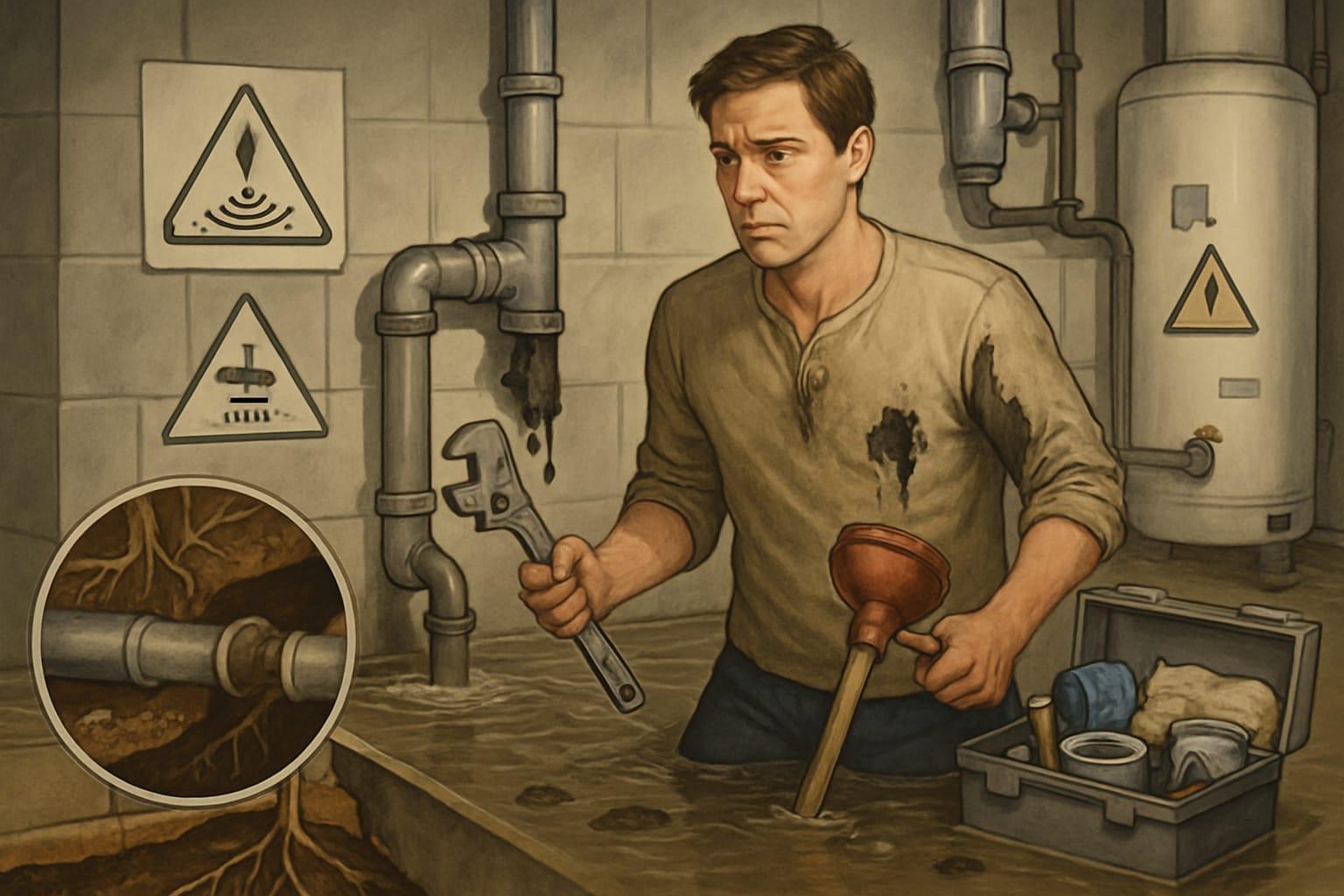
Your main sewer line carries everything from the house out to the city sewer. In older homes that pipe is often clay or cast iron, and both have a hard life: Heavy Gulf rains keep the ground wet, roots go looking for that moisture, and hot, dry summers shift the soil around the pipe.
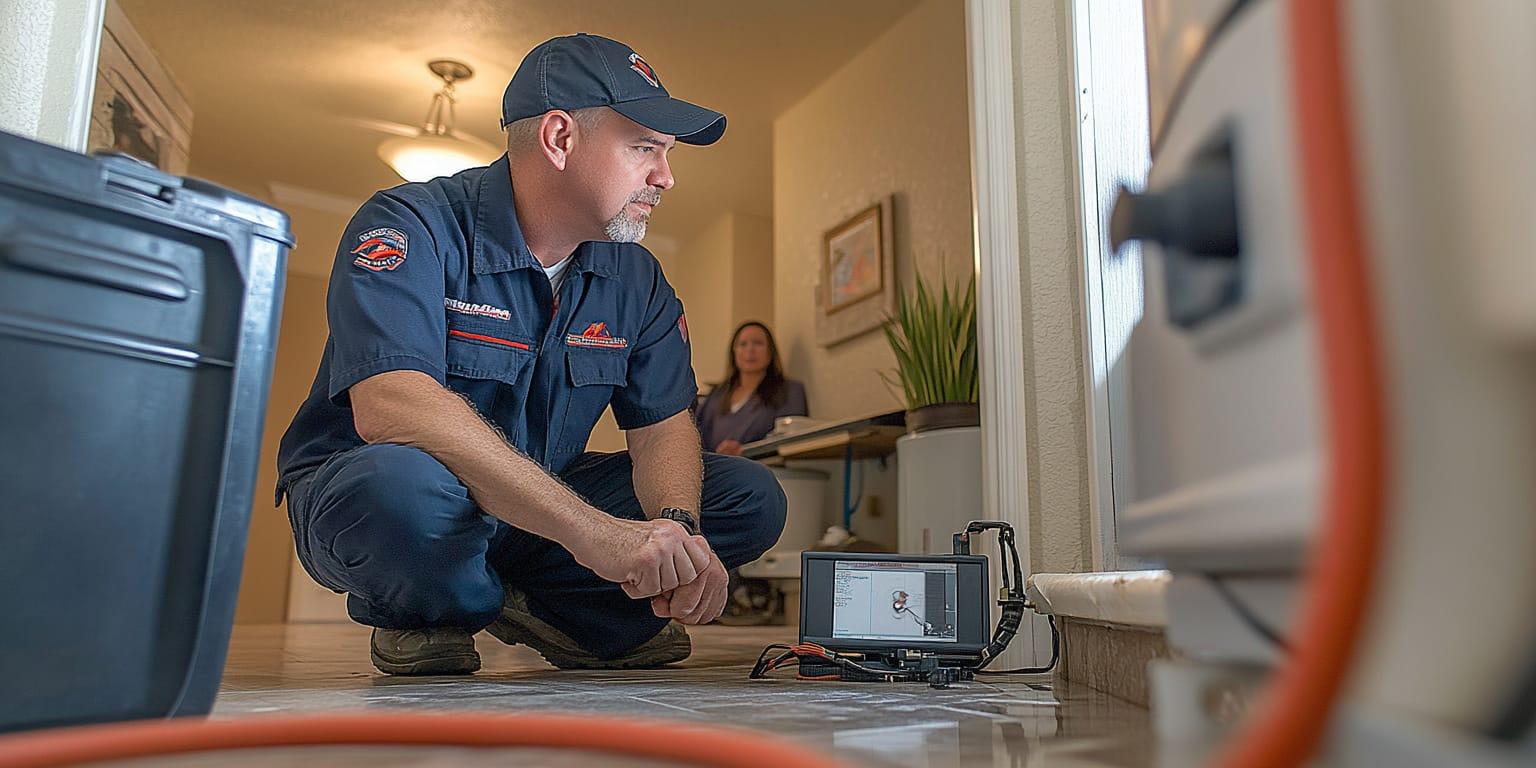
A waterproof camera on a flexible rod goes in through the main cleanout, usually in the yard, garage or basement. It has its own lights and sends live video to a screen, so you see what we see. Because it measures distance and depth, we can tell you where a problem sits without guessing and without digging up your yard to find it.
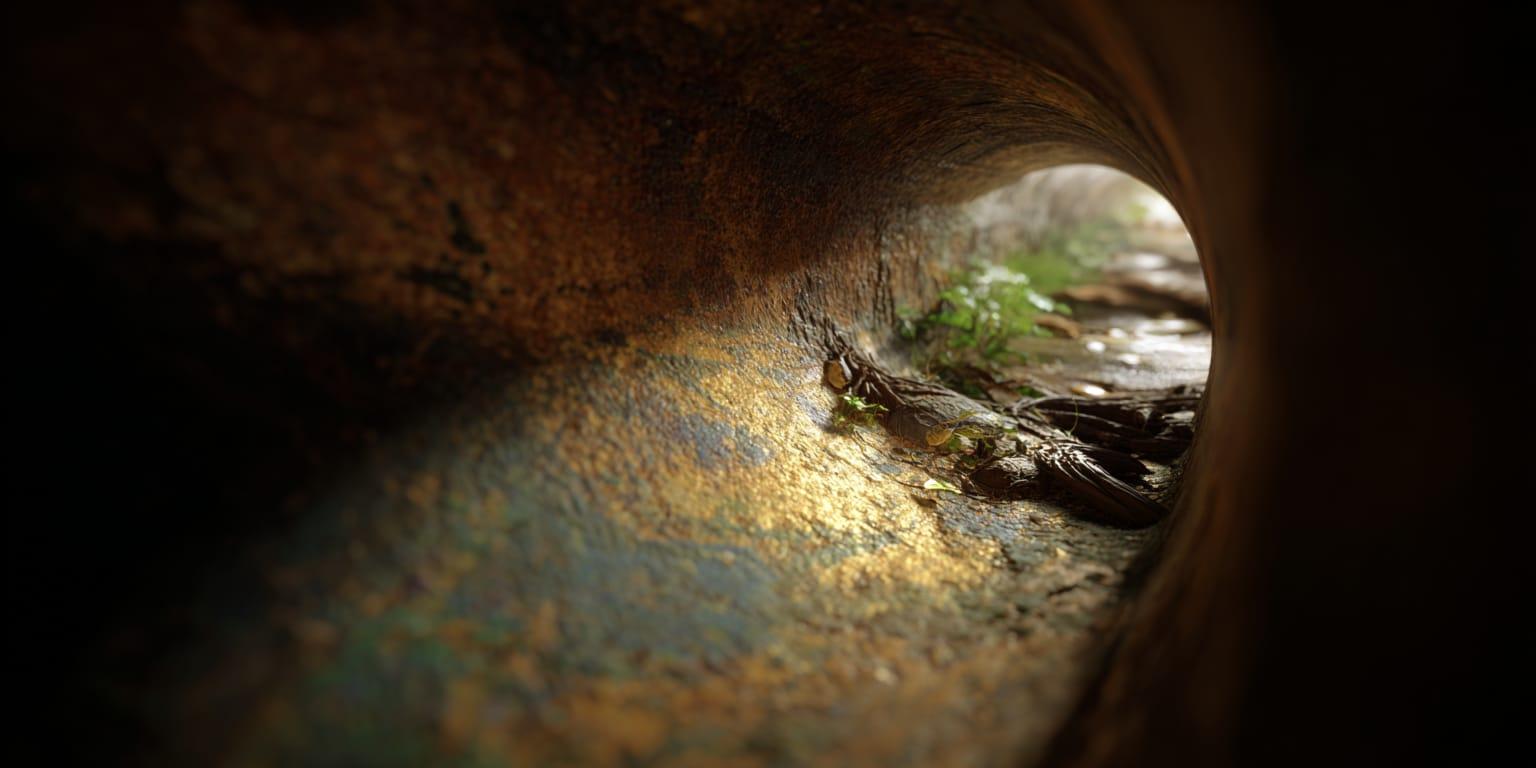
Here’s what the camera most often turns up in older homes:
- Clogs: Grease, soap or even toys can build up and block the pipe over time.
- Tree roots: Roots seek moisture and push into tiny cracks in aging pipe, eventually causing blockages or breaks.
- Pipe damage: Clay and cast iron can crack, collapse or shift out of line.
- Corrosion: Metal pipe rusts from the inside out, thinning the walls until it leaks or fails.
- Scale buildup: Mineral deposits from hard water shrink the pipe and slow drainage.
- Old repairs: Poor joints or outdated fixes can become weak spots.
The camera shows the inside of the main line. It can’t see the ground around it, so we’ll tell you what it can and can’t tell us.
How to Keep an Older Sewer Line Healthy
Most of what keeps a sewer line happy is easy, and you can do it yourself:
- Put grease and cooking oil in the trash, not the drain. It cools and clings to the pipe wall.
- Flush toilet paper and nothing else, including “flushable” wipes.
- Skip the chemical drain cleaners on old pipes. They don’t clear roots, and they’re hard on aging metal and clay.
- Find your main cleanout and keep it clear, so a plumber can get to it quickly.
- Think twice before planting thirsty trees close to the sewer line.
- If you’re buying an older house, ask for a camera look at the line before closing. The recording gives you something solid to use in negotiations or with your insurer.
That’s the whole routine. We’d rather you never need us.
Signs Your Sewer Line Needs a Look
A sewer problem usually announces itself in a few ways, and it helps to know them in the order you’ll notice them.
What You’ll See
If several drains are backing up at once, or water comes up in the tub when you flush or run the washer, the trouble is usually in the main line, not one fixture. Soggy or sunken spots in the yard along the sewer path are another clue.
What You’ll Hear
A gurgling drain, especially when another fixture empties, is air fighting its way past a partial blockage.
What You’ll Smell
If your bathroom smells like sewer and the traps are full of water, the line itself may be cracked or backed up.
What You’ll Feel
When one drain is slow, start with that drain. When every drain is slow, or the same one keeps clogging after you clear it, the line is worth a look. A camera inspection is how we tell a drain clog from a sewer problem.
When to Call a Plumber About Your Sewer Line
You can handle the maintenance. When it needs a pro, we’re a local, licensed master plumber here in Conroe, and we’ll take care of it. People also call us when a simple fix didn’t hold, or for a second opinion on what another plumber told them about their sewer line.
Here’s what our plumber does on a sewer visit. We put a camera in the main line so you can watch what we see, find where any problem is, how far from the house it sits and what the pipe is made of, and tell you whether a cleaning will hold or the pipe needs repair. We explain your options before any work starts. A spot repair fixes a damaged section when the rest of the line is sound. When damage runs along the pipe, we’ll tell you plainly, because fixing it once beats repeating spot repairs. Trenchless methods avoid a trench across the yard in most cases, and we’ll say so if your line can be done that way. That’s our sewer line repair service, and it starts with seeing the line.
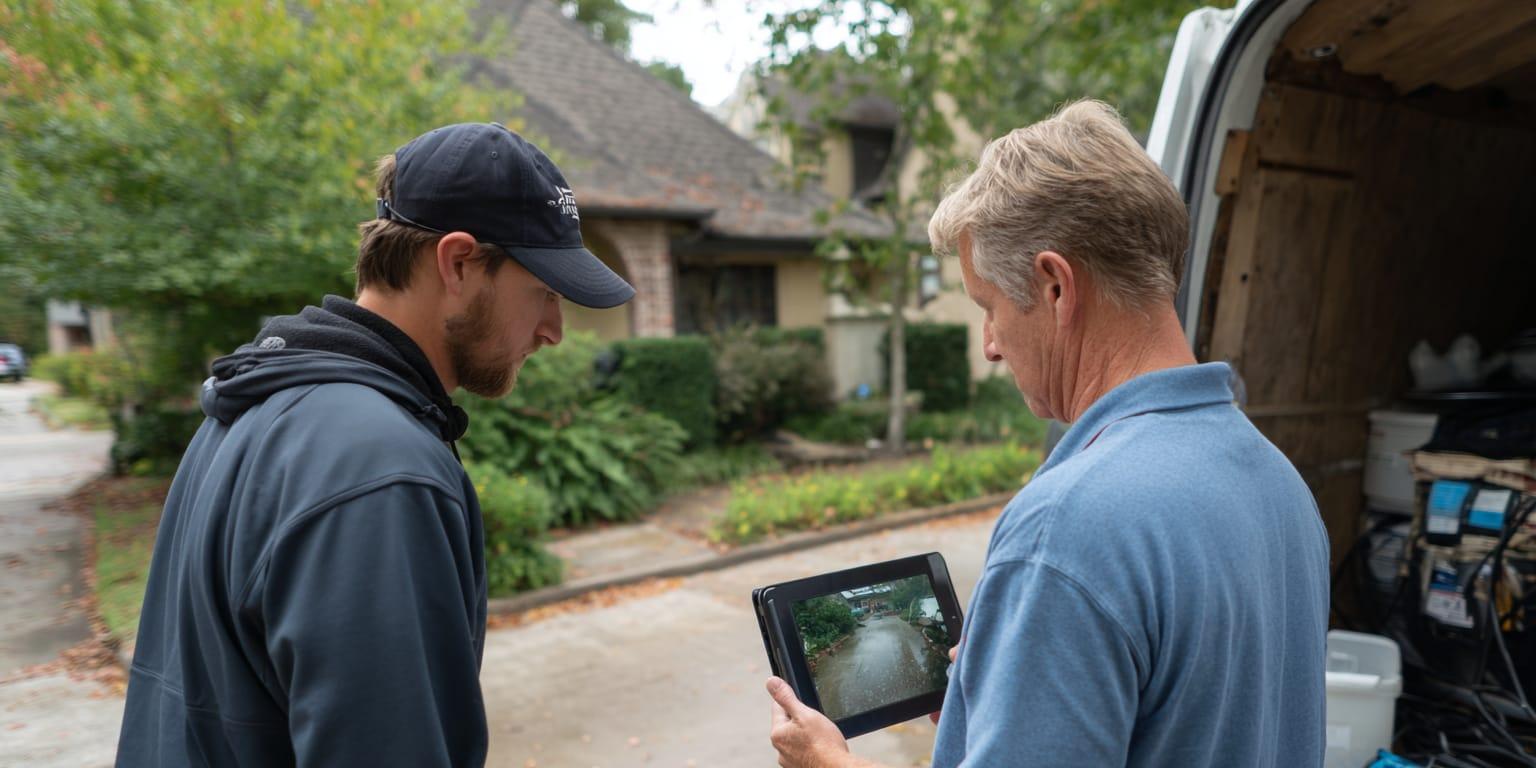
Afterward, ask for a recording or written notes of what the camera showed, so you have a record for yourself or a future buyer. Whatever we find, we’ll talk it through with you and leave the place the way we found it.
Getting started is easy: fill out the request form, pick an arrival window that works for you, and one of our plumbers comes out to you. Help is on the way in Montgomery County.
Have a plumbing problem like this?
We're a Marine veteran-owned plumbing company in Conroe. Tell us what's going on and we'll take it from there.