Wondering what trenchless sewer repair costs? We can’t put a number in a blog post, and you shouldn’t trust anyone who does without seeing your pipe. What we can do is tell you what moves the price up or down, so the estimate you get makes sense when it lands on your counter.
If the line is cracked, collapsed or full of roots, trenchless sewer replacement fixes it through small access points instead of a trench across your yard.
Why Sewer Line Costs Vary So Much
Two homes on the same street can get very different estimates for the same kind of repair, and that’s not a trick. A sewer line is buried, so nobody knows what it needs until a camera has been down it. A short, shallow run with a clear spot for access is a different job from a long, deep one running under a driveway, and the price follows the job.
In Conroe and the rest of Montgomery County, most homes sit on a slab, so the main line often runs right under the house. That makes a no-dig method worth a look before anyone talks about tearing up floors or yards.
What Drives Trenchless Sewer Line Replacement Cost
Here’s what shapes the cost of a trenchless job, in plain terms.
Length of the Line
More pipe means more material and more time on the job.
Depth
A deeper line is harder to reach and harder to work on.
Access
Trenchless work needs small entry points, usually at the cleanout, the house and the street side. Where those can go, and what’s in the way, changes the work.
Pipe Condition
A badly damaged line may need cleaning or prep before anything goes in, and that adds to the job.
The Method
Bursting and lining use different equipment and crews, so which one suits your pipe shapes the estimate.
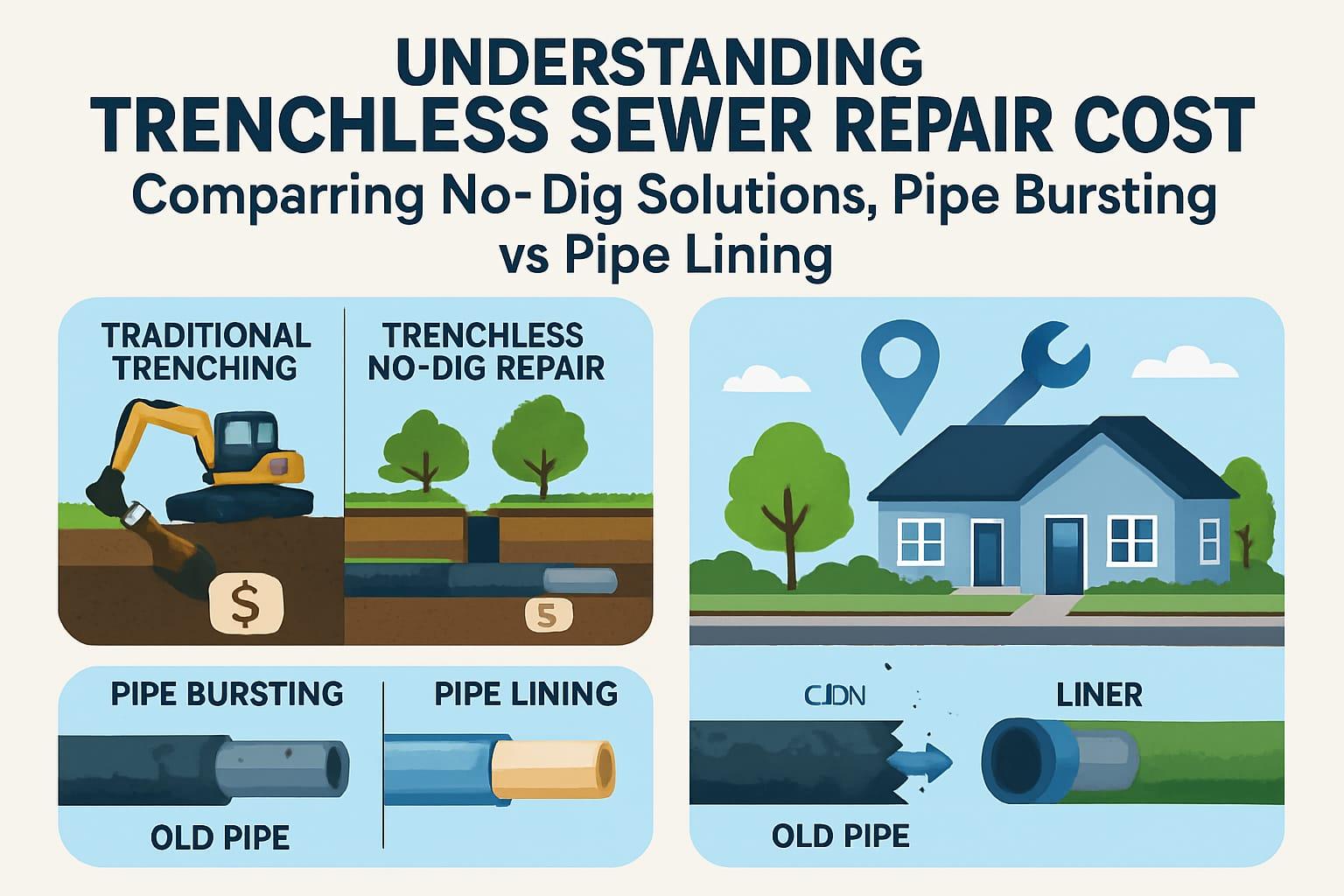
Compared with digging, the picture changes. Traditional excavation brings its own costs: restoring the lawn, a driveway or a walkway, and living with a torn-up yard. Trenchless pipe repair leaves most of that in place, which is why homeowners often find the total is more reasonable than they feared. Ask that your estimate spell out what’s included so you can compare it fairly.
Pipe Bursting vs Pipe Lining
Two methods cover most trenchless sewer work, and which one fits depends on what the camera shows.
Pipe bursting replaces the old pipe. A bursting head is pulled through the existing line, breaking it apart while a new pipe follows right behind. It suits pipes that are badly damaged or collapsed, because you end up with a new line rather than a patched one.
Pipe lining repairs the pipe from the inside. A resin-saturated liner is pulled into the pipe and inflated against the walls. Once it cures, you have a smooth new pipe inside the old one that seals cracks and root entry points. It suits a pipe that’s worn or cracked but still holds its shape.
Access differs too. Bursting generally needs entry points at both ends of the run, while lining may need fewer. Either way, you skip the trench. How long a new line lasts depends on the material, the soil and the installation, and we’ll talk that through for your pipe before any work starts.
How to Protect Your Sewer Line
Not much of a sewer line is within a homeowner’s reach, but a few habits help.
- Keep wipes, grease and “flushable” anything out of the line. Only toilet paper and waste belong in the toilet.
- Mind what you plant. Tree roots go looking for water, and a sewer joint is a drink waiting to happen. Keep big trees away from the line’s path.
- Skip chemical drain cleaners, especially on older pipes. They won’t clear a root mass, and they’re hard on old pipe.
- If several drains are backing up, stop running water in the house rather than flushing more down the line.
Where to stop: you can’t see inside a buried pipe, so if the trouble keeps coming back, the next step is a look with a camera.
Signs It’s More Than Maintenance
Most sewer line trouble announces itself well before the yard caves in. Here’s what we’d watch for, in the order you’ll probably notice it.
What You’ll See
If several of your drains are backing up at once, or a toilet and tub back up together, the trouble is usually in the main line, not in any one fixture. A soggy patch or sunken strip in the yard along the line’s path is another clue.
What You’ll Hear
A gurgling drain when another fixture runs, like a sink that bubbles when the washer drains, often means air is fighting its way past a blockage in the line.
What You’ll Smell
A bathroom that smells like sewer, or a drain odor that comes and goes, can mean a crack or a break letting gas escape.
What You’ll Feel
A slow drain that keeps slowing down even after you’ve cleared it tells you the problem sits farther down the line than a plunger can reach.
When to Call a Plumber for Trenchless Sewer Replacement
Plenty of sewer problems don’t need a replacement. A clog gets cleared, and a camera shows what the pipe looks like. If the line is in decent shape, a cleaning may be all you need. Replacement comes into it when the pipe is cracked, collapsed, offset or keeps filling with roots no matter how often it’s cleared.
Hopefully you never need us for this, but whenever you’re ready, we’re right here. Most people call when the simple fix didn’t hold, or when another company recommended digging up the yard and they’d like a second opinion. We’re a local, licensed plumbing company, and Dean Stewart holds our Texas master plumber license.
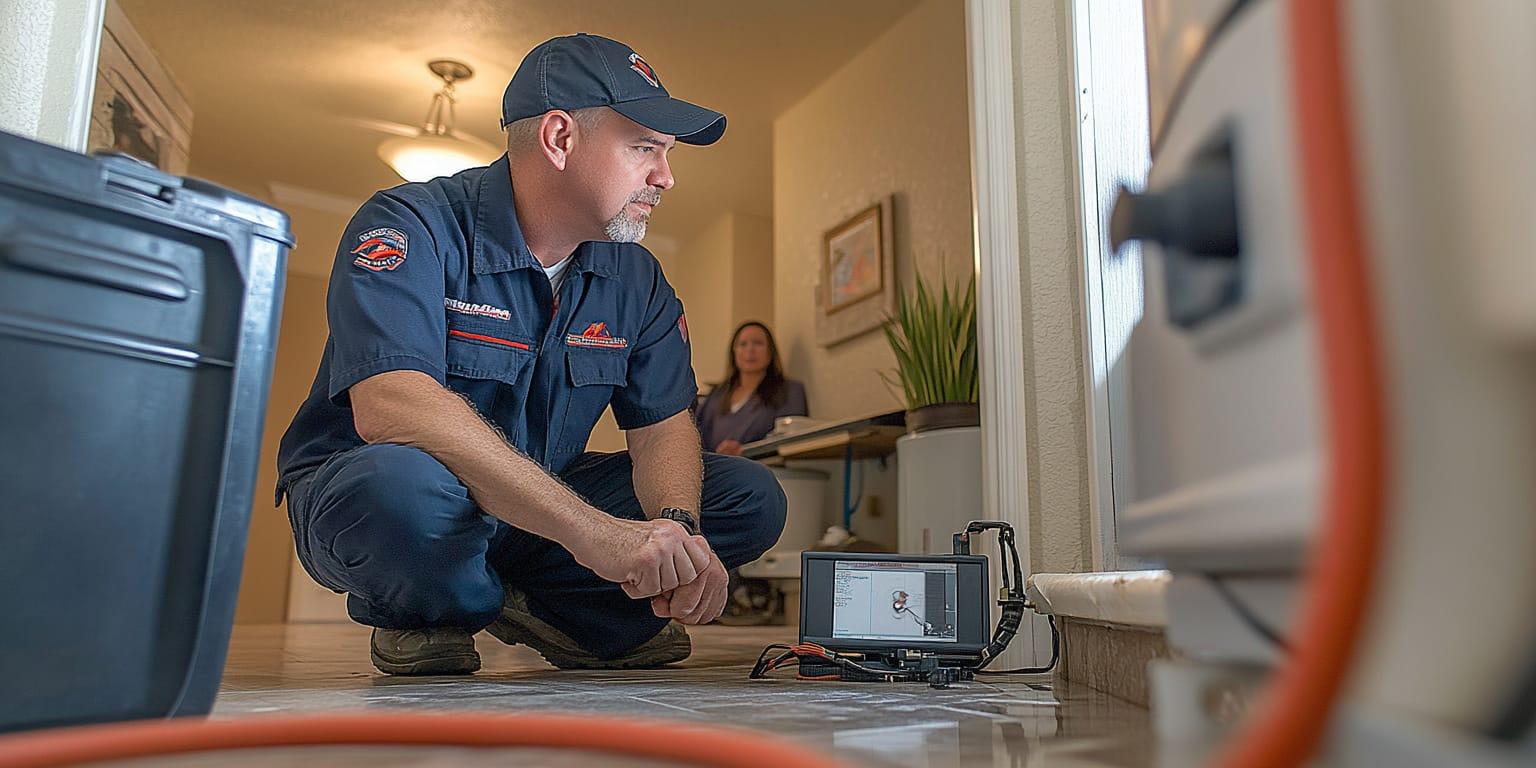
Here’s how it goes. Our master plumber inspects the line with a camera first, so we know what’s wrong before we recommend anything. Then we explain your options, including whether a trenchless method suits your pipe, your access and your property, and you get an estimate before work begins. No guessing, and no digging up the yard when you don’t need it.
The next step is easy: fill out the request form, pick an arrival window that works for you, and one of our plumbers comes out to you.
Help is on the way in Montgomery County.
Have a plumbing problem like this?
We're a Marine veteran-owned plumbing company in Conroe. Tell us what's going on and we'll take it from there.